

In 1761, James Otis Jr., a 36-year-old lawyer, ignited an early spark of the American Revolution when he resigned his post as Massachusetts Advocate General to represent merchants challenging the British use of overly broad warrants. Though he lost the case, his speech electrified the colonies: John Adams later wrote that Otis’ argument was the moment when “the Child Independence was born.”
That struggle over arbitrary warrants is no longer a historical footnote, now that the federal government is reviving the very practice Otis condemned. An internal Immigration and Customs Enforcement memo dated May 12, 2025, authorizes agents to enter homes solely on the basis of an “administrative warrant,” without prior judicial approval. The memo acknowledged that this marked a departure from historic ICE practices but claimed that DHS had “recently determined that the U.S. Constitution … (did) not prohibit relying on administrative warrants.”
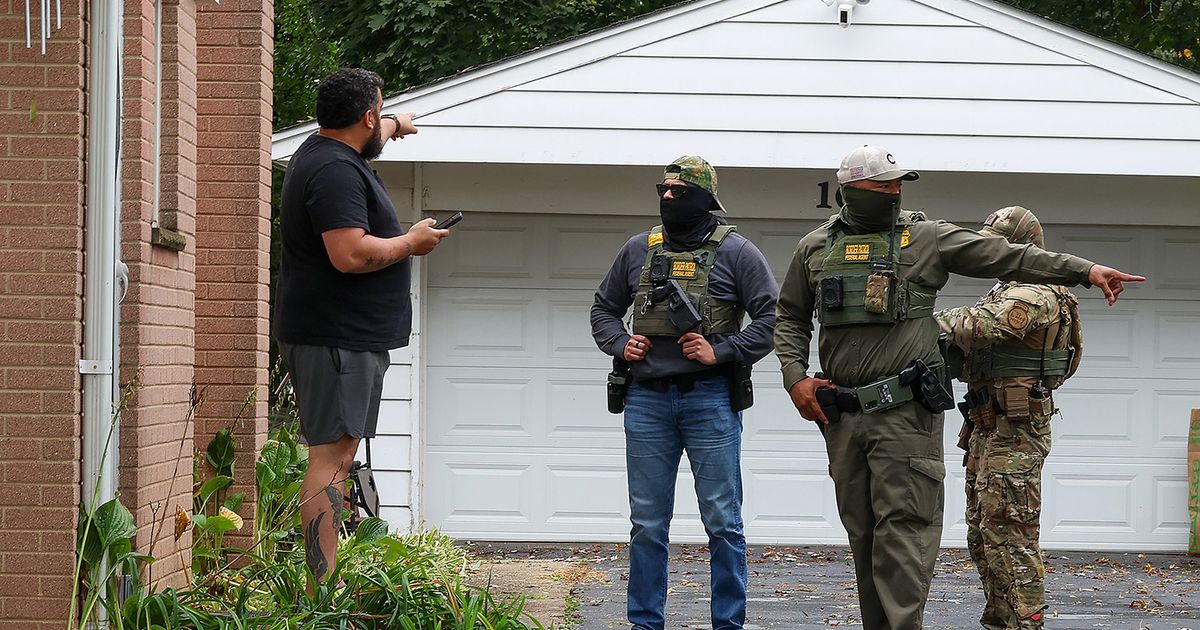
In early January, ICE agents were documented forcibly entering homes on the basis of administrative warrants alone (AP News). The flagrant violation of a key constitutional right — the Fourth Amendment’s “right of the people to be secure in their persons, houses, papers, and effects, against unreasonable searches and seizures” — happened in plain sight. Even today’s conservative Supreme Court reaffirmed last month the “strong presumption against warrantless intrusions into the home” (Case v. Montana).
Rather than backing away from these practices, the administration has now publicly doubled down. On Feb. 4, the Department of Homeland Security issued a lengthy statement defending the use of administrative warrants and rejecting the claim that ICE is violating the Fourth Amendment.
DHS asserted that judicial warrants are unnecessary for immigration arrests and suggested that undocumented individuals are not entitled to the same constitutional protections — a position that runs directly counter to decades of Supreme Court precedent. Congressional Republicans have echoed this stance, calling any proposal to require judicial warrants a “non‑starter.” Far from retreating, the government is entrenching itself.
Origins of the Fourth Amendment
In the lead-up to the American Revolution, British officials used general warrants, known as writs of assistance, that allowed for the search of any property without the need to show probable cause. This practice outraged the American colonists, who believed that general warrants enabled tyranny by empowering officers to enter homes and businesses at will.
The Fourth Amendment was adopted specifically to prevent arbitrary searches, seizures, and intrusions into one’s home. Its protections reflect an intentional transition away from general, unlimited writs to specific, judicially approved warrants.
Born from the Revolution, the Fourth Amendment is a cornerstone of American governance. If ICE agents are being told they may disregard this foundational principle and violate the Fourth Amendment, we should all be alarmed. But let there be no confusion — an internal government memo should not be used to override our Constitution.
Administrative warrants are vulnerable to overuse and abuse
The administrative warrants that ICE claims give them the authority to enter homes ironically resemble the warrants used by the British. Writs of assistance were open‑ended search warrants granted to British customs officers to search for smuggled goods; they were not limited by time, person, or location, and no probable cause was required. This meant that the British could use these writs at their will, without supervision or oversight.
The specificity requirements built into the Fourth Amendment — particularity and probable cause — are key to protecting people from searches that are too broad or arbitrary. The Supreme Court has repeatedly emphasized that these requirements are intended to prevent general exploratory searches, an emphasis that has shaped modern American law enforcement practices.
Different kinds of warrants, like arrest warrants (for people) and search warrants (for property), ensure proper procedures are employed based on the government’s specified interest and authority. The use of administrative warrants to carry out immigration arrests is not new, but these warrants have traditionally been understood to authorize only the arrest of a specific individual — not to allow officers to enter private homes or businesses without consent.
The leaked ICE memo, however, sanctions a clear departure from constitutionally bound practices. These administrative warrants authorize agents to enter a home without consent and, if necessary, by force, regardless of the presence or identity of persons inside.
As such, while ICE claims that administrative warrants are used only to enforce final removal orders, those orders are issued against individuals, not households. When ICE forcibly enters a household using an administrative warrant, they are violating the Fourth Amendment rights of everyone in that home, even those not listed in the removal order.
In addition to probable cause and specificity requirements, the Fourth Amendment requires a warrant to be signed by a neutral judge or magistrate to ensure an independent check on law enforcement. Judges determine whether there is sufficient evidence to support probable cause and ensure that the warrant’s scope is narrowly focused to permit only minimal incursions on people’s rights. Judicial oversight functions as an essential check on government power.
ICE’s administrative warrants, by contrast, are procedural forms approved internally by immigration authorities with no independent judicial review. This brings us closer to the very tyranny we sought to escape when we founded our country.
If we would not tolerate officers forcibly entering our homes without cause during the Revolution, we must certainly reject this conduct today when it is expressly prohibited by our Constitution.
Why this matters
Reference to the American Revolution here is not intended as a history lesson; rather, it reminds us that the use of general warrants was one of the foundational grievances that animated our Constitution and the founding of our country. Americans across the colonies who had little else in common agreed that the warrants used by the British would not be tolerated in the new United States of America. Even then, the sanctity of the home and the right to privacy were seen as core American principles, shared across the political spectrum.
That consensus has not changed. Standing up for our constitutional rights and shared American principles is not political.
Our Constitution was intentionally written, born out of lived experiences of tyranny and authoritarianism. Our founders understood that placing limits on government power — especially when it comes to the privacy of the home — was fundamental to ensuring democracy and preventing tyranny. The current government’s attempts to ignore the Fourth Amendment fly in the face of our constitutional democracy and disregard the very foundations of our national ethos.
Today, as DHS publicly defends practices that erode judicial oversight and Congress refuses to impose even the most basic guardrails, we are confronted with a stark question: Will we allow the very abuses that sparked the American Revolution to be revived under the banner of immigration enforcement? The answer will determine not only how we treat the most vulnerable among us, but whether we still recognize the Constitution as the supreme law of the land. The Fourth Amendment was written to restrain government power in moments exactly like this.
Our willingness to defend it now will reveal whether we still believe in the promise our founders fought to secure.
