

For decades, the world has treated Israel’s nuclear arsenal as an awkward secret — something everyone knows exists but few are willing to discuss openly. Israel has never officially acknowledged possessing nuclear weapons, yet it is widely understood among security experts that the country maintains a significant nuclear capability.
Estimates from institutions such as the Stockholm International Peace Research Institute suggest Israel possesses roughly around 80 nuclear warheads, along with delivery systems that could include aircraft and ballistic missiles. The policy governing this arsenal is known as “nuclear opacity.”
Israel neither confirms nor denies the existence of its weapons. In practice, this ambiguity has allowed the international community to avoid confronting a difficult question: under what circumstances would Israel actually use them?
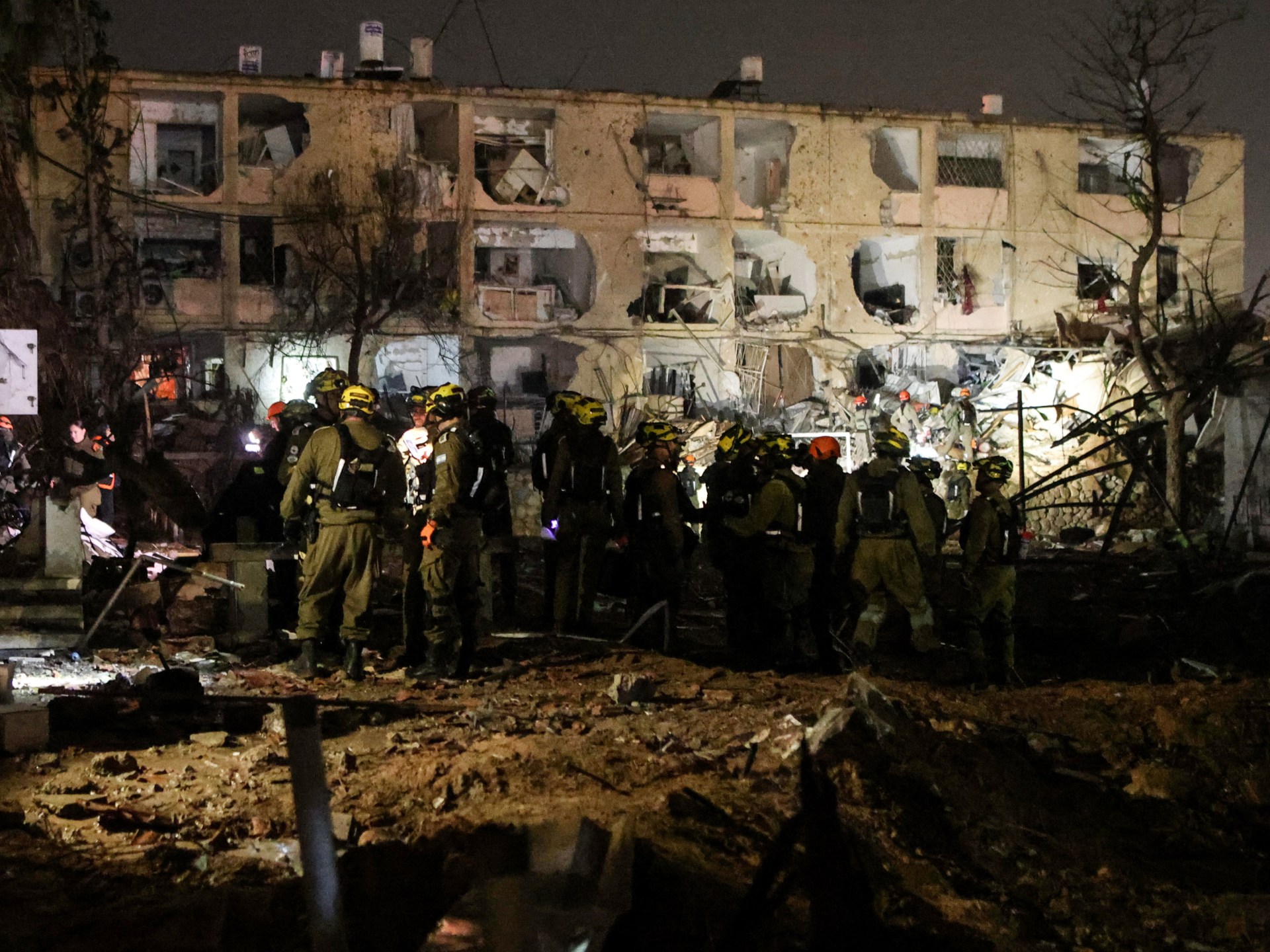
That question matters more today than at any point in recent decades, as the United States and Israel wage a dangerous war on Iran. On Saturday, Iran struck the Israeli city of Dimona which houses a key nuclear facility, demonstrating that it can retaliate for attacks on its own nuclear sites.
Israeli strategic thinking has long been shaped by the fear of an existential threat. Unlike most nuclear states, whose doctrines revolve around deterrence or competition with other nuclear powers, Israel’s security narrative is rooted in the belief that the country could face destruction if a war turns decisively against it. Israeli leaders have repeatedly framed regional conflicts — from the wars of 1967 and 1973 to present confrontations with Iran and armed groups in Gaza and Lebanon — as struggles for national survival. That mindset matters enormously when nuclear weapons are involved.
In most nuclear doctrines, the threshold for nuclear use is deliberately set extraordinarily high. Nuclear weapons exist primarily to deter other nuclear powers. Israel’s strategic thinking introduces a different variable: the possibility that nuclear weapons could be considered if the state believes its survival is in jeopardy due a threat from a non-nuclear state.
Strategic literature has long discussed what is sometimes referred to as the “Samson Option” — the idea that Israel could resort to nuclear weapons if faced with defeat. Whether or not such a doctrine formally exists, the logic behind it is clear. If a state genuinely believes its existence is threatened, the pressure to escalate dramatically becomes far greater.
That concern becomes even more significant when viewed against Israel’s current regional posture. Israel is engaged in a widening network of conflicts and confrontations across the Middle East — from Gaza to Lebanon, Syria and Iran. The possibility of wars unfolding across multiple fronts is no longer theoretical.
In such a scenario, Israeli leaders might perceive themselves not merely as fighting a conventional war but confronting a regional coalition. The more a state interprets its wars as existential, the lower the psychological barrier to extreme escalation becomes. This is precisely why nuclear doctrines in most countries are constrained by rigid strategic frameworks and international oversight.
Israel’s nuclear arsenal, however, exists almost entirely outside international regulation. Israel is not a signatory to the Nuclear Non-Proliferation Treaty, and its nuclear facilities are not subject to the same inspection regimes that govern most other states.
This creates a rare situation in global security: a nuclear-armed state whose capabilities and doctrine remain largely shielded from international scrutiny. While the world has spent decades focusing on preventing nuclear proliferation elsewhere in the Middle East, the region’s only existing nuclear arsenal has remained largely beyond debate.
Recent events in Gaza also raise difficult questions about escalation thresholds. Since October 2023, Israel’s military campaign in Gaza has resulted in the killing of tens of thousands of Palestinians and the near-total destruction of much of the territory’s infrastructure. Entire neighbourhoods have been flattened. Hospitals, schools and civilian infrastructure have repeatedly been struck. The scale of destruction has led many human rights organisations and legal scholars to describe the campaign as genocidal.
The intensity of the bombardment has been extraordinary. Some military analysts estimate that the explosive power dropped on Gaza during the early stages of the war alone amounted to several times the explosive yield of the Hiroshima atomic bomb.
The comparison does not suggest equivalence between nuclear and conventional weapons. The devastation of a nuclear detonation would be vastly greater. But it does reveal something important about the scale of force Israeli leaders have been willing to deploy when they believe national security is at stake. If a state is willing to unleash such overwhelming destruction through conventional means, the uncomfortable question arises: what would its threshold be if it believed it was actually losing a war?
Another factor rarely discussed in strategic debates is the political climate within Israel itself. The current Israeli government is widely described as the most hardline in the country’s history, with ministers who openly advocate extreme positions regarding Palestinians and regional adversaries.
At the same time, Israeli society has undergone significant political shifts in recent years, with growing support for more nationalist and militarised policies. That makes the threshold of what could be perceived as an “existential threat” even lower.
All of this should worry the rest of the nuclear states and the international institutions tasked with averting a nuclear Armageddon. And in the context of the ongoing US-Israeli war with Iran, it should spring them into action.
The views expressed in this article are the author’s own and do not necessarily reflect Al Jazeera’s editorial stance.
