

When he campaigned for the governor’s office, Bob Ferguson vowed to improve education in Washington, promising to tackle an area of policy that many lawmakers view as a quagmire.
Specifically, Ferguson told the editorial board that, as governor, his administration would focus on equitable funding. He also promised to invest more in kindergarten readiness and academic interventions to improve literacy and math skills.
These were bold claims, and much needed. They suggested that Ferguson might even view himself as an education governor, providing crucial leadership in a devilishly tricky arena.
Yet, after nearly a year and a half on the job, Gov. Ferguson’s progress on education has tacked in a different direction. He’s presided over huge cuts to levy equalization money for poor districts and reduced a state early education program by some 2,000 slots.
In March, just weeks after the close of the legislative session, Ferguson’s campaign committee sent an email blast asking for donations to fund his next race and trumpeting a single accomplishment for schools: Money from his new tax on income over $1 million would cover free breakfast and lunch for all K-12 students, starting in 2029.
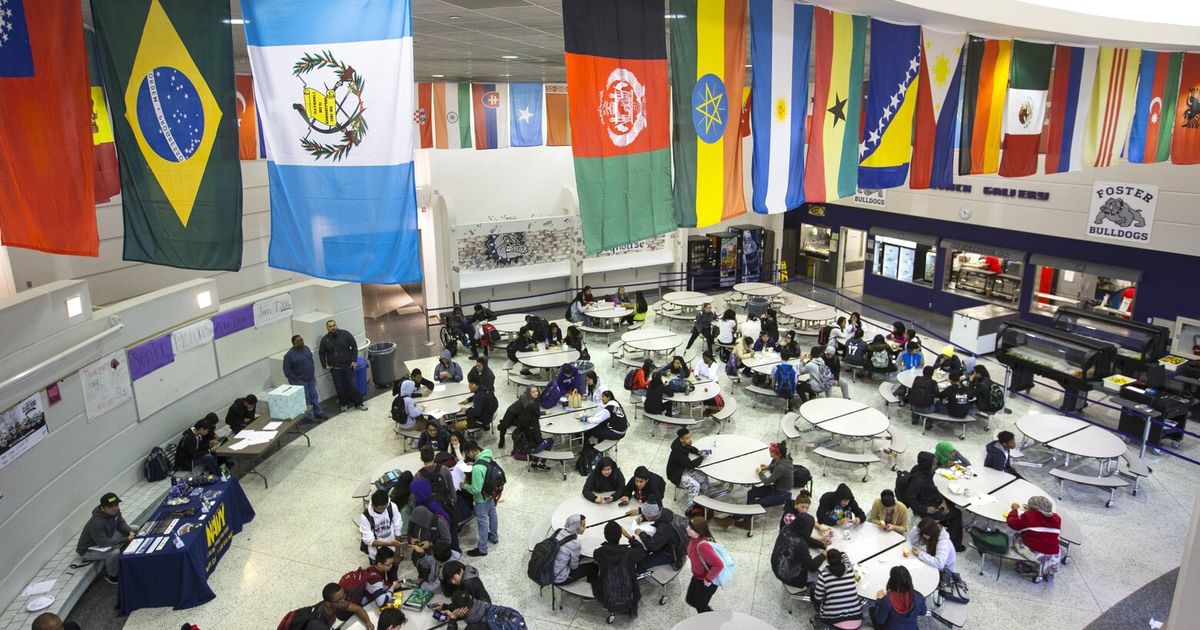
That’s nice. But every low-income child in Washington already gets free meals at school. And hundreds of thousands of middle-class kids also can eat for free. The governor’s plan to use an estimated $140 million from the millionaires tax for school meals would cover the last 25% of kids — a good chunk of them in the state’s wealthiest districts: Mercer Island, Issaquah, Lake Washington and Bellevue.
“This is a sham,” said a livid Trevor Greene, superintendent of the Yakima School District, where 78% of students are growing up in poverty. “The governor is congratulating himself for providing free- or reduced-price lunches to the elite — that’s where we’re putting our money?”
Greene’s dismay is echoed by superintendents, school board members and education officials across the state, who are urging the governor to reconsider. The editorial board agrees, especially since this plan is only part of the “intent” section of the income tax law.
Ferguson’s turnabout is striking. While campaigning, he told The Times that equitable funding was at the top of his education to-do list. Yet, he has presided over a $27 million cut to levy aid and another $25 million chopped from Washington’s Transition to Kindergarten program for 4-year-olds. Last year, he also stood firm on shutting down an early education program for 200 of the very poorest toddlers in the state.
However, the governor has shown more willingness than his predecessor to at least discuss education. He points out that a philanthropic donation will expand a preschool program rated more highly than Transition to Kindergarten, and has promised a raft of proposals to come. Last week he met, over Zoom, with 85 superintendents in rural districts. His staff had allotted 20 minutes for the discussion, though Ferguson stayed on the line for an extra 13.
But he would engage on just two subjects, attendees said: the prospect of a statewide ban on cellphones in school, and the idea of requiring all graduating seniors to complete a federal or Washington state college scholarship application (forms widely known as the FAFSA and the WASFA).
To be clear: The FAFSA is important. Washington has one of the lowest completion rates in the country (we rank 47th), which may be part of the reason for our lower-than-average college attendance. And everyone agrees that all children need proper nutrition. But using the millionaires tax to feed kids who are already well-off is hardly prioritizing equity.
What would truly benefit this state is major reform to the way we fund our schools. There are currently three groups working on proposals, and some have been at it for years. Gov. Ferguson could make a name for himself by leading that effort.
At the moment, though, he seems more interested in providing free lunch to children of privilege.
