

I ran for attorney general to defend the rule of law, not to sue the president.
But when the federal government insists on attacking rights set forth in the Constitution and Bill of Rights, that strikes directly at the principles I swore to uphold.
Six days after being sworn in as Washington state’s attorney general, I sued the president over his birthright citizenship order.
This cynical rewrite of our Constitution and our history would have stripped citizenship rights from tens of thousands of babies born each year. The administration willfully ignored more than a century of Supreme Court precedent and a clear historical record showing that back in the 1860s, members of Congress rejected anti-immigrant fearmongering and intentionally applied the 14th Amendment’s citizenship clause to babies born on this soil, no matter where their parents come from.
What is most shocking is that the president tried this at all.
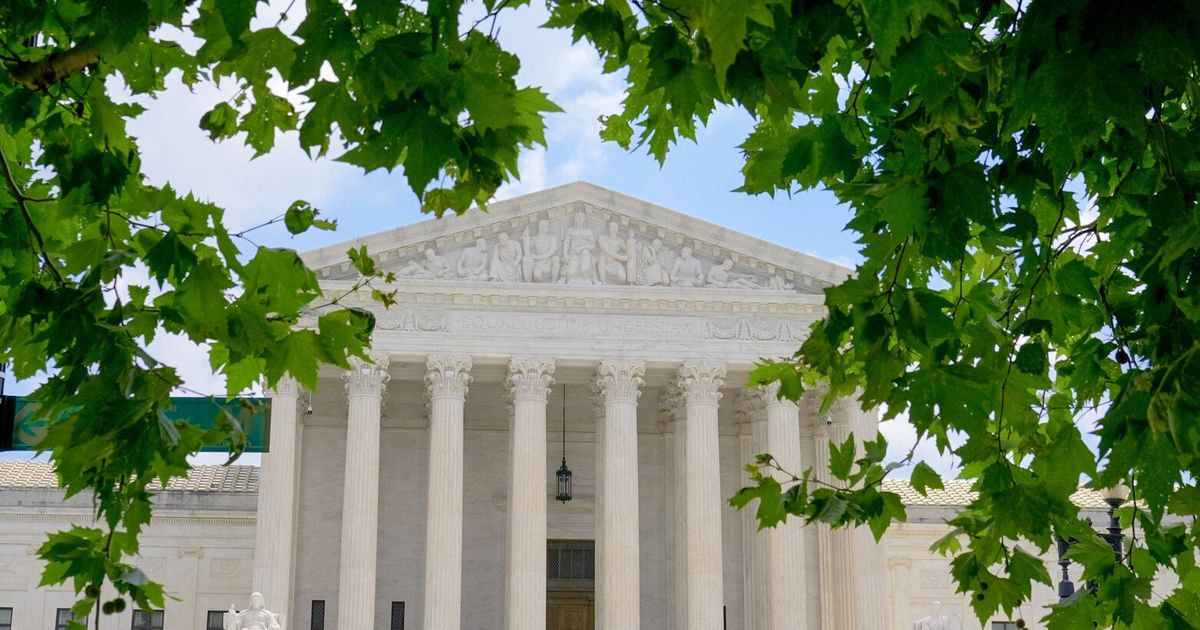
Now the Supreme Court has finally confirmed that the 14th Amendment’s citizenship clause means what it always has — anyone born in this country is a U.S. citizen, with a few longstanding exceptions for kids born to foreign ambassadors.
Even a Supreme Court that has played a leading role in the erasure of rights Americans have fought and died for could not stomach the administration’s line on this question. Sadly, this does not mean the court has had a change of heart when it comes to the conscious effort we’re seeing to narrow our democracy.
Their decision in Louisiana v. Callais gutted the 1965 Voting Rights Act, unraveling the progress Black people fought so hard to win during the Civil Rights Movement. Meanwhile, the president continues to interfere in state-run elections, attempts to limit voting rights, and stokes fear about safe and secure vote-by-mail systems like that in our state.
Everyone’s voting rights are in jeopardy at this moment.
To secure our rights as American citizens and turn back this concerted effort to deny so many of us our right to participate, we must get stubborn about democracy. We must follow in the footsteps of the civil rights leaders who came before us, with just as much ambition, innovation and a refusal to accept an immoral system that denies the promise of America.
In March, I walked across the Edmund Pettus Bridge in Selma, Ala., to commemorate Bloody Sunday 1965 — that famous day when John Lewis and hundreds of others walked for voting rights, opportunity and justice for Black Americans.
The Edmund Pettus Bridge is not a flat line. There’s a crest in the middle. You can’t see what’s on the other side until you get there.
In 1965, the marchers knew that something malevolent waited on the other side.
Over the crest, they saw the officers, and the billy clubs, and the dogs, and the tear gas ready and waiting for them at the bottom.
What they did in that moment is what’s important:
They did not stop. They did not turn around. They did not cower. They did not accept the illegal and amoral structure they were living under.
They put their lives on the line, and their actions helped pass the single greatest piece of civil rights legislation since the Civil War.
As a young nation, even after 250 years, America is always changing and reinventing itself with strength and ingenuity. We must summon those qualities in this moment to halt the reincarnation of a dark past.
History and current events show us that rights can be earned and preserved when yearned for, or torn down and lost entirely when presumed as unassailable. The Supreme Court’s ruling is a milestone for democracy, but on a path that is still being cut.
