

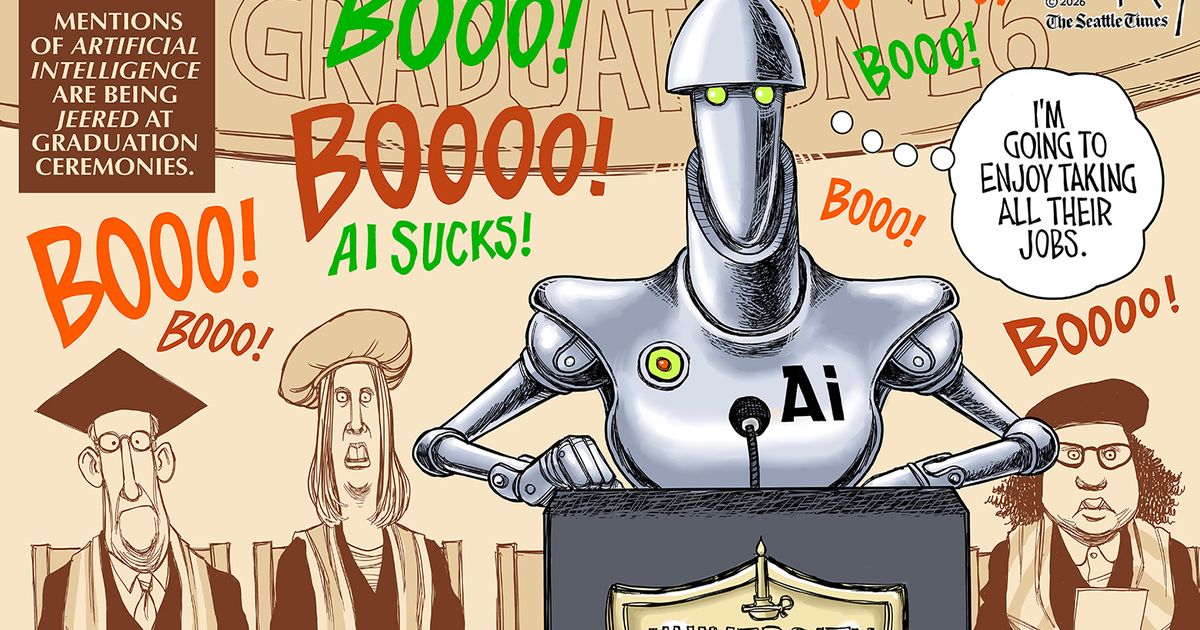
University commencement speakers may want to think twice about extolling the virtues of artificial intelligence unless they are eager to face jeers and boos. During several recent graduation ceremonies around the country, newly minted college grads have erupted with choruses of complaint at the mention of AI.
At the University of Arizona, the audience loudly expressed its displeasure when the speaker, former Google CEO Eric Schmidt, praised artificial intelligence.
Students chastised Marquette University’s administrators as being “tone deaf” and “hypocritical” after they invited Chris Duffey, Adobe’s global executive for AI, to speak at graduation.
A rain of boos also greeted pro-AI commencement speakers at the University of Central Florida and at Middle Tennessee State University.
AI is not especially popular with the American public in general, but it is especially despised by young people just entering the job market who see the futures for which they planned and studied being threatened by the rapid, unregulated rise of artificial intelligence entities that are expected to kill millions of jobs.
It is a bit of a dirty trick. After being told year after year of their young lives that a STEM-centered education was the only way to go, now many recent graduates are finding it nearly impossible to find employment because thousands of positions in tech and other industries are being eliminated and replaced by AI.
College grads are right to be scared, right to be angry, and right to jeer at anyone who attempts to sell them on the false promise of a glorious future dominated by unfettered AI.
See more of David Horsey’s cartoons at: st.news/davidhorsey
View other syndicated cartoonists at: st.news/cartoons
Editor’s note: Seattle Times Opinion no longer appends comment threads on David Horsey’s cartoons. Too many comments violated our community policies and reviewing the dozens that were flagged as inappropriate required too much of our limited staff time. You can comment via a Letter to the Editor. Please email us at letters@seattletimes.com and include your full name, address and telephone number for verification only. Letters are limited to 200 words.
