

From 6-22 February, the 2026 Winter Olympics in Milan-Cortina d’Ampezzo, Italy will feature not just the world’s top winter athletes but also some of the most advanced sports technologies today. At the first Cortina Olympics in 1956, the Swiss company Omega—based in Biel/Bienne—introduced electronic ski starting gates and launched the first automated timing tech of its kind.
At this year’s Olympics, Swiss Timing, sister company to Omega under the parent Swatch Group, unveils a new generation of motion analysis and computer vision technology. The new technologies on offer include photofinish cameras that capture up to 40,000 images per second.
“We work very closely with athletes,” says Swiss Timing CEO Alain Zobrist, who has overseen Olympic timekeeping since the winter games of 2006 in Torino “They are the primary customers of our technology and services, and they need to understand how our systems work in order to trust them.”
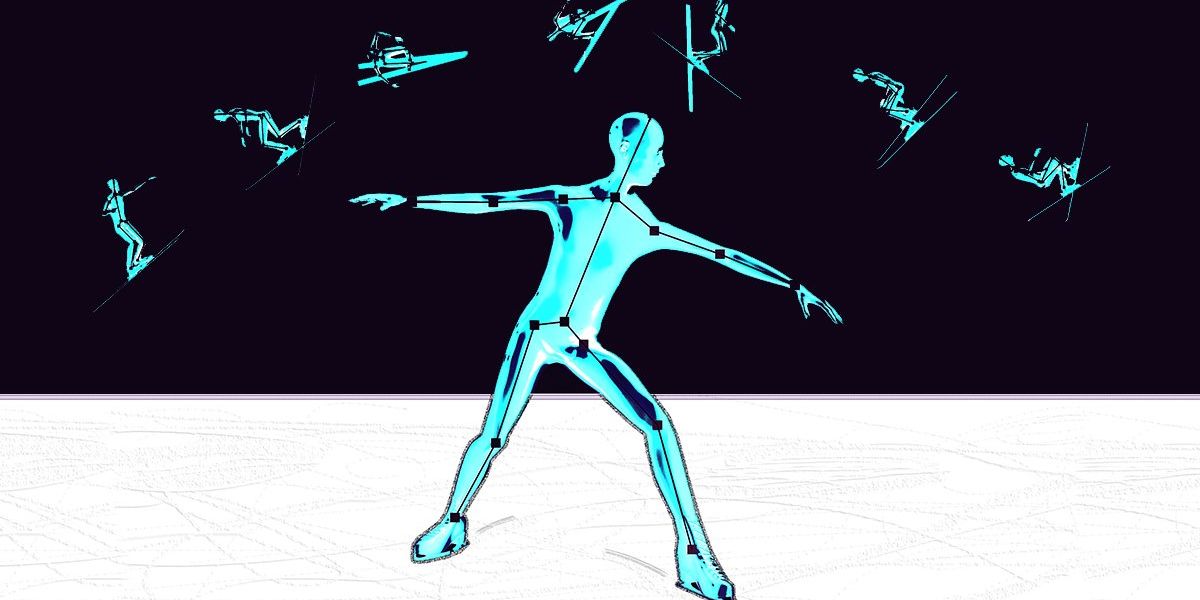
Using high-resolution cameras and AI algorithms tuned to skaters’ routines, Milan-Cortina Olympic officials expect new figure skating tech to be a key highlight of the games. Omega
Figure Skating Tech Completes the Rotation
Figure skating, the Winter Olympics’ biggest TV draw, is receiving a substantial upgrade at Milano Cortina 2026.
Fourteen 8K resolution cameras positioned around the rink will capture every skater’s movement. “We use proprietary software to interpret the images and visualize athlete movement in a 3D model,” says Zobrist. “AI processes the data so we can track trajectory, position, and movement across all three axes—X, Y, and Z”.
The system measures jump heights, air times, and landing speeds in real time, producing heat maps and graphic overlays that break down each program—all instantaneously. “The time it takes for us to measure the data, until we show a matrix on TV with a graphic, this whole chain needs to take less than 1/10 of a second,” Zobrist says.
A range of different AI models helps the broadcasters and commentators process each skater’s every move on the ice.
“There is an AI that helps our computer vision system do pose estimation,” he says. “So we have a camera that is filming what is happening, and an AI that helps the camera understand what it’s looking at. And then there is a second type of AI, which is more similar to a large language model that makes sense of the data that we collect”.
Among the features Swiss Timing’s new systems provide is blade angle detection, which gives judges precise technical data to augment their technical and aesthetic decisions. Zobrist says future versions will also determine whether a given rotation is complete, so that “If the rotation is 355 degrees, there is going to be a deduction,” he says.
This builds on technology Omega unveiled at the 2024 Paris Olympics for diving, where cameras measured distances between a diver’s head and the board to help judges assess points and penalties to be awarded.
 At the 2026 Winter Olympics, ski jumping will feature both camera-based and sensor-based technologies to make the aerial experience more immediate and real-time. Omega
Ski Jumping Tech Finds Make-or-Break Moments
Unlike figure skating’s camera-based approach, ski jumping also relies on physical sensors.
“In ski jumping, we use a small, lightweight sensor attached to each ski, one sensor per ski, not on the athlete’s body,” Zobrist says. The sensors are lightweight and broadcast data on a skier’s speed, acceleration, and positioning in the air. The technology also correlates performance data with wind conditions, revealing environmental factors’ influence on each jump.
High-speed cameras also track each ski jumper. Then, a stroboscopic camera provides body position time-lapses throughout the jump.
“The first 20 to 30 meters after takeoff are crucial as athletes move into a V position and lean forward,” Zobrist says. “And both the timing and precision of this movement strongly influence performance.”
The system reveals biomechanical characteristics in real time, he adds, showing how athletes position their bodies during every moment of the takeoff process. The most common mistake in flight position, over-rotation or under-rotation, can now be detailed and diagnosed with precision on every jump.
Bobsleigh: Pushing the Line on the Photo Finish
This year’s Olympics will also feature a “virtual photo finish,” providing comparison images of when different sleds cross the finish line over previous runs.
 Omega’s cameras will provide virtual photo finishes at the 2026 Winter Olympics. Omega
“We virtually build a photo finish that shows different sleds from different runs on a single visual reference,” says Zobrist.
After each run, composite images show the margins separating performances. However, more tried-and-true technology still generates official results. A Swiss Timing score, he says, still comes courtesy of photoelectric cells, devices that emit light beams across the finish line and stop the clock when broken. The company offers its virtual photo finish, by contrast, as a visualization tool for spectators and commentators.
In bobsleigh, as in every timed Winter Olympic event, the line between triumph and heartbreak is sometimes measured in milliseconds or even shorter time intervals still. Such precision will, Zobrist says, stem from Omega’s Quantum Timer.
“We can measure time to the millionth of a second, so 6 digits after the comma, with a deviation of about 23 nanoseconds over 24 hours,” Zobrist explained. “These devices are constantly calibrated and used across all timed sports.”
From Your Site Articles
Related Articles Around the Web
