

The logic of carbon neutrality is simple. Whenever a building consumes energy, a factory produces materials, a firm distributes goods around the world, or a city builds infrastructure, there is an environmental price tag. It can be calculated. It can be minimised. And where residual emissions remain after all reasonable reductions, they must be accounted for. Today, this rationale forms the basis for how we judge businesses, government projects and the activities of numerous institutions. It should also apply to the world’s most prominent events, including football’s biggest tournaments.
This is also the reasoning behind carbon pricing schemes and tariffs. Governments worldwide are beginning to acknowledge that pollution costs should be covered. A particular industry may be required to account for its high greenhouse gas emissions through taxes, carbon markets, more stringent regulations and increased reporting requirements. Naturally, this mechanism’s main objective is not to penalise any economic activity. The key is to make visible the costs that were previously hidden. Energy-intensive technologies have benefitted people for decades, but the climate has paid the price. Thus, carbon pricing aims to address this injustice in a fairly direct manner.
Sports should be treated in the same way. Businesses that contribute to the construction of our buildings, supply us with energy at home, provide us with fuel for air travel, and produce our goods are frequently questioned about how they affect the climate. However, when it comes to major sporting events, the scrutiny often becomes softer and less rigorous. Despite being a fantastic aspect of culture, football undoubtedly has a significant environmental footprint. There is an environmental impact when teams, fans, sponsors, broadcast media and equipment are transported across nations for a competition.
This issue with the 2026 FIFA World Cup cannot be avoided. The tournament, which began on June 11 and runs until July 19, is bigger than previous editions and spans a vast geographic area. With 48 teams competing in 104 games across 16 host cities in the US, Canada, and Mexico, suppliers, sponsors, journalists, officials, teams and spectators are travelling across North America largely by air. This scale of movement has a significant environmental impact: an independent bottom-up estimate by carbon accounting platform Greenly puts the tournament’s total footprint at roughly 7.8 million tonnes of CO2e, with spectator travel alone responsible for around 88 percent of the total. Beyond travel, stadium operations also consume large amounts of energy through lighting, cooling, broadcasting, security and food services, while travelling fans require accommodation. Each of these elements adds to the event’s overall carbon footprint.
The scale of the tournament matters financially as well as environmentally. FIFA initially budgeted around $11bn in revenue for its 2023-2026 cycle, with the 2026 World Cup as the biggest event in that period, and has since revised that revenue target upwards. That is a substantial sum of money. If the event can generate such vast revenues, sustainability should not be treated as a slogan or an afterthought. It should be built into the way the tournament is funded and planned. A portion of this funding must go toward legacy initiatives, climate research, sustainable mobility, renewable energy, carbon accounting, and emission reduction.
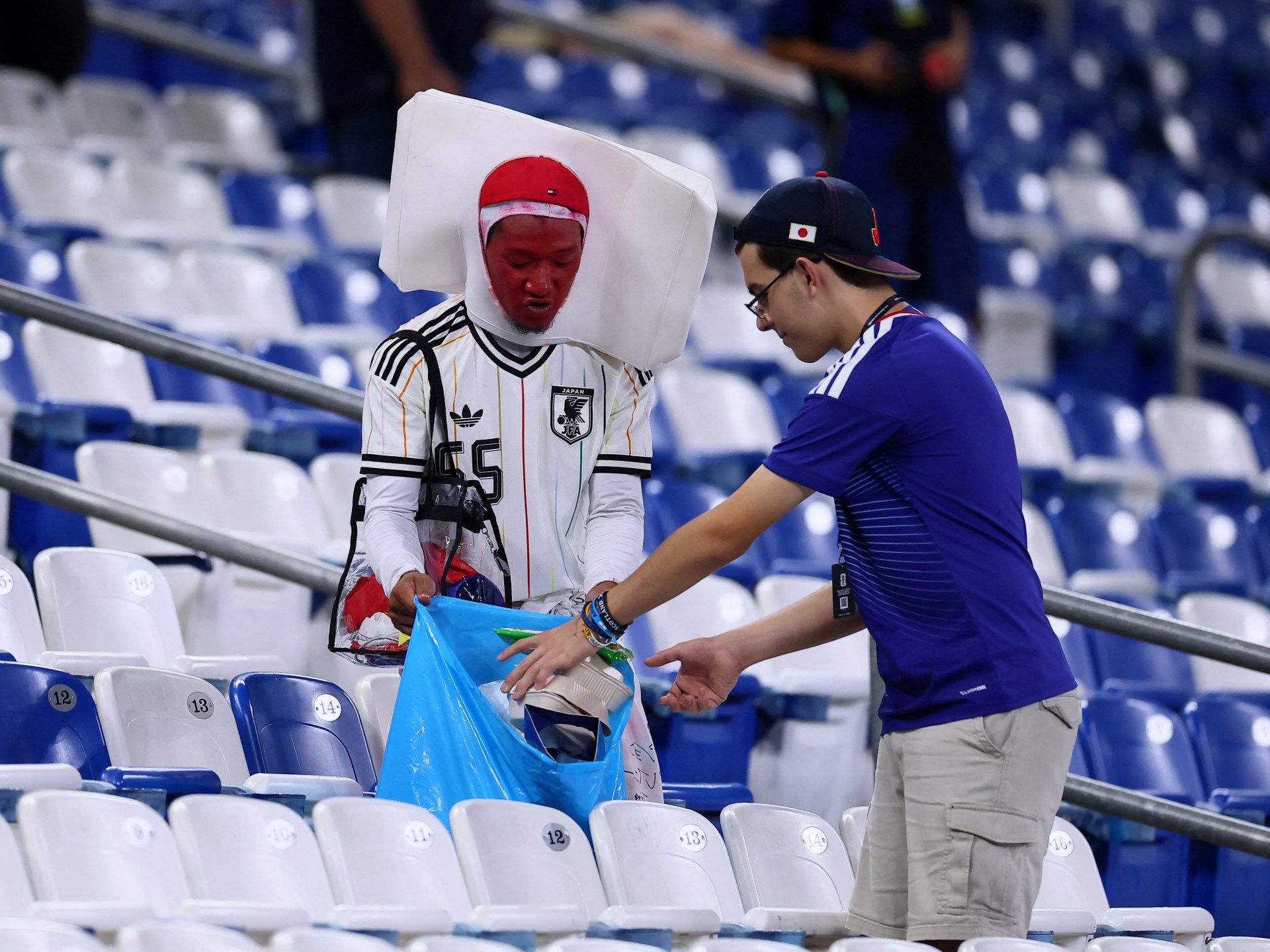
We already understand this on a human level. It is heartwarming to see fans stay behind to clean the stadium seats after a game. It is a small gesture, but a powerful one. It says that joy should not leave people heedless of their responsibilities, or leave a mess behind for others to clean up. The FIFA World Cup’s environmental impacts should be treated similarly. If fans can pick up the waste they leave behind, football organisations can also reduce the emissions and pollution generated by their events. Cleaning stadium seats may look impressive, but cleaning up the environmental impact is far more important.
For this reason, I propose establishing a Sports Climate Responsibility Fund. It should be financed through a fixed share of tournament revenues and contributions from FIFA, sponsors, broadcasters and other commercial beneficiaries, with independent oversight to ensure transparency. There is precedent for such an approach: UEFA’s Euro 2024 Climate Fund invested nearly 8 million euros in grassroots sustainability projects, from solar panels and battery storage to LED floodlights, EV charging stations and waste separation systems. That fund was built for a single-country tournament on a far smaller scale, so it should be read as proof of concept rather than a template that scales neatly to a three-nation, 104-match World Cup. The mandate would be to evaluate tournament-related emissions, then design solutions that put the event on a credible path towards carbon neutrality. This can be achieved through smarter scheduling, less polluting transportation, renewable energy, efficient stadium operations, and better waste systems to reduce the unavoidable carbon footprint. Finally, the fund would support key climate and research initiatives to address the residual emissions. Specifically, Scope 1, 2 and 3 emissions linked to travel, lodging, logistics, food, waste and stadium energy must be evaluated independently. I plan to launch a research study to help build this evidence base. Researchers, universities, sustainability professionals, and funders who believe sport can be both joyful and responsible can join this effort and help turn the idea into rigorous, useful work.
The World Cup does not need to become less joyful to become more responsible. Football will remain a sport that thrills people, unites communities, and creates enduring memories for its supporters. But those who profit from this global love affair must also acknowledge the environmental cost of organising the event. The term “carbon neutrality” should not be attached to this event only after the fact. It ought to be ingrained in the planning, funding and celebration of this tournament.
The views expressed in this article are the author’s own and do not necessarily reflect Al Jazeera’s editorial policy.
