

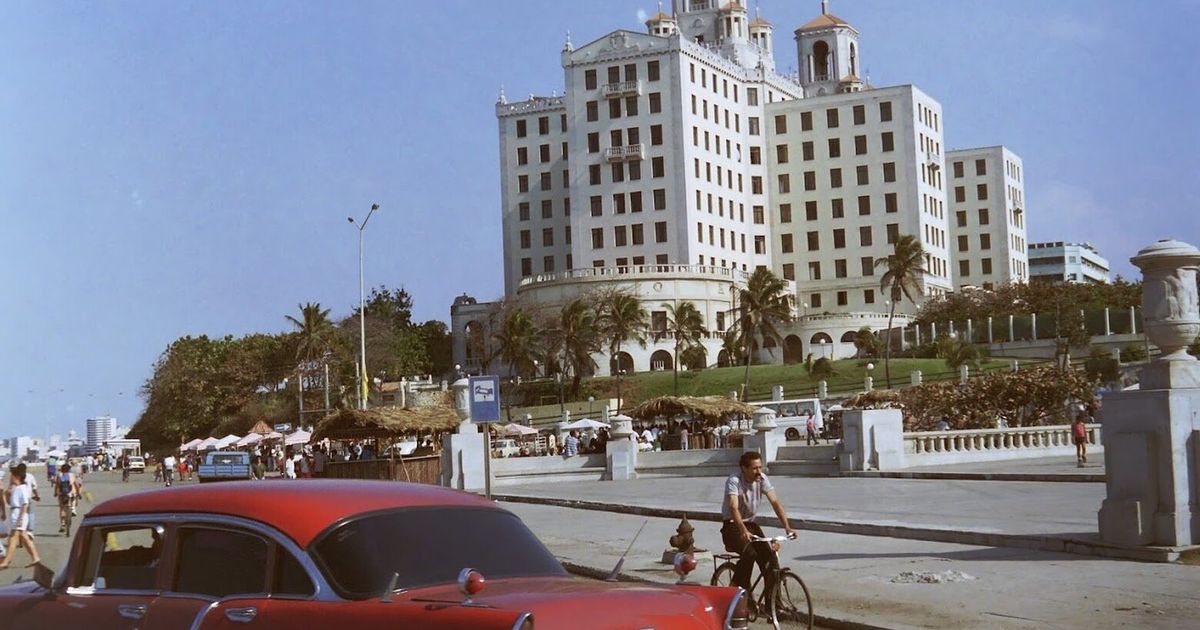
One afternoon 30 years ago, I was sitting on a beach near Havana watching pale, bald Ukrainian children — victims of the Chernobyl nuclear disaster brought to Cuba for medical treatment — play in the waves.
A thundering roar shattered the tropical calm. A Cuban Air Force fighter jet tore east above the white sands, banked sharply and streaked over the turquoise sea.
Startled, I turned to an interpreter who was helping me report on Cubans struggling during an economic crisis brought on by the collapse of the Soviet Union. Before I could ask her about the jet, a second MiG shot above us, racing out to sea on the same trajectory.
“It’s unusual to see Air Force planes these days,” the interpreter said. But one thing is certain, she added ominously: “They don’t have fuel for practicing.”
The jets that scrambled that afternoon, Feb. 24, 1996, changed the course of history. Cuban media confirmed the next day that a MiG-29 had shot down two Cessna Skymaster planes flown from Florida by Brothers to the Rescue, a Miami-based exile organization. Three American citizens and a U.S. resident in the unarmed civilian planes were killed.
Fast-forward to May 20 of this year, when federal prosecutors in Miami unsealed an indictment naming Raúl Castro, Cuba’s defense minister at the time of the Cessna shootdowns. Castro, 95, who led the country for 15 years after his older brother, Fidel, became ill in 2006, is accused along with five Cuban military pilots of murder and conspiracy in the four deaths.
Resurrecting hostilities and targeting a frail former dictator in his 90s for retribution is classic behavior for the version of President Donald Trump we have come to know in his unconstrained second term. Belligerence toward a nation less than 300 miles from Mar-a-Lago checks familiar boxes for the 47th president:
● Maximum economic pressure. Choking off oil with a naval blockade atop a longstanding trade embargo aims to force political concessions.
● Bullying and cruelty. Denying energy supplies exacts pain, causing national power outages amid intense heat and humidity, and disabling pumps that supply water to homes.
● Discrimination. Afro-Cubans and mixed-race people who routinely face socioeconomic disadvantages tend to suffer the most.
● Profiteering. Trump has long regarded Cuba as a potential prize for real estate development, while members of the politically powerful Miami-Cuban lobby desire some form of property restitution.
● Vanquishing communism. The prospect of conquering the socialist nation jibes with Trump’s recent rhetoric about communism in the United States, where he claims Cuba fosters left-wing activism.
● Hemispheric dominance. Trump asserts the “Donroe doctrine,” his reinterpretation of the 19th-century Monroe Doctrine, to dominate the Western Hemisphere.
The Trump administration envisions freeing political prisoners, restoring freedom of speech and — perhaps eventually, as in Venezuela — moving toward democratic elections. But asked about Cuba at a news conference in March, Trump spoke of the prestige he would gain for his legacy.
“I do believe I’ll be … having the honor of taking Cuba,” Trump said. “That’s a big honor, taking Cuba in some form. I mean, whether I free it, take it. Think I can do anything I want with it, you want to know the truth. They’re a very weakened nation right now.”
While Americans focus on rising prices and the Iran war, Trump has placed Cuba firmly under his boot, inflicting more hardship on its people than I saw 30 years ago.
During the current man-made crisis, Cubans spend much of their day queuing for bread, chicken and cooking gas in sparsely stocked state-owned stores. Paltry salaries force ordinary citizens to find second jobs or survive on remittances from family members abroad. Foreigners and members of a wealthy elite shop in well-stocked private markets and dine in modern restaurants.
Trump aims to strangle Cuba into submission, ridding it of the regime that seized power in a 1950s revolution. The indictment of Raúl Castro amounts to a threat to extricate him, as U.S. commandos extracted Venezuelan President Nicolás Maduro, for trial in New York.
When I visited three decades ago, Cuba was struggling through the “Special Period” that followed the Soviet collapse. Cuts in Russian subsidies and oil supplies had reduced Cuba’s GDP by more than a third.
Gasoline was scarce. People crowded into improvised buses, trekked to work and rode Chinese-made bicycles distributed by the government.
Cuba still took pride in its universal healthcare system, showcasing its treatment of the Ukrainian children and sending doctors on medical missions to allied nations.
But Cuba began charging wealthier nations for medical services to generate hard currency.
Restrictions on U.S. travel to Cuba meant that visits by Americans were rare. As word spread of my planned trip, people showed up at my home in Portland with gifts for me to carry.
A man entrusted me with a pair of glasses, having filled a Cuban friend’s prescription in the United States. Someone else gave me a clarinet for a relative in Havana. One of my co-workers, a Cuban American, gave me $100 for his elderly aunt.
Busy with reporting, I had put off the deliveries until my final weekend in-country. I had regarded the errands as chores, but they turned out to provide the most meaningful occasions of my visit.
The man who received the glasses — easily obtained in the United States, but irreplaceable in Cuba — wept at the generosity. He and the amateur musician who got the clarinet expressed shock at the shootdowns and despaired over the U.S.-Cuba hostility that the attacks portended.
Overnight, the city that had just celebrated its first Carnaval in five years had gone from jubilation to mourning.
My colleague’s aunt lived alone in a sweltering Havana apartment. I found her shut in behind curtains, fretting over a neighborhood tuberculosis outbreak.
The money I brought would supplement her income of $5 a month plus rations. “I try to get one meal a day,” she said.
More than a million people have left Cuba since 2021, driven by the difficult living conditions and crackdowns on protests. An open question is whether Trump’s blockade could backfire, leading a massive new wave of Cubans to flee the country for Florida in makeshift rafts and boats.
There is little indication that Trump has the interests of Cuban people at heart. Judging from past actions, he will look out for his own.
Trump promised in 1999, long before becoming president, that he would not do business in Cuba until the island was “free.” But in 2008 he applied to register the Trump trademark for investing in real estate, casinos, beauty contests, golf courses and hotels.
Subsequently, a Trump Organization delegation scouted the Bello Monte area east of Havana for a potential luxury golf course and resort development.
Bello Monte is a short drive from Tarará beach, where I watched the jets fly out. It wouldn’t surprise me to return someday and find a Trump hotel on the shore.
But how ordinary Cubans will be doing by then, and whether they’ll get to vote in democratic elections, I couldn’t say.
