

Today, we mark three years of Russia’s full-scale invasion of Ukraine. For three years, the Ukrainian people have demonstrated remarkable resilience, foiling Russian plans to conquer Kyiv and forcing its army to retreat from Kharkiv and Kherson.
Ukrainians continue to resist against the onslaught of the Russian army, but the war has inevitably entered a grinding phase in which every territorial gain comes at an enormous cost, testing Ukraine’s endurance and the West’s willingness to maintain support.
At this critical stage, a new administration in the United States has signalled a dramatic shift in its policy on Ukraine, demanding that a swift peace agreement be reached. Last week, US and Russian officials met in Saudi Arabia for direct negotiations without Ukraine at the table. This meeting and the rhetoric coming from Washington have raised fears that President Donald Trump’s administration is laying the groundwork for broader concessions in the name of de-escalation with Russia.
For Ukraine, the fundamental issue is not whether diplomacy should be pursued – any war eventually ends at the negotiating table – but what terms those negotiations will involve. If the priority is simply to stop the fighting as quickly as possible, there is a risk of Ukraine being pressured into accepting a settlement that does not address its long-term security concerns and that temporarily freezes the war rather than putting an end to it.
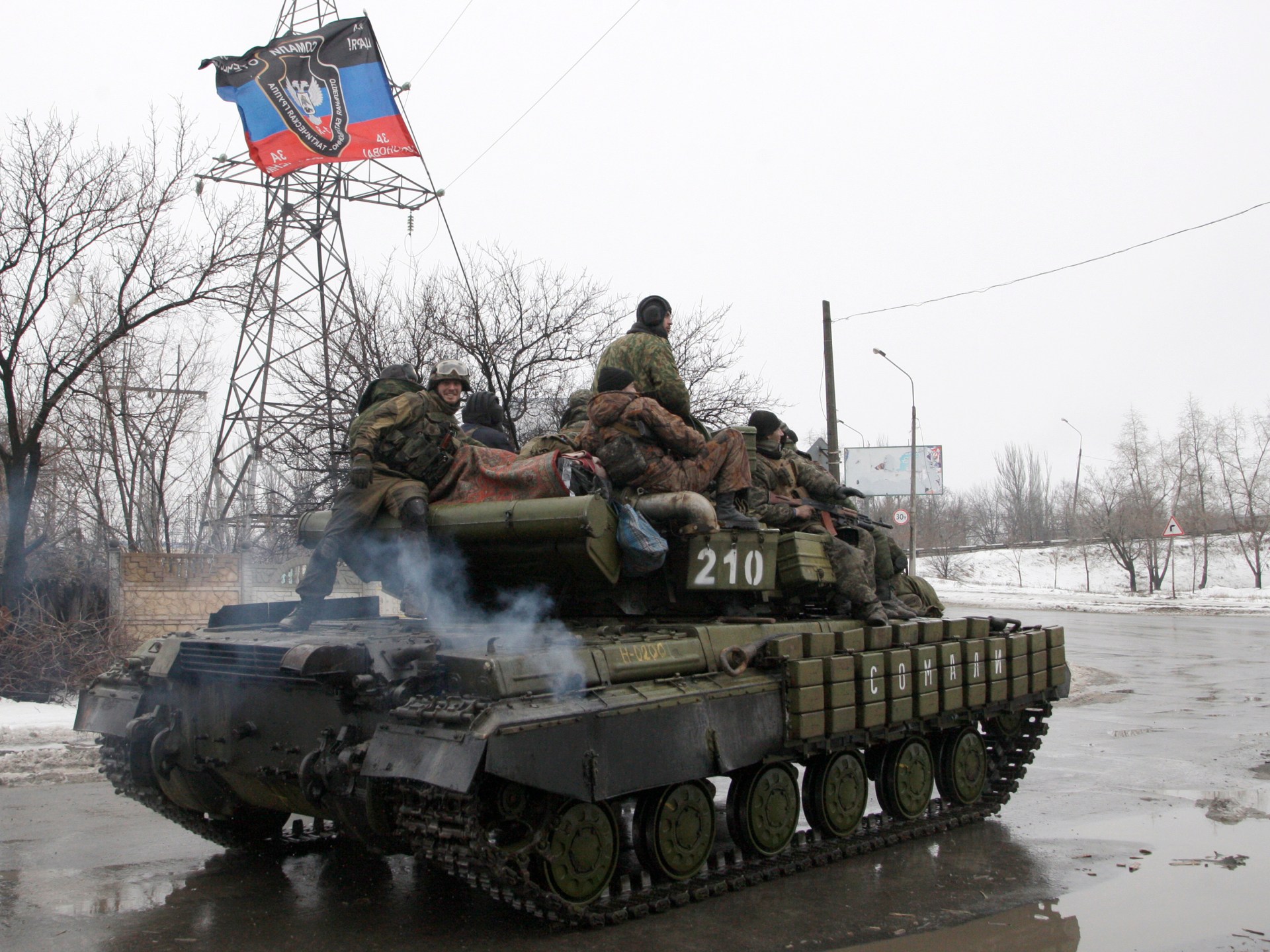
Recent history provides a clear warning against such flawed “peacemaking”. In February 2014, Russia invaded Ukraine’s Crimean Peninsula and occupied it; two months later, its troops along with local pro-Russia forces launched an operation in eastern Ukraine’s Donbas region, taking control of some territory. In August, Kyiv was forced into negotiations brokered by France and Germany that aimed to put a stop to the fighting under unfavourable terms.
What came to be known as the Minsk I agreement, signed in September of that year, lasted no more than six months. In January 2015, forces loyal to Moscow and regular Russian army units renewed their attacks on Ukraine to force it into more concessions. In February 2015, what came to be known as the Minsk II agreement was negotiated and signed, stipulating that Kyiv had to recognise the “special status” of two regions in the Donbas in effect occupied by Russia.
The Minsk agreements ultimately failed to secure a durable peace. Structured to freeze the conflict rather than resolve it, they allowed Russia to consolidate control over the occupied territories while keeping Ukraine politically and militarily constrained. Moscow never adhered to its commitments, using the diplomatic process to buy time, regroup and prepare for further aggression.
The failed Minsk agreements serve as a cautionary tale: Settlements that ignore Ukraine’s security realities and societal expectations do not lead to lasting peace but merely postpone the next conflict.
Any settlement must reflect the will of the people who have endured this war for three years. Polls conducted in Ukraine show clearly what the Ukrainians want.
War fatigue is real, as illustrated by a poll conducted by Gallup in November, in which 52 percent of respondents said they supported negotiations. However, when it comes to any territorial concessions, only 27 percent said Ukraine should consider such a step. A clear majority of Ukrainians reject giving up any land as part of a peace agreement.
These figures highlight an inescapable political reality: There is no broad support in Ukraine for a peace agreement that legitimises Russian territorial gains. Any Ukrainian leadership attempting to negotiate such terms would face enormous public pressure. And even if an agreement were reached at the diplomatic level, attempts to implement it would be met with fierce resistance domestically.
That is why US and other Western policymakers advocating for an expedited resolution cannot ignore the will of the Ukrainian people. If they do want a peace deal to hold, they should consider continuing support for the Ukrainian army. Ukraine’s ability to negotiate from a position of strength depends on continued military success and a unified stance from its allies.
In making decisions on their Ukraine policy, Western countries should not fall for Russia’s flawed narrative. Moscow has been trying to create the illusion of strength while concealing its growing vulnerabilities.
Russian officials have insisted the Russian economy is stable despite sanctions, their military operations are sustainable and time is on their side. At the Riyadh talks, Russian representatives reportedly suggested that businesses in Moscow are thriving, restaurants are full and only Western economies are suffering from prolonged engagement in Ukraine.
The message was clear: Russia can fight for as long as it takes while the West faces diminishing returns. This framing has led some in the West to conclude that a quick peace deal – one based on Ukrainian concessions – may be the most pragmatic way forward.
But it is not. Appeasing Russia would only increase its appetite for more aggression.
The way to guarantee peace in Ukraine is by setting up a robust post-war security framework. Whether through NATO integration, bilateral defence agreements or a structured European-led security framework, Ukraine needs concrete security commitments. If these are absent in any peace settlement, the risk of renewed conflict would remain high.
The coming months will be critical as Washington reassesses its role in Ukraine. While much is unknown, one reality is clear: Ukraine’s fight is not only about reclaiming lost territory but also about ensuring that its sovereignty is no longer in question. Whether Western policy continues to align with that goal or shifts towards a more transactional approach will shape the next phase of the war.
The views expressed in this article are the author’s own and do not necessarily reflect Al Jazeera’s editorial stance.
