

Driving trucks is one of the unappreciated backbones of modern civilization. It’s also hard and sometimes dangerous work. But technology is being spun up to make the job safer and easier.
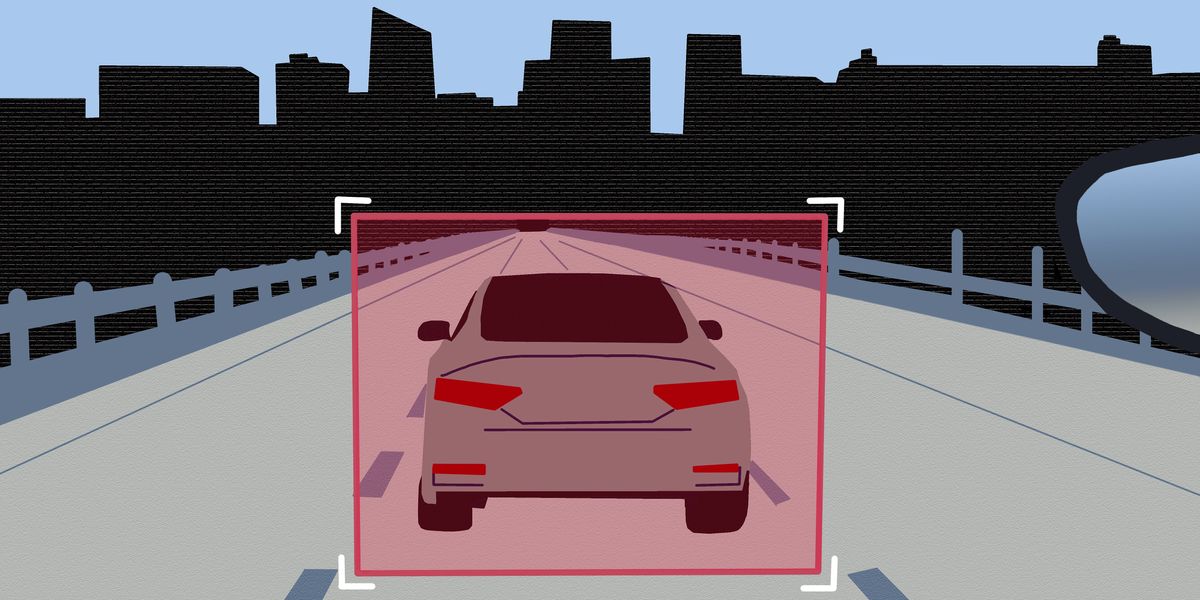
A new class of devices is being targeted at fleets that helps drivers elude accidents by flagging risky situations. The new systems use convolutional neural networks running in the vehicle (“edge” AI) and in the cloud to fuse data inputs from on-board vehicle diagnostics, along with data from cameras facing the driver and the roadway. The result are systems that can assess, in real time, the risk of collision and warn drivers in time to avoid most of them.
One of the most advanced of the new systems is from a company called Nauto. Earlier this year, the Virginia Tech Transportation Institute (VTTI) put the AI-enabled safety system from the Palo Alto, Calif.–based startup through its paces on the same Virginia Smart Roads controlled-access test tracks where it conducted a 2023 benchmark study evaluating three similar products. VTTI says this year’s testing was performed under the same scenarios of distracted driving, rolling stops, tailgating, and night driving.
According to the Virginia Tech researchers, Nauto’s dashcam matched or outperformed the previously benchmarked gadgets in detection accuracy—and provided feedback that translated more directly into information supervisors could use to address and correct risky driver behavior. “This study allowed us to evaluate driver monitoring technologies in a controlled, repeatable way, so we could clearly measure how the [Nauto] system responded to risky behaviors,” says Susan Soccolich, a senior research associate at VTTI.
MIT driver attention researcher Bryan Reimer, who was not involved in the study, says the real value of systems like Nauto’s lies beyond monitoring. “Many companies focus only on monitoring, but monitoring alone is just an enabler—the sensor, like radar in adaptive cruise control or forward collision warning. The real art lies in the support systems that shape driver behavior. That’s what makes Nauto unique.”
Reducing Alert Fatigue in Trucking Safety
“One of our primary goals is to issue alerts only when corrective action is still possible,” says Nauto CEO Stefan Heck. Just as important, he adds, is a design meant to avoid “alert fatigue,” a well-known phenomenon where alerts triggered when situations don’t actually call for it makes would-be responders less apt to take heed. False alerts have long plagued driver-assist systems, causing drivers to eventually disregard even the most serious warnings.
Nauto claims its alerts are accurate more than 90 percent of the time, because it combines more than ten distraction and drowsiness indicators. Among the inattention indicators the system tracks are head nodding or tilting, yawning, change in eye blink rate, long eyelid closures (indicating something called microsleeps), and gaze drifting from the road for extended periods (what happens when people text and drive). If a pedestrian enters the crosswalk and the driver is awake, alert, and not driving too fast, the system will remain silent under the assumption that the driver will slow down or stop so the person on foot can cross the street without incident. But if it notices that the driver is scrolling on their phone, it will sound an alarm—and perhaps trigger a visual warning too—in time to avoid causing injury.
While VTTI did not specifically test false-positive rates, it did measure detection accuracy across multiple scenarios. Soccolich reports that in Class 8 tractor tests, the system issued audible in-cab alerts for 100 percent of handheld calls, outgoing texts, discreet lap use of a smartphone, and seat belt violations, as well as 95 percent of rolling stops. For tailgating a lead vehicle, it alerted in 50 percent of trials initially, but after adjustment, delivered alerts in 100 percent of cases.
Nauto’s alarms can be triggered not only in the driver’s cabin but also in fleet supervisors’ offices of the trucking company that uses the system. But Nauto structures its alerts to prioritize the driver: Warnings—for all but the most high-risk situations—go to the cab of the truck, allowing self-correction, while supervisors are notified only when the system detects recklessness or a pattern of lower-risk behavior that requires corrective action.
“Many companies focus only on monitoring, but monitoring alone is just an enabler—the sensor, like radar in adaptive cruise control or forward collision warning. The real art lies in the support systems that shape driver behavior. That’s what makes Nauto unique.” –Bryan Reimer, MIT
The company packages its vehicle hardware in a windshield-mounted dashcam that plugs into a truck’s on-board diagnostics port. With forward- and driver-facing cameras and direct access to vehicle data streams, the device continuously recalculates risk. A delivery driver glancing at a phone while drifting from their lane, for example, triggers an immediate warning and a notice to supervisors that the driver’s behavior warrants being called on the carpet for their recklessness.
By contrast, a rural stop sign roll-through at dawn might trigger nothing more than a cheerful reminder to come to a complete stop next time. There are more complex cases, as when a driver is following another vehicle too closely. On a sunny day, in light traffic, the system might let it go, holding back from issuing a warning about the tailgating. But if it starts to rain, the system recognizes the change in safe stopping distance and updates its risk calculation. The driver is told to back off so there’s enough space to stop the truck in time on the rain-slick road if the lead car suddenly slams on its brakes.
Nauto aims to give drivers three to four seconds to steer clear, brake gently, or refocus. “The better response isn’t always slamming on the brakes,” Heck says. “Sometimes swerving is safer, and no automated braking system today will do that.”
AI Dashcams Lower Trucking Collision Rates
According to a 2017 Insurance Institute for Highway safety (IIHS) report, if all vehicles in the United States were equipped with both forward collision warning with automatic emergency braking in 2014, “almost 1 million police-reported rear-end crashes and more than 400,000 injuries in such crashes could have been prevented.” A separate IIHS study concluded that putting both technologies on a vehicle was good enough to prevent half of all such collisions. Heck, pointing to those numbers as well as to the Nauto system’s ability to sense danger originating both outside and inside a truck, claims his company’s AI-enabled dashcam can help cut the incidence of collisions even further than those built-in advanced driver assistance systems do.
Vehicle damage obviously costs a lot of money and time to fix. Fleets also pay follow-on costs such as those associated with driver turnover, a persistent problem in trucking. Lower crash rates, conversely, cut recruitment and training costs and reduce insurance premiums—giving fleet managers strong incentive to implement technologies like this new class of AI dashcams.
Today, Nauto’s dashcam is an aftermarket add-on about the size of a smartphone, but the company envisions future vehicles with the technology embedded as a software feature. With insurers increasingly setting their rates based on telematics from fleets, the ability to combine video evidence, vehicle data, and driver monitoring could reshape how risk is calculated and rates are set.
Ultimately the effectiveness of these risk assessment–and-alerting devices hinges on driver trust. If the driver believes that the system is designed to make them a better, safer motorist rather than to serve as a surveillance tool so the company can look over their shoulder, they’ll be more likely to accept input from their electronic copilot—and less likely to crash.
From Your Site Articles
Related Articles Around the Web
