

Opinions expressed by Entrepreneur contributors are their own.
Key Takeaways
- The rapid growth of data centers, EV charging and reshored manufacturing is putting unprecedented pressure on the power grid. Electricity demand is rising while much of the infrastructure carrying that power was built decades ago.
- For founders building anything that touches physical infrastructure, real estate, logistics or manufacturing, grid reliability is becoming a crucial concern.
- As aging equipment faces heavier loads, preventive maintenance and faster repair capabilities are becoming essential. Reliability will require smarter maintenance, faster response and better technology.
- Businesses planning new facilities or expanding operations should consider not only how much power a location can provide, but also how quickly that power can be restored when infrastructure fails.
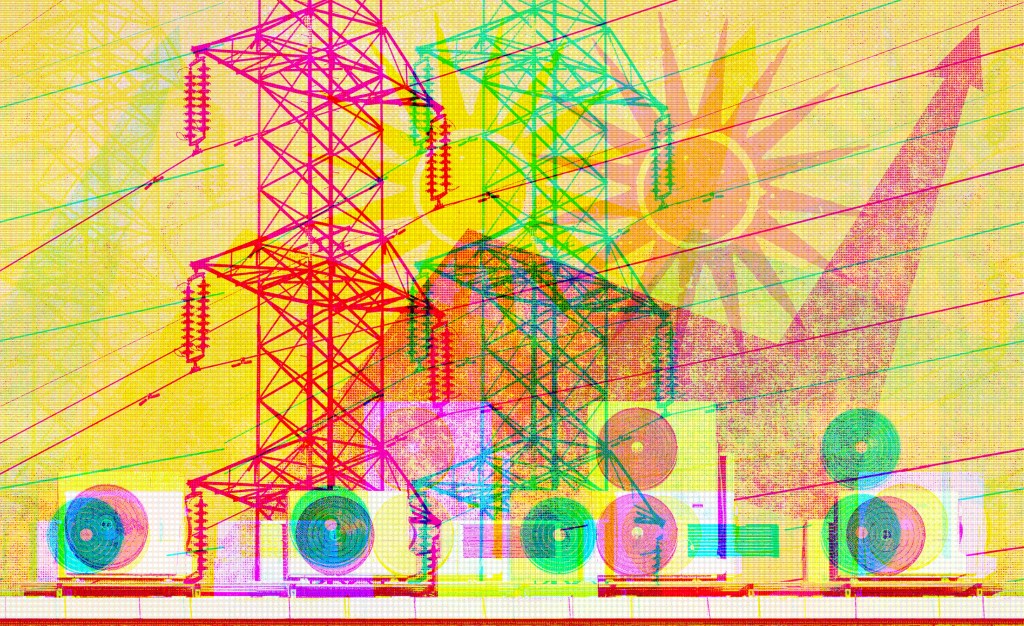
Between 2020 and 2025, U.S. electricity demand grew roughly 1.7% a year, more than ten times the annual pace utilities saw over the prior decade and a half, according to federal energy forecasts. Data centers, EV charging depots and reshored manufacturing plants are pulling more current through wires than the grid was ever designed to carry.
For founders building anything that touches physical infrastructure, real estate, logistics or manufacturing, this is not an abstract policy debate. It’s a supply chain risk. A transformer failure in the wrong substation can shut down a distribution center for days. Power reliability is quietly becoming a competitive advantage.
The challenge: Aging infrastructure meets rising demand
Much of the U.S. transmission network was built between the 1950s and 1980s, engineered for a slower-growing, less electrified economy. Layer today’s load onto yesterday’s steel and copper, and stress shows up fast: sagging conductors, overheated transformers, voltage drops during peak demand.
Add geography to the equation. Utility crews service lines strung across mountain passes, wetlands and dense urban cores, often well above 100 feet, exposed to wind, ice and heat that legacy equipment was never rated for. Every outage compounds: hospitals lose backup capacity, cold storage spoils inventory, data centers throttle compute as AI workloads push demand the grid was never designed to carry. The grid isn’t just old. It’s outmatched by the loads now riding on it.
Why maintenance is more critical than ever
Reactive maintenance, fixing equipment only after it fails, was tolerable when demand stayed flat. It isn’t anymore. A single unplanned outage can cost a mid-size manufacturer six figures in lost production, and repeated failures invite regulatory scrutiny utilities can’t afford.
Preventive maintenance flips the economics: Crews replace worn hardware on a schedule, before it strands a substation. It also protects people. Line workers hold some of the most physically demanding jobs in any industry, and a single fall or arc flash can end a career. Compliance bodies increasingly treat inspection cadence as a legal requirement, not a courtesy.
The role of advanced maintenance technologies
Utility maintenance has moved well past bucket trucks and paper inspection logs.
Insulated aerial platforms, drone inspections and modular repair rigs now let crews reach damaged conductors without de-energizing entire feeder lines. That single change cuts repair windows from days to hours.
To reduce downtime and protect crews working at extreme heights, utility providers increasingly rely on specialized electric line repair equipment built specifically for high-voltage transmission and distribution work. The same logic that keeps warehouse employees off ladders for hazardous tasks is pushing utilities toward remote, automated inspection wherever the terrain allows it.
Crews report real gains from this shift:
- Fewer full line shutdowns during routine repair work
- Lower injury rates for elevated tasks
- Faster mobilization to remote or storm-damaged sites
- Longer equipment lifespan through frequent, less invasive servicing
Scaling grid expansion with smarter solutions
Renewable generation adds complexity before it adds resilience. Solar farms and wind installations often sit far from existing substations, requiring new transmission runs into terrain utilities have rarely serviced. Data center power demand alone is projected to nearly triple by 2030, forcing utilities to expand capacity while keeping existing customers online.
Smarter deployment now centers on:
- Modular substations installed without months-long shutdowns
- Rural line extensions using rapid-deployment repair equipment instead of permanent crews
- Staged upgrades that isolate single circuits rather than whole grids
Business and economic implications
Reliable power underwrites everything from manufacturing schedules to server uptime. Every hour of outage ripples through payroll, spoiled inventory and missed shipping windows — the same triage businesses run through after any physical disruption.
Faster repair cycles also help utilities retain skilled linework crews. Turnover is expensive to replace and slow to train; equipment that reduces physical strain and risk keeps experienced workers on the job longer, itself a resilience asset during storm season or rapid buildout.
The future of grid maintenance
Predictive analytics are starting to flag failing transformers before they fail, using sensor data the same way manufacturers now forecast equipment breakdowns. Remote monitoring, satellite imagery and automated drone patrols are shrinking the gap between damage and dispatch.
Capital is following. Utilities and private investors are funding infrastructure at a pace not seen in decades, betting that reliability, not just capacity, will define which grids can support the next wave of electrified industry.
Reliability depends on innovation
Grid expansion without maintenance investment is a bet against physics. Every new data center, EV fleet and factory adds load to infrastructure that still ages on a fixed schedule.
Business leaders building near that grid should treat maintenance capacity, not just generation capacity, as a site-selection criterion. Ask utilities how fast they can restore power, not just how much they can supply. The company that plans around repair speed, not average uptime, will be the one still running when the next storm or surge hits.
Key Takeaways
- The rapid growth of data centers, EV charging and reshored manufacturing is putting unprecedented pressure on the power grid. Electricity demand is rising while much of the infrastructure carrying that power was built decades ago.
- For founders building anything that touches physical infrastructure, real estate, logistics or manufacturing, grid reliability is becoming a crucial concern.
- As aging equipment faces heavier loads, preventive maintenance and faster repair capabilities are becoming essential. Reliability will require smarter maintenance, faster response and better technology.
- Businesses planning new facilities or expanding operations should consider not only how much power a location can provide, but also how quickly that power can be restored when infrastructure fails.
Between 2020 and 2025, U.S. electricity demand grew roughly 1.7% a year, more than ten times the annual pace utilities saw over the prior decade and a half, according to federal energy forecasts. Data centers, EV charging depots and reshored manufacturing plants are pulling more current through wires than the grid was ever designed to carry.
For founders building anything that touches physical infrastructure, real estate, logistics or manufacturing, this is not an abstract policy debate. It’s a supply chain risk. A transformer failure in the wrong substation can shut down a distribution center for days. Power reliability is quietly becoming a competitive advantage.
The challenge: Aging infrastructure meets rising demand
Much of the U.S. transmission network was built between the 1950s and 1980s, engineered for a slower-growing, less electrified economy. Layer today’s load onto yesterday’s steel and copper, and stress shows up fast: sagging conductors, overheated transformers, voltage drops during peak demand.
