

In Washington state politics, it’s ostensibly a time of jubilation for Democrats. The party may pick up as many as nine seats in the state House, creating a supermajority unequaled in Olympia since the 1940s. The Senate, too, may add another Democratic member, with Thurston County Commissioner Carolina Mejia maintaining a slight lead over Sen. Drew MacEwen, R-Union, in the typically-red 35th District.
The victory celebration is likely to meet an abrupt end, however, once lawmakers focus on the bleak state budget work ahead of them.
A multibillion-dollar shortfall should temper any ambitious plans for new spending. The ruling party’s previous decisions to outspend annual revenues and drain reserves to the nation’s lowest levels has left Washington on a precarious fiscal cliff.
Lawmakers should also be mindful that voters, who just defended the state’s first-ever income tax at the ballot box, are likely to be fatigued by talk of further tax increases. Washington already has the nation’s fourth least competitive tax structure, the Tax Foundation, a think tank, announced this week.
It leaves Gov. Bob Ferguson and the Legislature’s budget writers to prioritize using existing revenues to fund core state government services, namely its K-12 education system.
The governor has already shown some necessary prudence. In negotiations this year with state workers’ unions, he insisted raises weren’t feasible given the current financial morass. Democratic legislators, in crafting the final version of the state’s next two year budget, will benefit from his leadership.
Which begs two questions: What will the Democrats do with their widening grip on power when the Legislature reconvenes in January? And how will a diminishing number of Republicans rebuild credibility as their party slides further into irrelevance?
For Democrats, there are three sobering takeaways. The first is that they’re largely not responsible for the widening majorities. The repudiation of Donald Trump’s presidency drove many to vote, a gift to down-ballot Democrats, exit polls showed.
That’s not to say individual candidates didn’t wage and win tough campaigns, some of which were Democrats choosing to take on their own party members. Rep. Gerry Pollet, representing the 46th District in North Seattle, survived a tough challenge from an AI industry-backed Democrat, for example.
But it was Trump — whose approval rating of just 25% in Washington is among the lowest in the nation, according to pollster Civiqs — that drove the widening majority.
Second, nowhere was it obvious during the campaigns that state Democrats were pining for a supermajority. Some within the party appear ready to fight their own leadership.
To wit: Rep. Cindy Ryu, a once-moderate Democrat and former president of the Shoreline Chamber of Commerce, pivoted left and unseated the pragmatic state Sen. Jesse Salomon this fall. Ryu has already advocated lowering the new millionaires tax threshold to earnings over $250,000, an unwise move that undermines her party’s credibility — and Ferguson’s vow to keep the deduction at $1 million — before a cent of the tax is even collected.
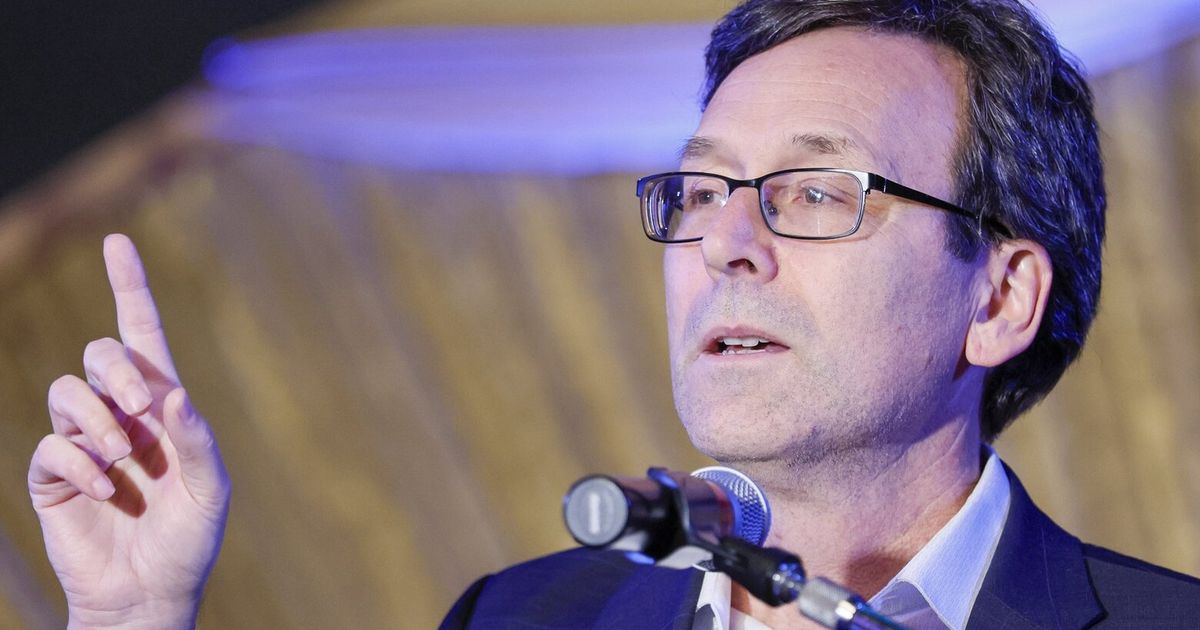
And third, a bigger caucus, freed of the accountability that comes with a robust opposition party, could lead lawmakers into an echo chamber of policymaking. Ferguson, for his part, threw necessary cold water on this approach at his first news conference following Tuesday’s election. He used Republicans’ control of Congress, and the blue tsunami that resulted, as a cautionary tale for his own party.
“So I think you see as an example what can go wrong when one party is in complete and total control,” he told reporters.
He urged legislative Democrats to avoid a bubble mentality, which this editorial board has also previously warned against.
“We have to stay open minded about how we’re reforming government, how we’re balancing our budget, how we’re doing things,” he said.
To be clear, legislative Democrats could use wider majorities to move the needle on pertinent social priorities away from the budget. Efforts to enshrine abortion rights in the Washington state Constitution, for example, have so far failed to get a floor vote, let alone the supermajority necessary to send the amendment to voters.
But on the budget, only tough choices lie ahead.
For Republicans, the task ahead is nothing short of a restoration of the brand that fully abandons any allegiance to Trump. As former state GOP chair Chris Vance said in an op-ed (“Fellow Republicans, Trump’s era is over. We need a new direction,” Nov. 5, Opinion), that means replacing firebrand GOP Chair Rep. Jim Walsh and his Trump-parroting style, and seeking candidates that can compete everywhere, including the Democratic-rich Puget Sound. There are plenty of examples in a state molded by legendary Republicans like Dan Evans and Sam Reed.
Campaign season will soon transition to governance. Ferguson’s first state budget will be released in mid-December. As he noted, the state’s income tax on millionaires won’t be collected until 2029. The governor has vowed to shore up the state’s finances in this bridge biennium that begins in 2027. Legislative leaders should commit to that crucial goal, too.
