

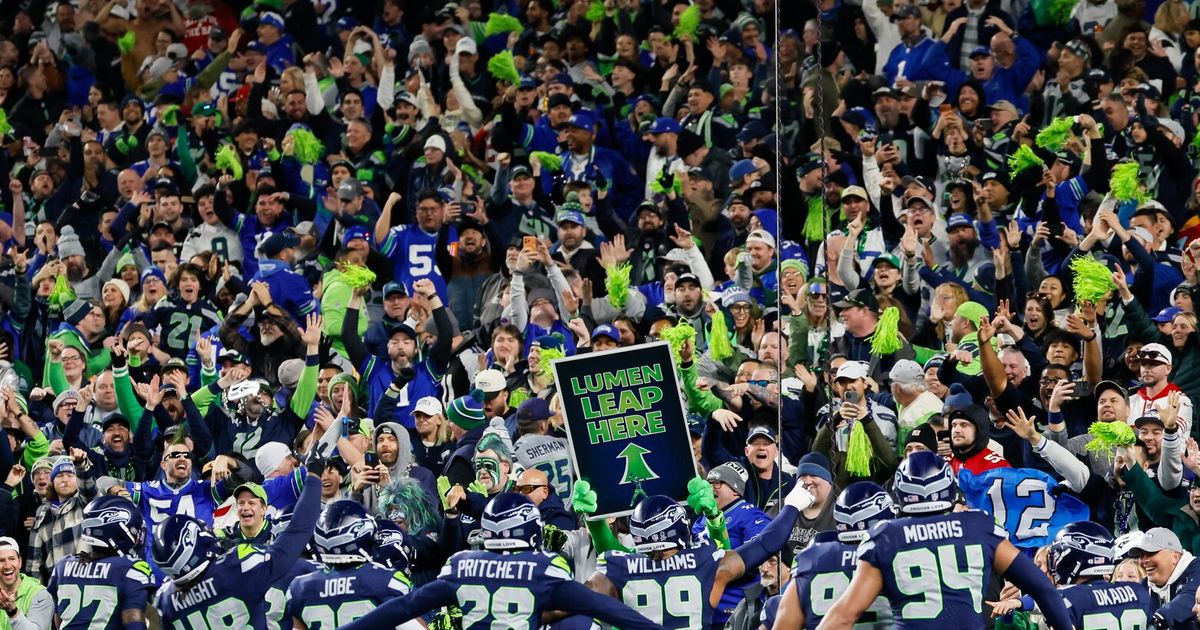
A fun fact about Seattle sports is that our loudest contribution didn’t come from a player, a coach or a front office executive. It came from the crowd.
In 2013, Seahawks fans set a Guinness World Record for crowd noise, registering 137.6 decibels — roughly the volume of a jet engine at takeoff. It wasn’t a gimmick. It wasn’t a stunt. It was simply Seattle being Seattle, doing what it has always done, standing and shouting for the Puget Sound.
As the Seahawks prepare to face the Rams for a third time this season with a Super Bowl berth on the line, that moment has arrived again.
I don’t believe home-field advantage is a marketing myth or psychological fluff. In Seattle, it is architectural, acoustic and deeply intentional. Opposing teams don’t just play the Seahawks; they play the stadium and the “12s” inside it.
That didn’t happen by accident. Paul Allen didn’t just save the Seahawks from leaving town; he reimagined what a football stadium could do. When Lumen Field was designed, Allen pushed for an open bowl and partial roof that would trap sound and reflect it directly toward — you guessed it — the opposing sideline. Engineers studied acoustics. Angles mattered. Materials mattered. The result was a stadium that doesn’t just host noise — it weaponizes it.
Allen understood something fundamental: Seattle fans were not background scenery but part of the competitive equation.
Anyone who has watched a visiting offense stumble through false starts here has seen that in action. Since the stadium opened, opposing teams have burned timeouts they didn’t want to burn, jumped early on crucial downs and abandoned carefully rehearsed cadence systems altogether. Crowd noise doesn’t show up in box scores, but it shows up in momentum, confusion and mistakes.
That’s never more true than in January because championship games aren’t won with style points. They’re tight, nervous and fragile. They turn on inches, seconds and missed assignments. Last weekend reminded us that conditions matter — sometimes it’s snow, sometimes it’s wind, sometimes it’s simply the environment overwhelming the visitors. In Seattle, the environment is us.
We may get rain this weekend. That’s fine. Rain is practically a civic accessory here. What matters is the sound — the sustained, disciplined kind of noise that swells on third down and never lets an opposing quarterback hear himself think.
This is where fans matter most. Not just when things are going well, but when the game tightens. When the Rams are trying to settle in. When they’re backed up near their own end zone. When they’re facing third-and-long and desperately want a clean snap count. Those are the moments Lumen Field was built for.
This isn’t about being rude or reckless. It’s about being present in the age of distraction. It’s about nearly 70,000 people understanding the assignment and committing to it together. Stand when the defense is on the field. Stay loud between plays. Reload after big moments instead of exhaling. Seattle fans have earned their reputation through years of consistency. But reputations don’t win championships. Participation does. This is a new game, a familiar rival and a chance to honor a vision that treated Seattle Sound as advantageous as New England sleet or thin Rocky Mountain air.
Allen gave this city a stadium designed to magnify belief. He trusted Seattle to fill it with something meaningful. Every time the noise rolls back onto the field, that trust is repaid.
The players will do their jobs. The coaches will do theirs. The noise in the stands is up to us.
So, Los Angeles, beware, because Seattle doesn’t need weather to create a home-field storm. Our voices already know how to make one when we “Stand for the Sound.”
