
Close Menu
    National News Brief
    Friday, July 3
    • Home
    • Business
    • Lifestyle
    • Science
    • Technology
    • International
    • Arts & Entertainment
    • Sports
    National News Brief
    Home » Audacious mission to rescue NASA’s falling telescope has launched

    Audacious mission to rescue NASA’s falling telescope has launched

    Team_NationalNewsBriefBy Team_NationalNewsBriefJuly 3, 2026 Science No Comments3 Mins Read
    Share
    Facebook Twitter LinkedIn Pinterest Email


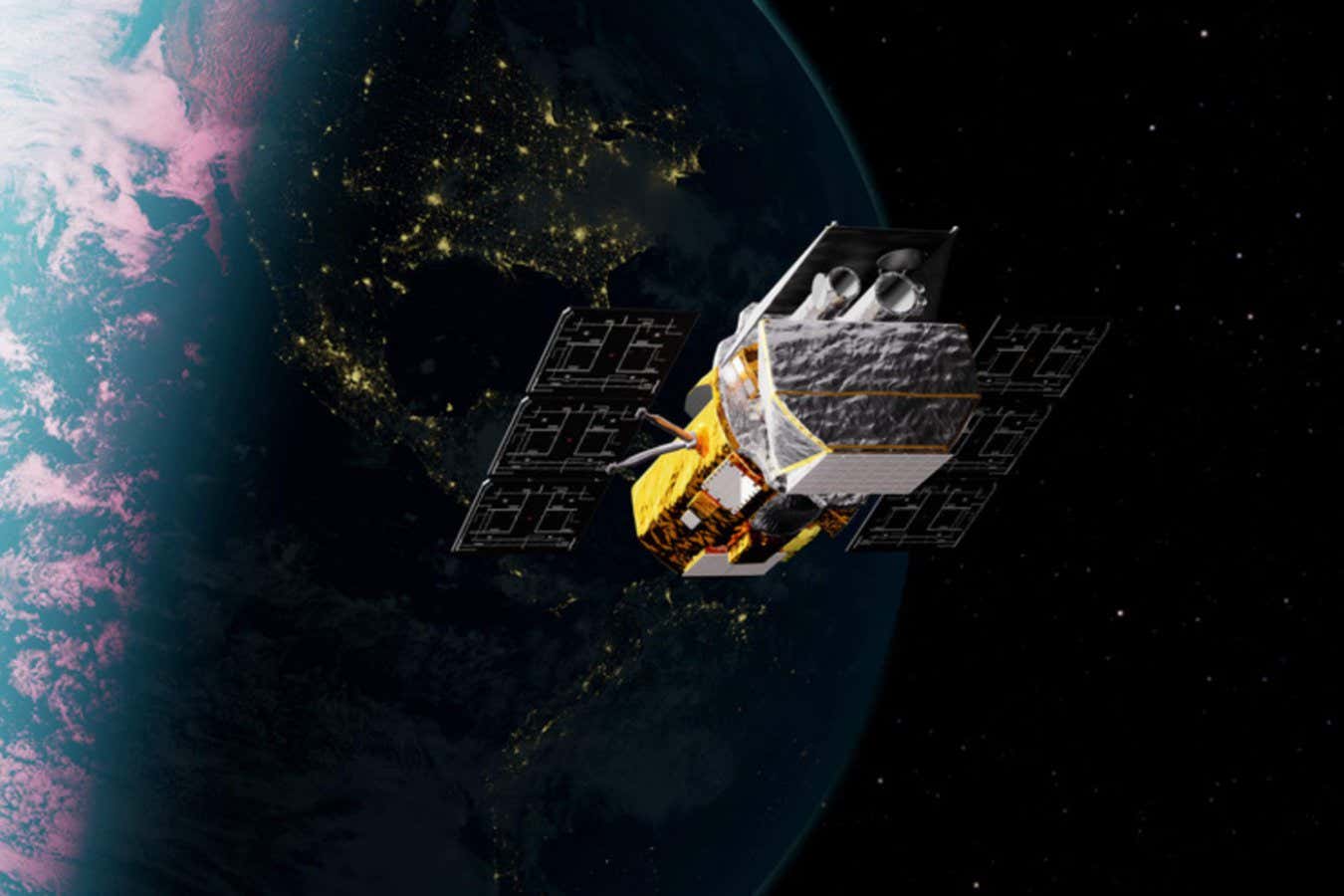
    NASA’s Neil Gehrels Swift Observatory

    NASA Goddard Space Flight Center

    One of NASA’s premier space telescopes is falling, and an audacious mission to rescue it has just begun. The Neil Gehrels Swift Observatory is months from dropping back to Earth, but if the rescue works, it could continue watching the sky for years to come.

    All satellites’ orbits eventually decay, and Swift is no exception. The outer edges of Earth’s atmosphere have been dragging it down since it launched in 2004: its initial orbit was at an altitude of about 600 kilometres from the ground, and now it’s only about 375 kilometres up. Its descent in recent years was faster than expected because of powerful solar flares depositing energy into the atmosphere, puffing it outwards and increasing drag on satellites.

    So if NASA wanted to keep Swift operating, the agency had few options. The one that won out was a proposal by Katalyst Space Technologies, a small start-up based in Arizona, to give the orbiting observatory a boost.

    The plan rests on a satellite called LINK, designed to grab Swift with a trio of robotic arms and pull it upward. At less than 2 metres tall, its main body is only about one-third the size of Swift, but it is flanked by immense sheets of solar panels to power its thrusters and grappling arms.

    LINK launched atop a Northrop Grumman Pegasus XL rocket on the morning of 3 July, in what is intended to be the final launch for Pegasus XL before it is retired. The spacecraft will now go through a few weeks of testing in space before it grabs Swift and slowly pushes upwards for about two months, letting go when it reaches its original 600-kilometre altitude. If all goes well, this manoeuvre will keep Swift operating for as much as a decade longer.

    Swift was originally built to study gamma-ray bursts, which are the brightest and most powerful explosions in the universe. Over the years, it has detected about 1800 of these blasts, and has also made crucial discoveries about other cosmic objects, ranging from comets and planets to supernovae and black holes.

    Boosting it will allow it to continue observing, but if it works, it will also be an important demonstration that it is possible to save a space telescope. “Swift wasn’t designed to be serviced,” said Ghonhee Lee, CEO of Katalyst, in a statement. “By demonstrating we can quickly and cost-effectively extend its lifetime, we’re creating a blueprint for servicing spacecraft that were never designed for on-orbit maintenance.” This could be a cost-effective way to extend the lifetimes of other satellites as well, in particular the Hubble Space Telescope, which is predicted to fall in the 2030s if it doesn’t get a boost.

    Topics:


    Source link

    Team_NationalNewsBrief
    • Website

    Keep Reading

    Orangutan mothers seem to plan playdates for their offspring

    Synthetic biology may finally be ready to solve life’s biggest mystery

    Evocative photos of Canadian Arctic win New Scientist Editors Award

    June heatwave may have killed around 20,000 people in Europe

    Random wobbles in time could finally solve gravity’s greatest mystery

    Why digital government records are so hard to preserve

    Add A Comment

    Comments are closed.

    Editors Picks

    Lily Allen Hints At Who ‘Madeline’ Is In Breakup Album

    October 27, 2025

    We can’t let another generation of kids slip into homelessness

    January 10, 2026

    Ancient human DNA found on cave art for the first time

    June 27, 2026

    Developers go their own way as jobs dry up

    August 5, 2025

    Use These ChatGPT Prompts to Boost Your Amazon Sales

    January 20, 2025
    Categories
    • Arts & Entertainment
    • Business
    • International
    • Latest News
    • Lifestyle
    • Opinions
    • Politics
    • Science
    • Sports
    • Technology
    • Top Stories
    • Trending News
    • World Economy
    About us

    Welcome to National News Brief, your one-stop destination for staying informed on the latest developments from around the globe. Our mission is to provide readers with up-to-the-minute coverage across a wide range of topics, ensuring you never miss out on the stories that matter most.

    At National News Brief, we cover World News, delivering accurate and insightful reports on global events and issues shaping the future. Our Tech News section keeps you informed about cutting-edge technologies, trends in AI, and innovations transforming industries. Stay ahead of the curve with updates on the World Economy, including financial markets, economic policies, and international trade.

    Editors Picks

    Cardi B Scores Five-Figure Victory Against Blogger Tasha K

    July 3, 2026

    Ukraine backers to vow major support at NATO summit

    July 3, 2026

    US heatwave raises alarms over AI data centre energy demands | Energy News

    July 3, 2026

    Five worst signings of NBA free agency

    July 3, 2026
    Categories
    • Arts & Entertainment
    • Business
    • International
    • Latest News
    • Lifestyle
    • Opinions
    • Politics
    • Science
    • Sports
    • Technology
    • Top Stories
    • Trending News
    • World Economy
    • Privacy Policy
    • Disclaimer
    • Terms and Conditions
    • About us
    • Contact us
    Copyright © 2024 Nationalnewsbrief.com All Rights Reserved.

    Type above and press Enter to search. Press Esc to cancel.