

Sam Forstag recently joined a text chain to better keep up with a few friends. There’s nothing unusual about that, except Forstag’s texting buddies are a group of Democratic candidates for the U.S. House who share one unusual characteristic: They have spent years in blue-collar jobs.
November’s election will test whether Democrats can address one of their greatest electoral challenges — winning over more working-class voters — by nominating more working-class candidates. Improving among voters without a four-year college degree is crucial to expanding Democrats’ prospects this year and beyond. Working-class white voters represent an outsized share of eligible voters in about two-thirds of the House seats, and most of the Senate seats, that Democrats hope to flip.
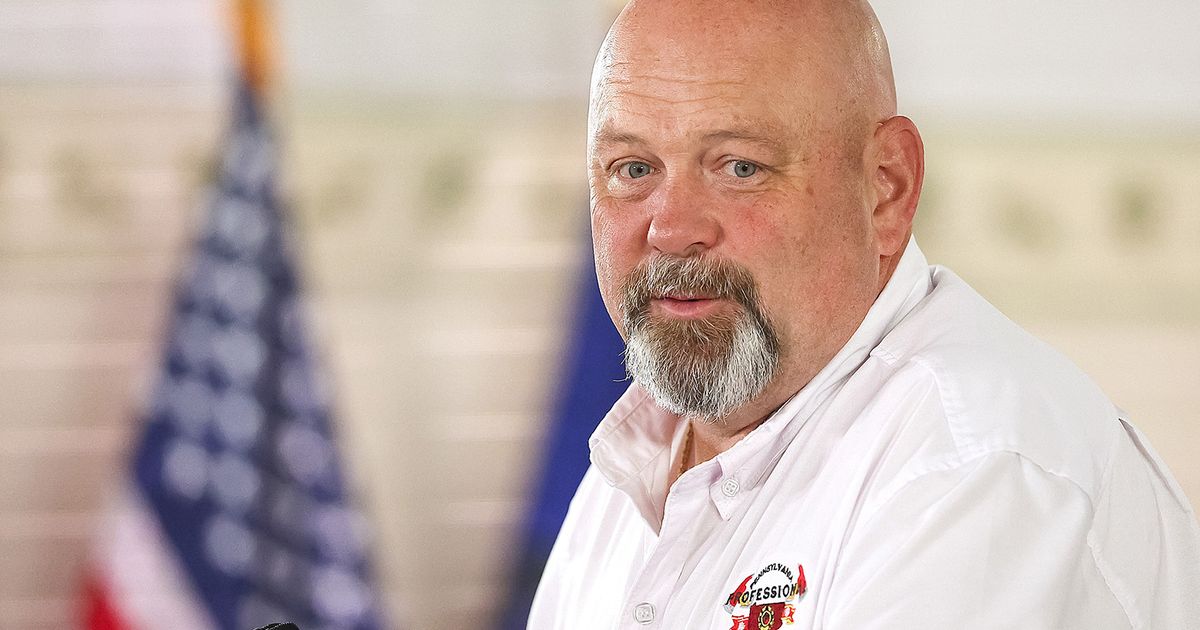
The “blue-collar brigade,” as the candidates on the text chain call themselves, includes Forstag, who works as a smokejumper fighting wildfires and is now running for an open House seat in Western Montana. Brian Poindexter is a union ironworker running against Republican Max Miller in a district south of Cleveland, Ohio. Bob Brooks, who is looking to unseat a first-term Republican in northeast Pennsylvania, worked for 20 years as a firefighter before becoming a union official.
Their common conviction, Forstag said in a recent interview, is that the best way to recover ground among working-class voters who have moved away from the party, especially in the President Donald Trump era, “is by running people from the groups we just lost who can speak to the problems of the people in them.”
Likewise, Poindexter told me, “The opportunity is presented by our perspective. We have that everyday average working person’s perspective. That gives us real strength and real credibility in our districts.”
Democrats this year have also nominated Rebecca Cooke, who has worked as a waitress, for a competitive House seat in Wisconsin and picked Troy Jackson, a former logger, as their Senate nominee against Republican Susan Collins in Maine (after oyster farmer Graham Platner was swamped by scandal). Democrats have also nominated a union electrician in a heavily Republican district in Missouri and a machinist in an equally longshot seat in Michigan. In Nebraska, the party has coalesced behind independent Senate candidate Dan Osborn, who spent years as a mechanic and union official.
Legislators with working-class backgrounds have always been “extremely rare,” usually not more than 2% of the total in the House and Senate, says Nicholas Carnes, a Duke University political scientist. Vastly more representatives and senators emerge from backgrounds in law, business or banking, according to the Brookings Institution’s Vital Statistics on Congress.
Noam Lupu, a Vanderbilt political scientist who co-authored a recent study on blue-collar candidates with Carnes, says one reason so few get elected to Congress is because they lack access to the fundraising networks available to rivals from tonier backgrounds. Several of this year’s blue-collar nominees initially struggled to attract attention from national party leaders, donors or constituency groups — a lament they often shared on their text chain.
But now that they have advanced to the general election, national Democrats see these candidates as essential to the party’s 2026 hopes. That’s the distinctive element of this year’s campaign, Carnes believes. While the number of working-class nominees isn’t unusually large, he says, what’s different is how many are running in high-profile races attracting national resources and support. “I feel like this idea is having a bit of a moment,” Carnes says. “It’s not that there are more of them. It’s that the party is paying more attention to them.”
All the blue-collar Democratic candidates (and Osborn) are centering their campaigns on high-octane economic populism, stressing ideas such as taxing the rich and expanding federal spending on health coverage. But plenty of Democrats have run on populist economic agendas for years without meaningfully regaining ground among non-college voters, especially white ones, drawn to conservative Republican positions on cultural issues, crime and immigration. The crucial question for the blue-collar Democrats is whether the dirt under their fingernails provides credibility with working-class voters unavailable to candidates who look most at home in a conference room.
The blue-collar candidates are leaning heavily into their work experiences. Poindexter’s ads show him hoisting up a girder; Forstag’s first ad begins with an image of him parachuting into a burning forest. “What’s different about me,” Forstag told me, “is I know what it’s like” to live on the wrong side of the nation’s widening income inequality.
In an extensive recent study, a collaborative of liberal groups concluded that such a working-class background provided candidates only a small boost with working-class voters. But any advantage could matter at a time when the country is divided as closely as it is now.
Since the emergence of the “Reagan Democrats” in the 1980s, no question has consumed Democrats more than how to recapture voters without a college degree. This year’s crop of blue-collar candidates represents the latest search for a solution. “Every job I’ve ever had, even before I was an ironworker, driving trucks, working in factories, everybody always said, ‘we need somebody like us in Washington,’ ” Poindexter told me.
If enough workers vote that way this fall in Ohio, Montana and the other places the blue-collar Democrats are contesting, their text chain will probably get a lot bigger with new nominees in 2028.
