

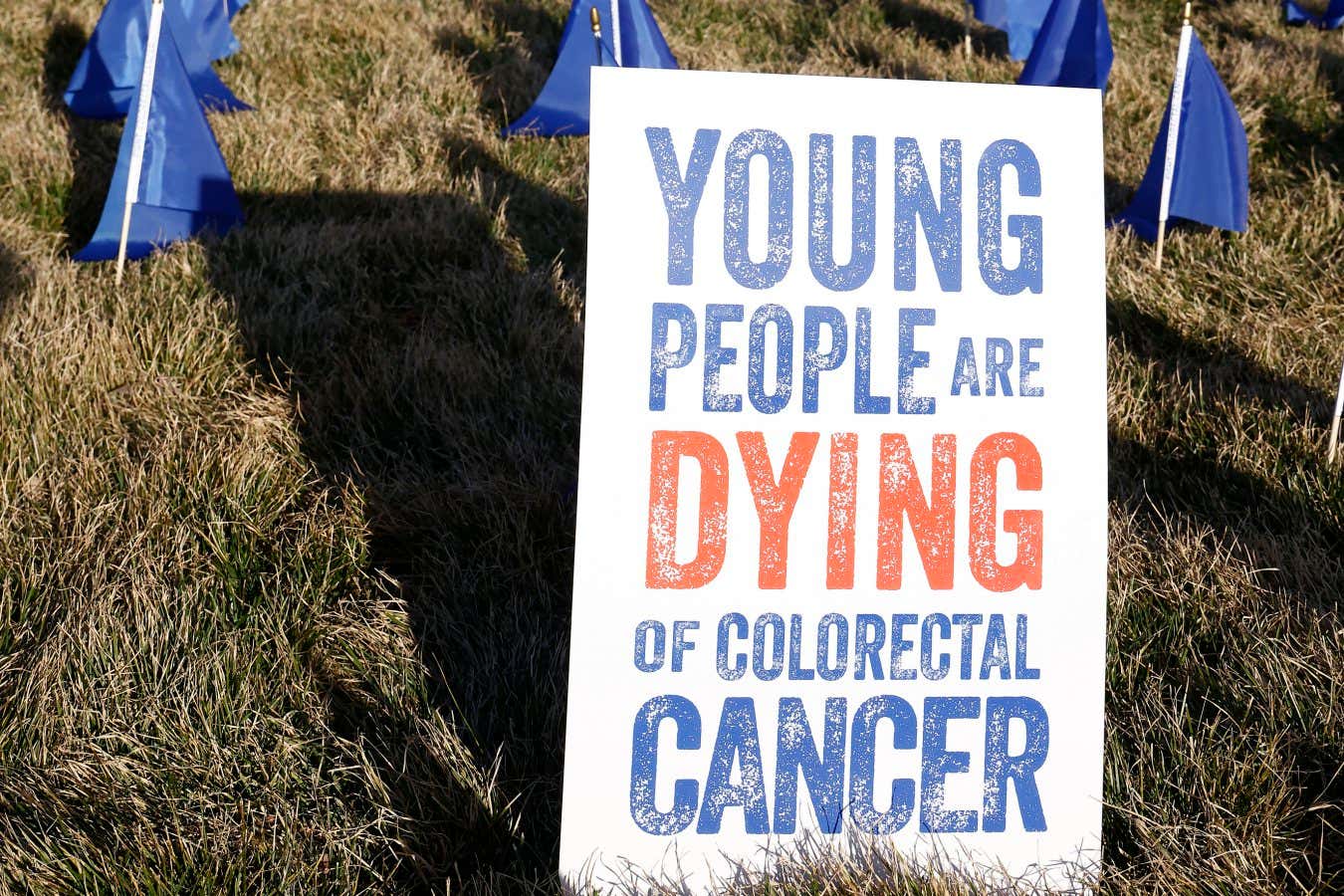
Colorectal, or bowel, cancer is one of the forms of the disease that are particularly on the rise among young people
Getty Images North America Copyright: Paul Morigi/Getty Images for Fight Colorectal Cancer
An attempt to uncover the reasons behind an increase in cancer in young people has raised more questions than answers. A study has found that rising rates of obesity might explain a small part of the increase, but it’s far from a complete explanation.
“Our main conclusion is that, although BMI [body mass index] is our best clue, much of the increases still remain unexplained,” says Montserrat Garcia-Closas at the Institute of Cancer Research (ICR) in London.
Around the world, a number of studies have found that rates of cancer in adults aged under 50 have been increasing. Since the 1990s, the rate of bowel cancer in particular has increased by around 50 per cent in a number of countries, including the US, Australia and Canada.
To try to find out why, Garcia-Closas and her colleagues have looked in detail at cancer trends in England and compared them with population trends for risk factors such as obesity. Based on data up to 2019, they found that 11 types of cancer are increasing in people aged 20 to 49, with the most common being breast and bowel cancer. Others include liver, kidney and pancreatic cancer, with the rate of increase ranging from 1 to 6 per cent per year.
For nine of these 11 cancers, the team found that rates were rising in people aged 50 or over as well, in many cases at a similar rate. “It suggests that there are some common causes underlying those increases,” says Garcia-Closas. The two exceptions were ovarian and bowel cancer.
Next, the team looked at behavioural factors that have been identified by the International Agency for Research on Cancer as being associated with these 11 cancers: drinking, smoking, physical inactivity, BMI, fibre intake and eating processed or red meat. “These are the ones that have the strongest evidence for these associations,” says Garcia-Closas.
But the researchers found that these risk factors have largely been either stable or improving over time. The only one that has been consistently getting worse is BMI, or excess weight. While obesity is a risk factor for a number of cancers, the rising incidence of obesity is very far from a complete explanation for the growing cancer rates in the young. For instance, only around 20 per cent of the increase in bowel cancers in young women could be explained by the increase in BMI over this period of time, says Garcia-Closas.
Lots of studies are trying to pin down the causes of these increases, says team member Marc Gunter at Imperial College London. “This is a very active area of research at the moment.” The possibilities include higher consumption of ultraprocessed foods, the “forever chemicals” known as PFAS and antibiotics disrupting gut microbiomes.
The researchers’ analysis suggests that the rise in cancers in young people is probably due to a combination of multiple factors, rather than a single cause, and they cannot rule out that changes in the rate of diagnosis have played a role.
The rise also needs to be seen in context, says team member Amy Berrington, also at the ICR. For instance, in England, only 3000 cases of bowel cancer are diagnosed in people aged 20 to 49 each year, so a 3 per cent increase in cases means around an extra 100 cases annually. “These relative trends in a disease that’s still rare means that the extra number of cases is still quite small,” says Berrington.
The study also left out cervical cancer, because the rates of cervical cancer are plummeting in women who were given the HPV vaccine in childhood.
Finally, Berrinton has been looking at more recent data on cancer rates, up to 2023. “The trends that were increasing have begun to flatten a bit, so there’s some better news coming already,” she says. What’s more, if rising rates of obesity are partially to blame for higher rates of cancers in young people, then the growing use of GLP-1 weight-loss drugs, like semaglutide, might help change the trends, says Gunter. “If obesity rates do start to decline because of the use of these drugs, that should have an effect on some of the obesity-related cancers in the future.”
Topics:
