

The animal kingdom abounds with examples of fatherhood. In some cases, dads simply mate, handing over the actual care of young ones to the mothers. But in others, animal fathers are extremely involved—they build nests, gather food and may even gestate their young.
In birds, for instance, males and females of 80 percent of species parent their young, says Karen McDonald, the STEM education program coordinator at the Smithsonian Environmental Research Center (SERC). In frogs and toads that parent, males take the lead about half the time.
Being a hands-on dad can have evolutionary benefits: In cases where males are doing the brooding and incubating or watching over fertilized eggs, “a lot of that has to do with being sure he’s the dad,” McDonald says. “He’s the one who gets to fertilize and to make sure that those are his offspring.”
On supporting science journalism
If you’re enjoying this article, consider supporting our award-winning journalism by subscribing. By purchasing a subscription you are helping to ensure the future of impactful stories about the discoveries and ideas shaping our world today.
In honor of Father’s Day, we compiled seven of the most whimsical and weird animal dads out there.
Male Djungarian hamsters act as “midwives”
Djungarian hamster dads are literally hands-on. The tiny hamster species, Phodopus campbelli, is found in Asia and features males that are known to serve as “midwives”: they use their paws to help pull their young from birthing mothers, journalist Elah Feder shared on Scientific American’s Science Quickly podcast last year.
“After the pups are born, the dad carries each one to a warm nest inside the burrow” and helps to keep the pups warm, Feder said.
Jacana bird fathers take their chicks under their wing
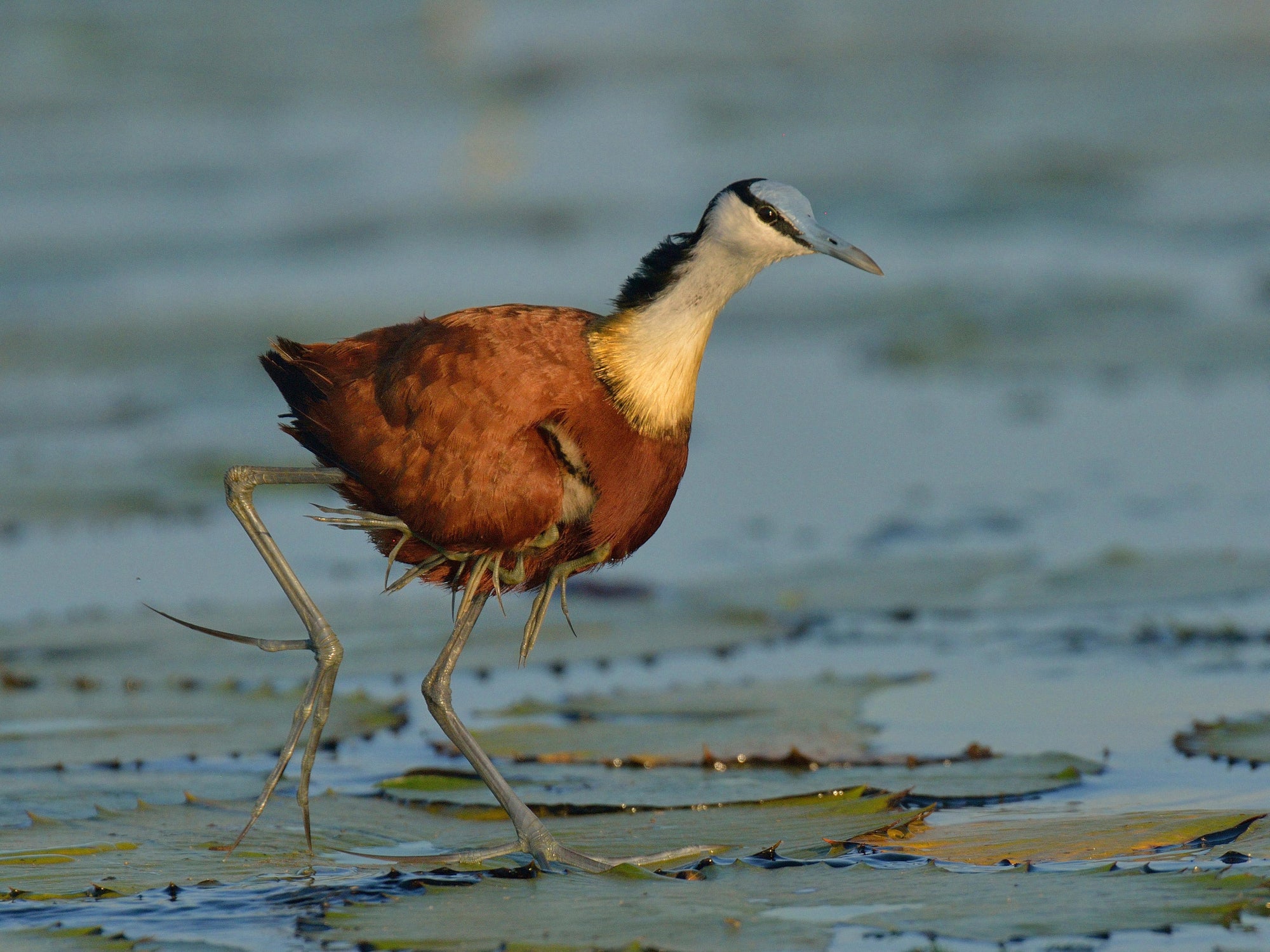
A male African jacana (Actophilornis africanus) carrying chicks under its wing.
Nature Picture Library/Alamy
Sometimes called “Jesus birds,” jacanas are known for their wide feet and ability to glide across lily pads. But these birds are also among nature’s most involved dads.
“They build a nest; they incubate the eggs; they transport the young under their wings,” McDonald says. This adaptation isn’t always as cute as it sounds—the jacana chicks’ feet stick out from the father’s wing rather unnervingly. Jacanas even have “little spurs” on their wings that the birds use to defend their chicks, McDonald adds.
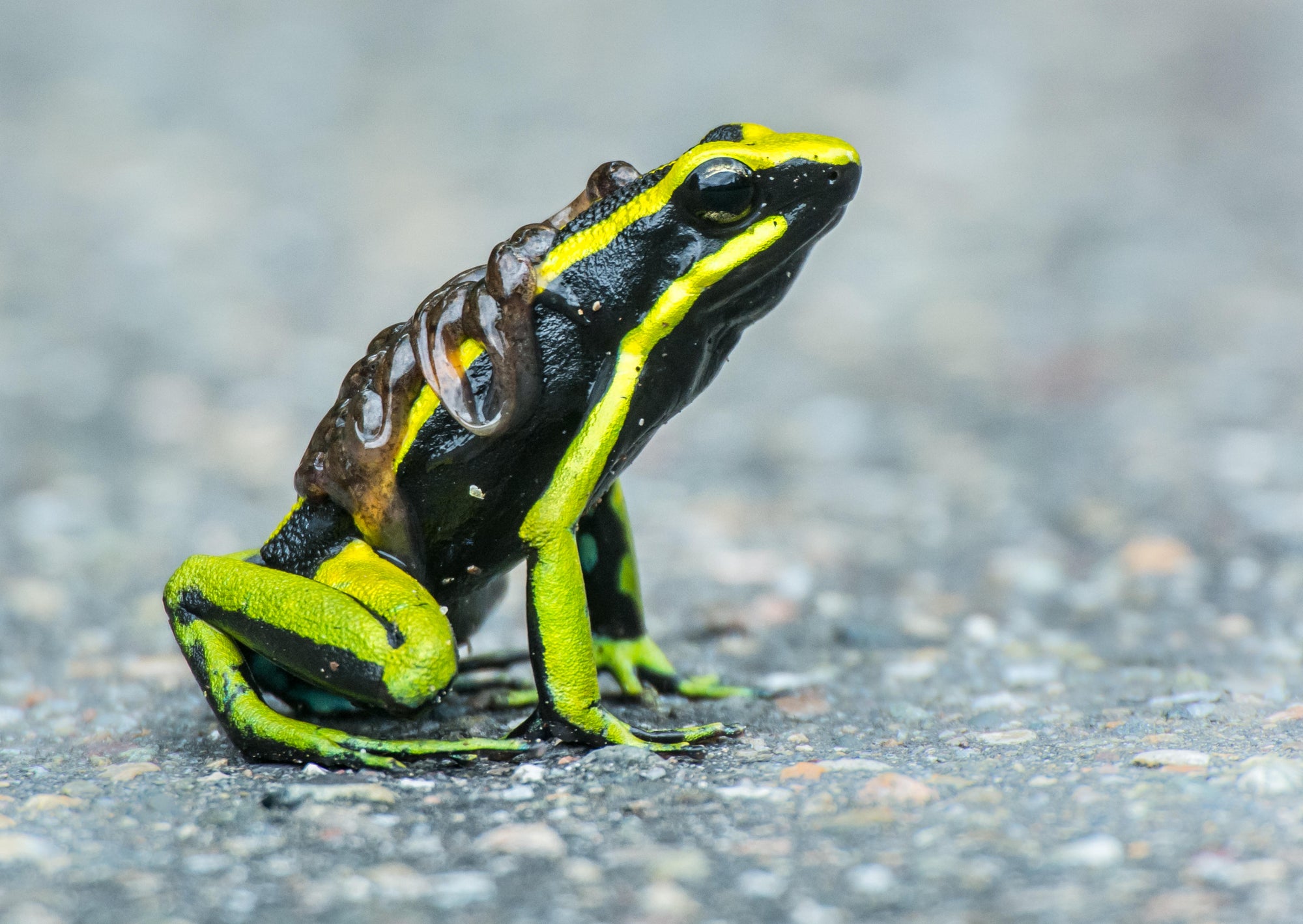
A three-striped poison frog (Ameerega trivittata) carrying tadpoles on his back.
Male poison dart frogs, like many other frogs, are known for transporting their offspring from land to water by carrying the tadpoles on their backs. But some poison dart frogs take things to a new level.
In 2019, as Scientific American reported at the time, researchers discovered that some poison frog dads may travel as far as 400 meters (or about a quarter of a mile) in an apparent search for ideal nursery grounds. That distance is about 10,000 times their body length.
Three-spined stickleback fish get crafty with their nests
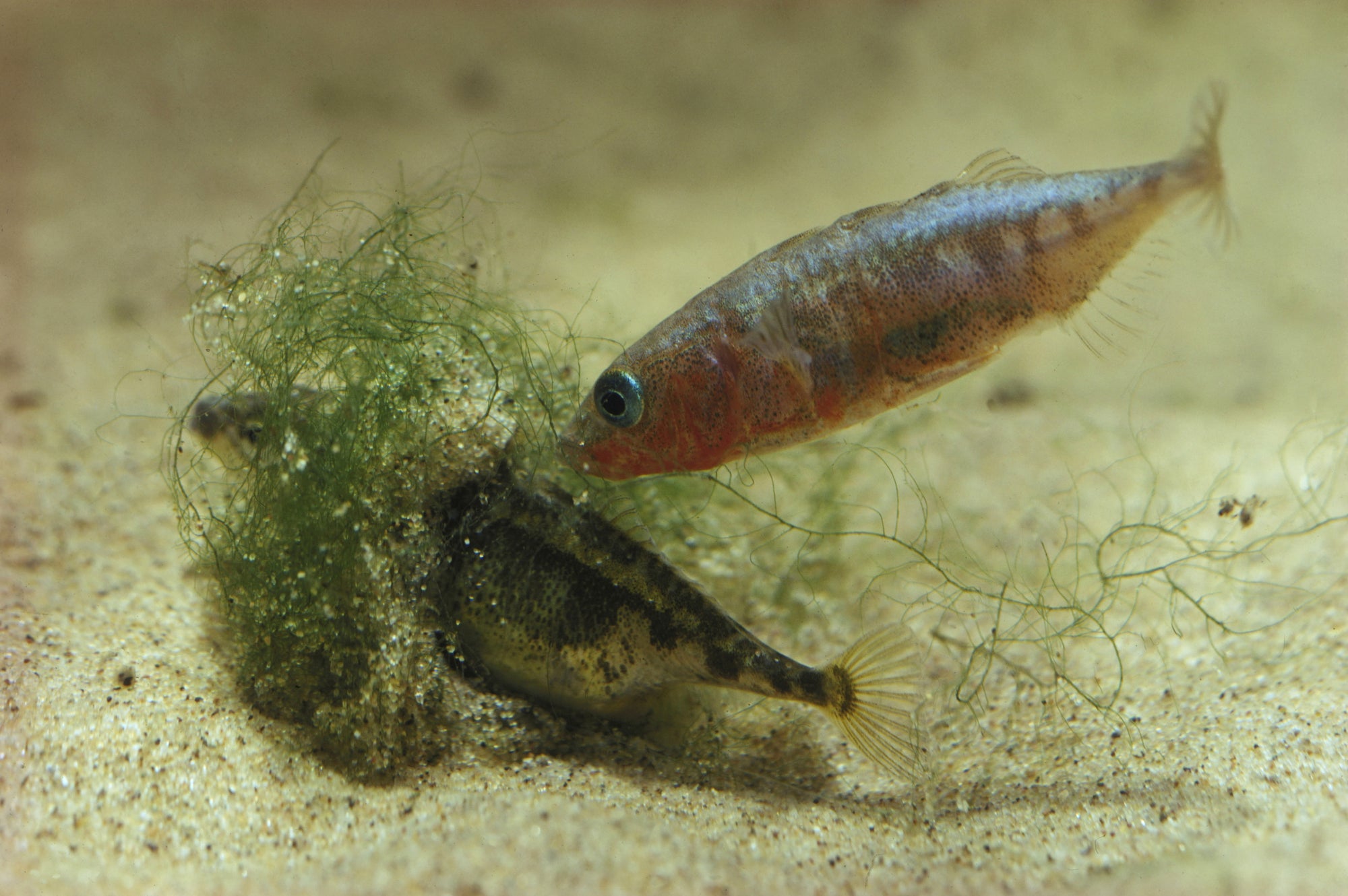
A three-spined stickleback (Gasterosteus aculeatus) male inducing female to spawn.
Oxford Scientific/Getty Images
This list wouldn’t be complete without the three-spined stickleback, a freshwater fish found across North America. Male sticklebacks shelter their offspring by building a “fun little tunnel” made out of plants, twigs and other material held together by a gluelike substance produced by the fish, McDonald says. After a female deposits her eggs into this tunnel, the male will fertilize them.
But dad duty doesn’t stop there. “He guards them and protects them and oxygenates the eggs in the little tunnel,” McDonald says. “Once the young hatch, if the fry go too far, he’ll actually pick them up in his mouth and put [them] back in the den,” she says.
Pipefish, like seahorses, gestate their young
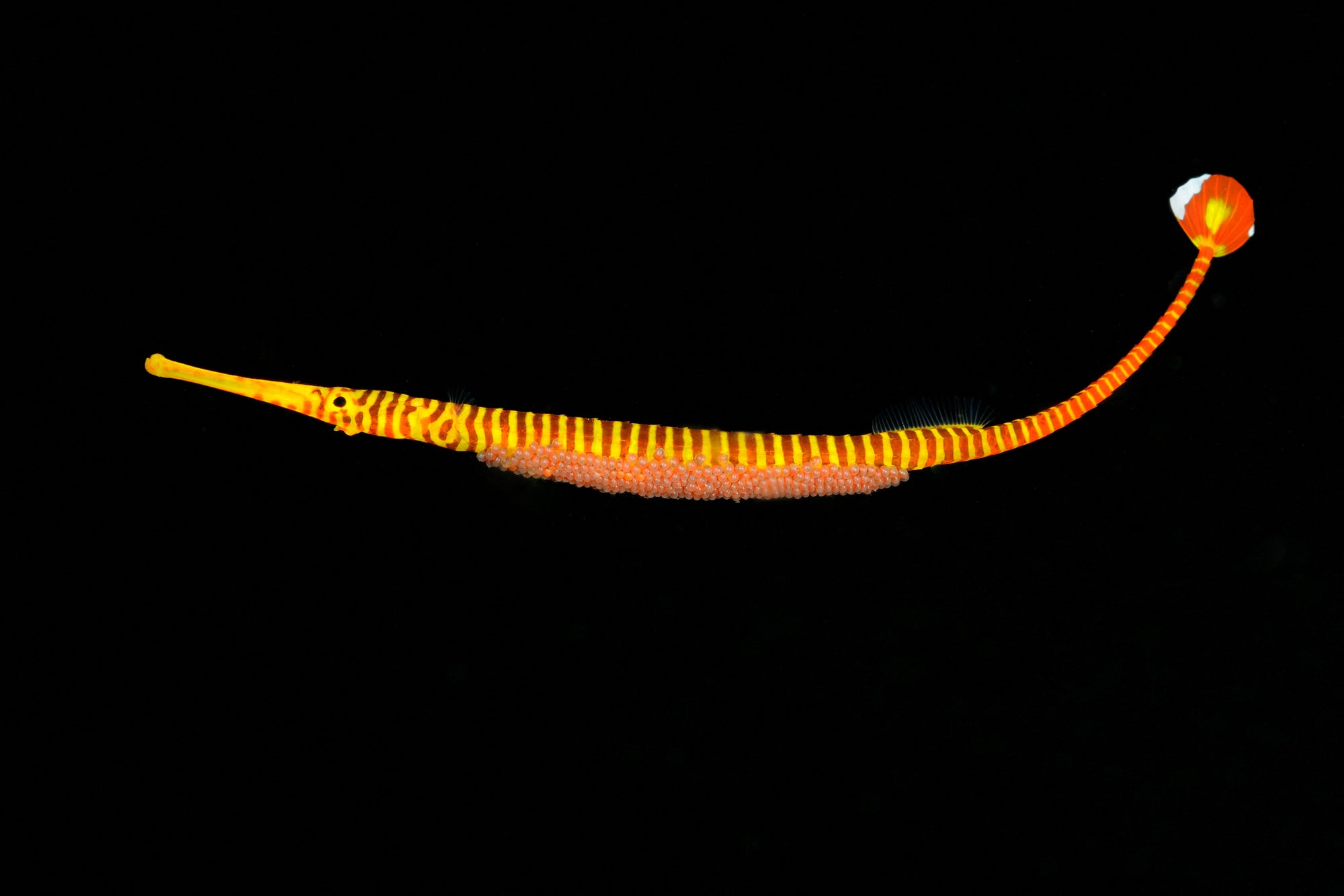
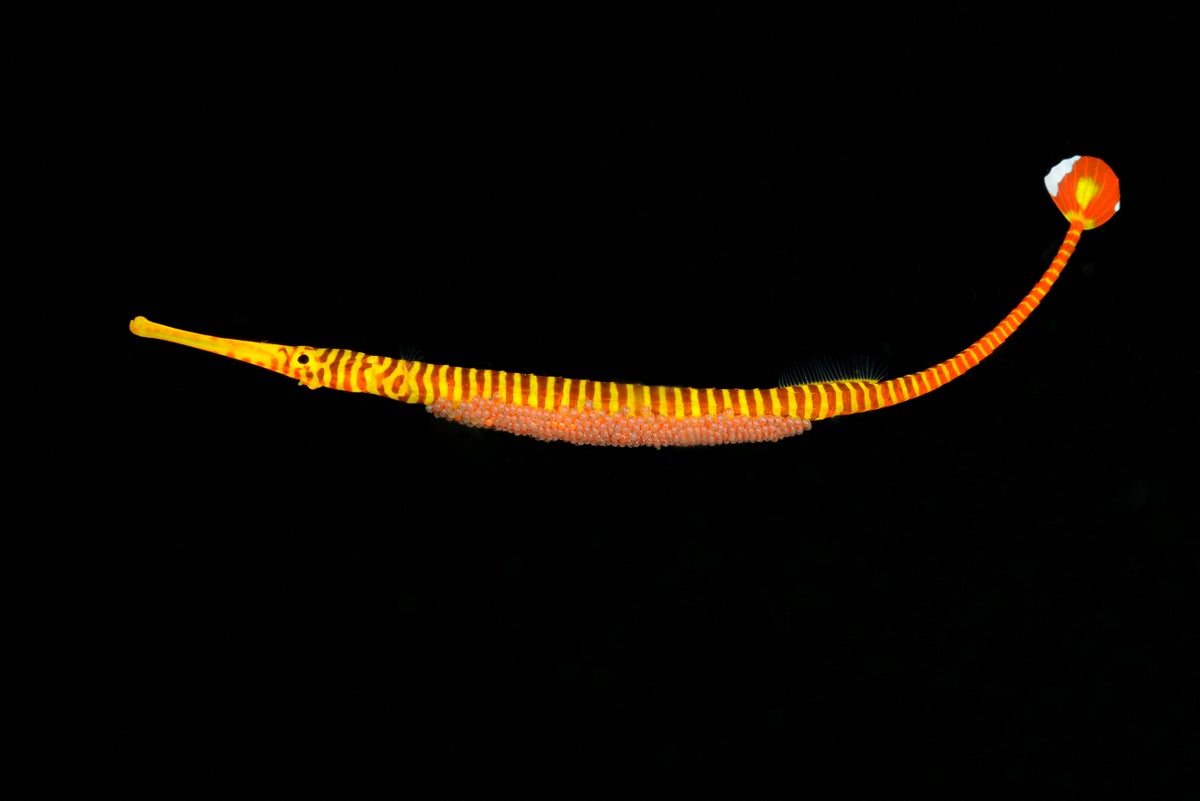
The yellow-banded pipefish (Dunckerocampus pessuliferus) with eggs attached to its belly.
Seahorses are among the most famous dads in the animal kingdom. Male seahorses are known for carrying, feeding and hatching eggs directly from a pouch on their body. But seahorses’ lesser-known—and much flatter—relative, the pipefish, does the exact same thing, McDonald explains.
“They care for the young, just like seahorses, but nobody thinks of them,” McDonald says. “Everybody thinks of seahorses.”
Eastern hellbenders are excellent caretakers, until they get hungry
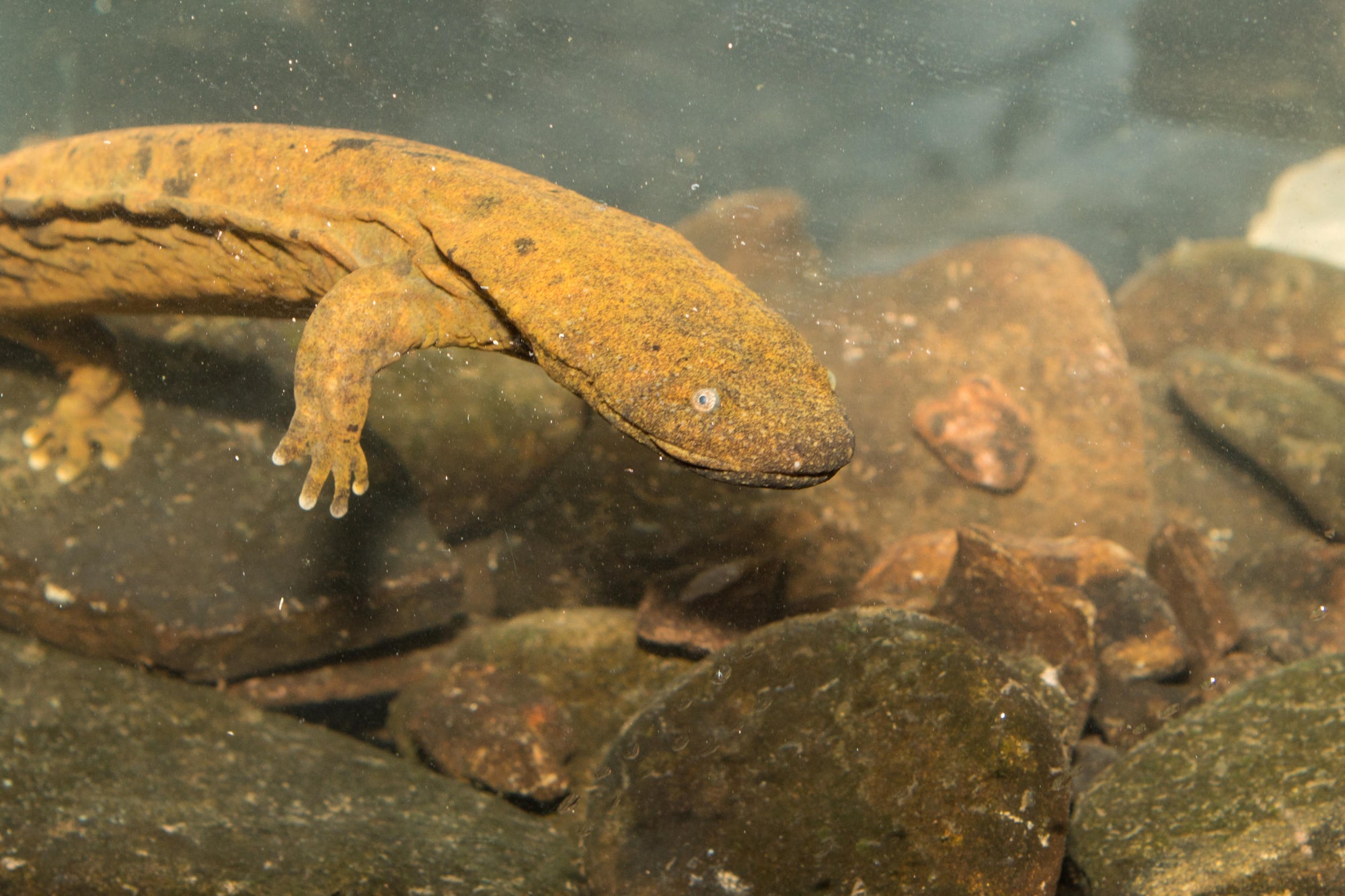
Eastern hellbender (Cryptobranchus alleganiensis alleganiensis).
North America’s largest salamander, the Eastern hellbender, can grow to about two feet in length. It’s typical for males in the subspecies to watch over the eggs. But according to recent research, some of those dads have resorted to eating their clutches, possibly in response to environmental stressors such as water pollution or vegetation loss, as Scientific American reported in 2023.
Darwin’s frog dads swallow their children—for safety
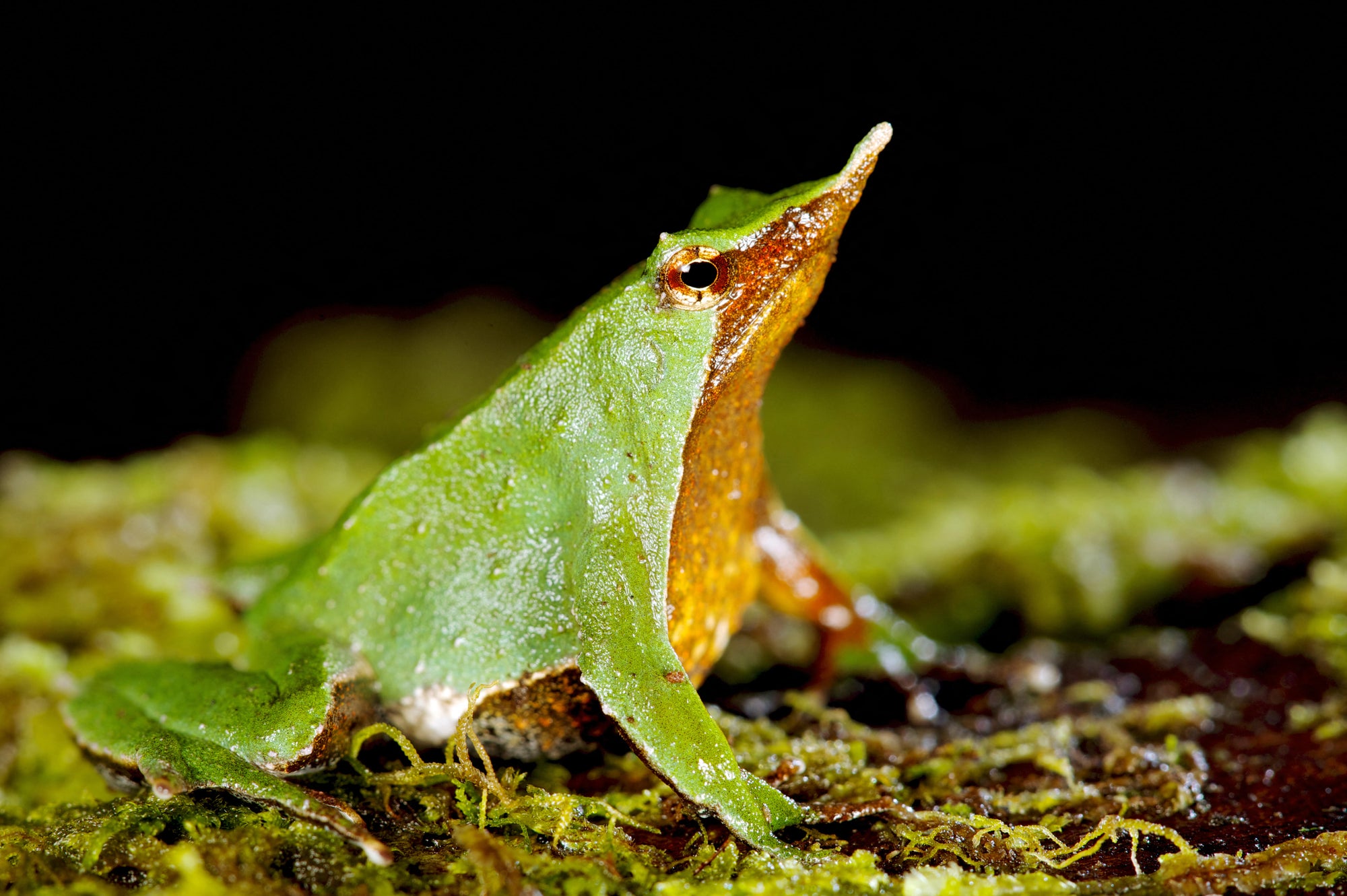
A male green Darwin’s frog (Rhinoderma darwinii) with young in the vocal pouch.
Nature Picture Library/Alamy
Yes, we put two frogs on this list. But Darwin’s frog (Rhinoderma darwinii) is too good to leave out. After the male of this species fertilizes its eggs, he “swallows” them, McDonald explains, and “carries them around in his vocal sac” until they’re ready to be released as juveniles.
“I love nature,” McDonald says.
It’s Time to Stand Up for Science
If you enjoyed this article, I’d like to ask for your support. Scientific American has served as an advocate for science and industry for 180 years, and right now may be the most critical moment in that two-century history.
I’ve been a Scientific American subscriber since I was 12 years old, and it helped shape the way I look at the world. SciAm always educates and delights me, and inspires a sense of awe for our vast, beautiful universe. I hope it does that for you, too.
If you subscribe to Scientific American, you help ensure that our coverage is centered on meaningful research and discovery; that we have the resources to report on the decisions that threaten labs across the U.S.; and that we support both budding and working scientists at a time when the value of science itself too often goes unrecognized.
In return, you get essential news, captivating podcasts, brilliant infographics, can’t-miss newsletters, must-watch videos, challenging games, and the science world’s best writing and reporting. You can even gift someone a subscription.
There has never been a more important time for us to stand up and show why science matters. I hope you’ll support us in that mission.
