

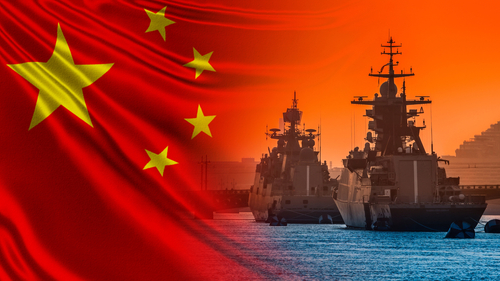
China has conducted one of its largest naval exercises around Taiwan without even bothering to announce it. More than 100 Chinese naval and coast guard vessels were reportedly operating throughout the western Pacific earlier this month, conducting exercises that included simulated attacks on military forces and cities, including those in Taiwan. The deployment was larger than Beijing’s formally announced Justice Mission 2025 exercises. Taiwan’s security officials are calling this a campaign of silent intimidation, but the more important issue is what China was actually practicing. Beijing is demonstrating that it can mobilize an enormous naval force, surround Taiwan, and potentially prevent outside military assistance without declaring war.
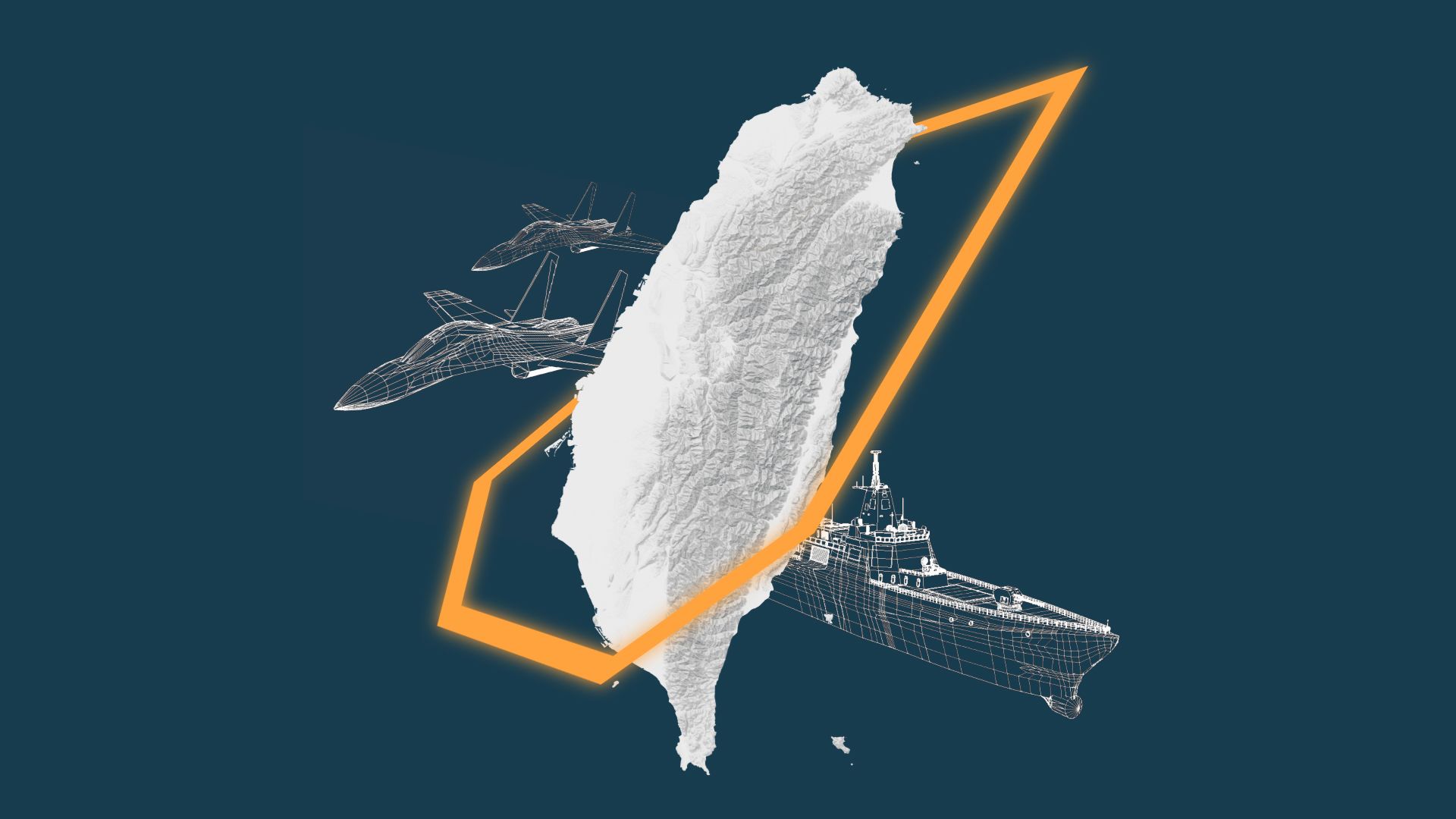
The exercises involved China’s Eastern, Northern, and Southern Theatre Commands operating together, along with the Liaoning aircraft carrier strike group. Taiwan’s defense minister, Wellington Koo, described the operations as area-denial drills, which means preventing an adversary from entering or operating within a particular region. A senior Taiwanese security official also reported that a Chinese submarine launched an intercontinental ballistic missile from the Yellow Sea into mainland China. Beijing maintains that its carrier exercises are routine and not directed at any particular country. Yet the scale and coordination of these operations suggest that China is developing the ability to conduct a blockade of Taiwan while simultaneously restricting American and allied military access to the western Pacific.
The confrontation over Taiwan cannot be understood without examining the economic relationship between China and the United States. China has spent decades building its manufacturing capacity while the West outsourced production and became increasingly dependent on Asian supply chains. Taiwan occupies an extraordinarily important position in advanced semiconductor manufacturing, and any disruption to its exports would have consequences for everything from automobiles and telecommunications to artificial intelligence and military equipment. A blockade does not need to destroy a single semiconductor factory to create an international economic crisis. Preventing commercial vessels from entering Taiwanese ports would immediately raise shipping insurance costs, disrupt deliveries, and force multinational corporations to reconsider their exposure to the region.
Washington continues treating China as though it can be economically isolated without consequences. The sanctions imposed on Russia demonstrated how quickly international finance can become a political weapon, and Beijing has been watching closely. China has been developing alternative payment arrangements, expanding its trade relationships, and reducing strategic dependencies where possible. The Chinese understand that the United States could attempt to weaponize the dollar-based financial system during a confrontation over Taiwan. They also understand that America’s enormous reliance on Asian manufacturing creates vulnerabilities of its own. Economic warfare works in both directions, regardless of what the politicians in Washington would like to believe.
The timing is also significant. President Donald Trump and President Xi Jinping are expected to meet at the APEC summit in Shenzhen next week. Xi has publicly called for peaceful reunification, while China continues demonstrating the military capabilities it could use if negotiations fail. Taiwan’s officials believe the absence of a formal announcement was deliberate, allowing Beijing to apply pressure without generating the international reaction that normally accompanies a major military exercise. That interpretation has not been independently established, but the strategic message is difficult to ignore. China is showing Washington what it can do while leaving the door open for diplomacy.
Our Economic Confidence Model has pointed to 2026 as a Panic Cycle year, with rising geopolitical volatility extending into 2027 and a major turning point approaching in 2029. The Taiwan situation has long been among the geopolitical risks that must be monitored as international tensions intensify. These cycles should not be interpreted as a declaration that China will invade Taiwan on a specific date. They warn of periods when the probability of confrontation increases and governments become more willing to test one another’s resolve. The danger is that military exercises become so routine that a genuine operation may be difficult to distinguish from another demonstration of force.
China does not necessarily need to launch an amphibious invasion to place Taiwan under enormous economic pressure. A naval blockade could interfere with energy imports, commercial shipping, and the movement of essential industrial components. Taiwan relies heavily on imported energy, making its economy particularly vulnerable to a prolonged disruption of maritime trade. Such an operation would also carry enormous risks for Beijing, including international sanctions, damage to Chinese exports, and the possibility of military confrontation with the United States and its allies. None of these outcomes would be economically painless.
By Friday, the number of Chinese vessels had reportedly declined to approximately 70, but Chinese naval formations remained active east of the Philippines, and Taiwanese officials reported continued elevated air activity. This was not a minor exercise involving a handful of ships. It was a coordinated deployment across a strategically critical region of the global economy. The politicians can continue debating whether China intends to invade Taiwan, but the more immediate question is whether Beijing is preparing to achieve its objectives without a conventional invasion at all. The international economy is so interconnected that a blockade of Taiwan could become a financial crisis long before the first shot is fired.
