

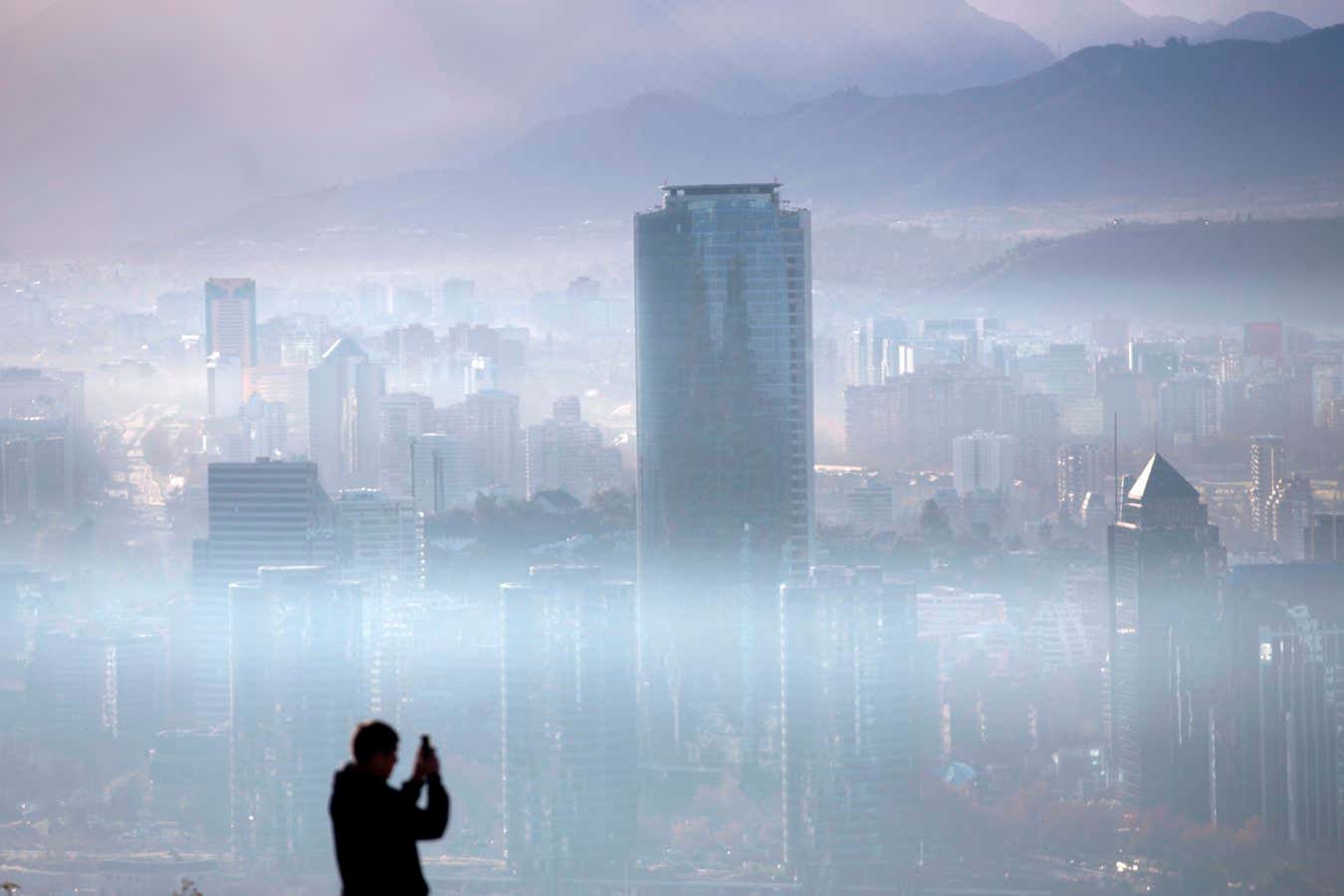
As smog clears worldwide, heatwaves are becoming more frequent
CLAUDIO REYES/AFP via Getty Images
Heatwaves have become more frequent as the world cleans up harmful aerosol pollution, unmasking more of the warming effects from greenhouse gases in the atmosphere. This warming influence is even greater in populated places, where there tends to be more air pollution.
“Reducing aerosol pollution is a public health imperative,” says Geeta Persad at the University of Texas at Austin. “But we need to recognise that this is going to reveal these unique risks that are going to be amplified where people live.”
Aerosol pollution, which mainly comes from burning fossil fuels, typically has an opposite effect to greenhouse gases. While gases like carbon dioxide trap heat in the atmosphere, aerosols lower temperatures because they reflect sunlight away from the planet, either directly or by changing clouds. By some estimates, aerosol pollution has masked as much as half of the warming effect of greenhouse gases to date.
This means efforts to clean up air pollution to benefit human health come with a warming effect on the climate. Until now, however, it wasn’t clear how the change in aerosols affected heat in populated areas specifically.
To get a spatially specific view across the world, Persad and her colleagues used a climate model to test how aerosols affect the frequency of heatwaves on land, both historically and in future projections. They defined a heatwave as three consecutive days that would have been among the hottest 10 per cent of days for that part of the year in a pre-industrial climate.
For most of the 20th century, they found aerosols were slowing down the increase in heatwave frequency caused by rising greenhouse gases. But after 2005, this dynamic flipped, and declines in aerosols began to accelerate the increase in heatwaves across the planet by about two days per decade.
Moreover, the researchers found aerosols have a greater influence on the frequency of heatwaves in populated places than on land in general – with the reduction in aerosol concentration mattering more than twice as much as the increase in greenhouse gas concentrations in some areas. “When you look at a spatial map of where concentrations of aerosols are in the atmosphere, it’s where people are,” says Persad.
Under a scenario where greenhouse gas emissions continue to increase to very high levels and aerosols decline at a moderate pace, the team projected dramatic increases in the number of heatwaves, with the average number of days with heatwaves in populated areas increasing from about 40 per year to over 110 days per year by 2080. “It implies changes in heatwave risk that are going to require fundamental changes in how many of these places operate,” says Persad.
“The uniqueness of this study is that it shows the daily timescale statistics. You can actually feel these aerosol reductions in different parts of the globe,” says Shiv Priyam Raghuraman at the University of Illinois Urbana-Champaign, who wasn’t involved in the analysis. He points out, however, that the results come from just a single model under a worst-case greenhouse gas emissions scenario.
“The findings are compelling and add to a growing body of literature on how aerosols can have out-sized impacts on climate extremes,” says Daniel Westervelt at Columbia University in New York. “It will be interesting to see how these results vary across other models and if we can detect them in historical observations.”
Another major uncertainty is how aerosol concentrations will change in the years to come, says Persad. “In the current generation of future emissions scenarios, there is a huge range of what is going to happen with aerosols over the next 30 years,” she says.
Topics:
