

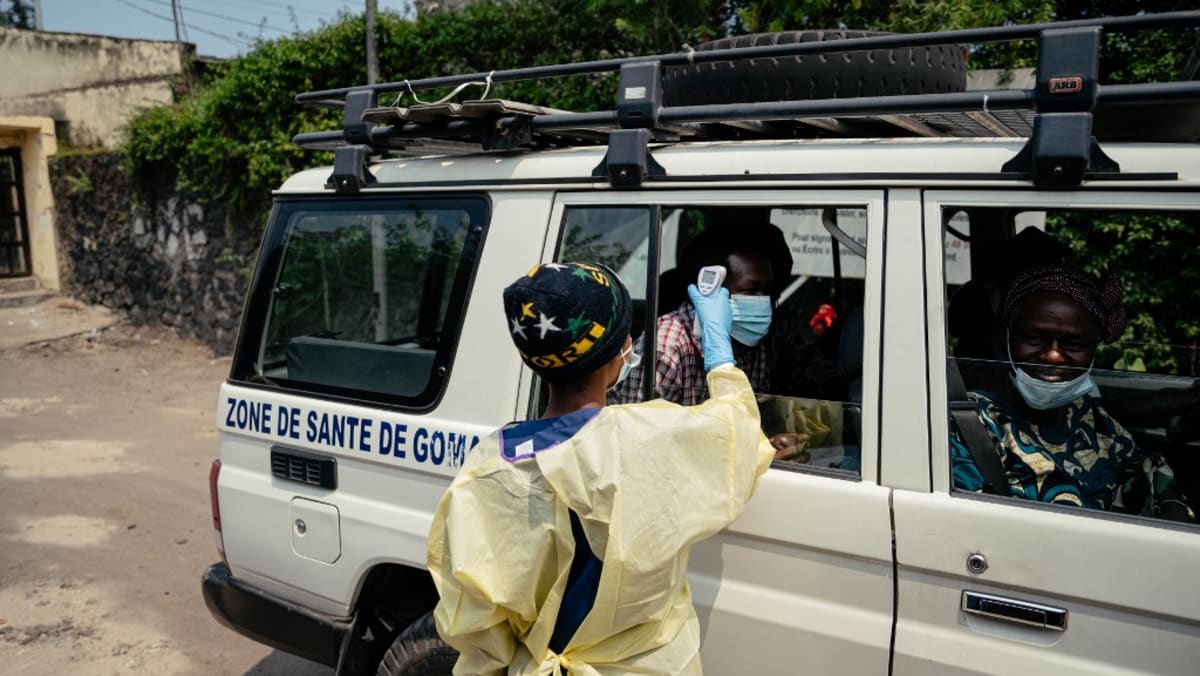
SINGAPORE: A rare strain of the Ebola virus with no approved vaccine has triggered a public health emergency of international concern, with the World Health Organization (WHO) chief warning that he is “deeply concerned about the scale and speed” of its spread across DR Congo and Uganda.
The current outbreak involves the Bundibugyo strain, named after a province in Uganda.
More than 500 cases and 131 suspected deaths have been reported so far.
While Ebola outbreaks have historically been contained within Africa, the scale and geographic spread of this one are prompting countries, including in Asia, to step up vigilance.
Here’s what we know about Ebola and why this outbreak is drawing global attention.
What is Ebola?
Ebola is a severe and often fatal disease caused by the Ebola virus. It spreads through direct contact with the blood and bodily fluids of an infected person, or through contact with contaminated surfaces.
In some cases, transmission can also occur through contact with infected animals and bushmeat.
Symptoms typically begin suddenly, and include fever, fatigue, malaise, muscle pain and headache. As the disease progresses, patients may develop vomiting, diarrhoea, abdominal pain, unexplained bleeding and organ failure.
Importantly, infected individuals are not contagious until symptoms appear. The incubation period for Ebola ranges from two to 21 days.
Why is the Bundibugyo strain significant?
The Bundibugyo strain is rare, with only two previous outbreaks recorded – in 2007-2008 and in 2012.
It has a mortality rate of 30 to 40 per cent, much lower than the Zaire strain, which causes death in up to 90 per cent of infected people, according to a study published in 2024.
However, experts said the current concern lies elsewhere. There are no approved vaccines or drugs specifically for the Bundibugyo strain.
“This is the third Bundabugio Ebola virus disease outbreak ever, and it is a species that we haven’t seen that much,” said Dr Nahid Bhadelia, founding director of Boston University’s Center on Emerging Infectious Diseases.
“That means we don’t have as much clinical experience, but also because it hasn’t been that common, there haven’t been as many investments in vaccines and therapeutics.”
She added that even if candidate vaccines are developed, they will take time to test, approve and deploy.
Why are healthcare systems under strain?
The outbreak is also proving difficult to track. Cases are spread across remote and, in some instances, conflict-affected areas, where access to healthcare and testing is limited.
Early detection has been challenging. Initial tests returned negative results in some cases, partly because they were not designed to detect the Bundibugyo strain. Health officials said the outbreak may have circulated undetected for weeks before it was identified.
At the same time, overlapping outbreaks of endemic diseases such as malaria and cholera have made it harder to identify Ebola cases quickly.
Cuts to international aid and public health funding have also weakened surveillance and response capacity on the ground, experts said, even as fresh funding is now being mobilised.
“Funding for things like malaria medications, bed nets and other sanitation programmes has gone down. That means other endemic diseases, like malaria and cholera, have increased in the area,” Dr Bhadelia told CNA.
“So, if Ebola is kind of like a needle in a haystack, and the haystack of endemic infectious diseases has gone up, it makes it harder to find the Ebola cases out of that.”
