

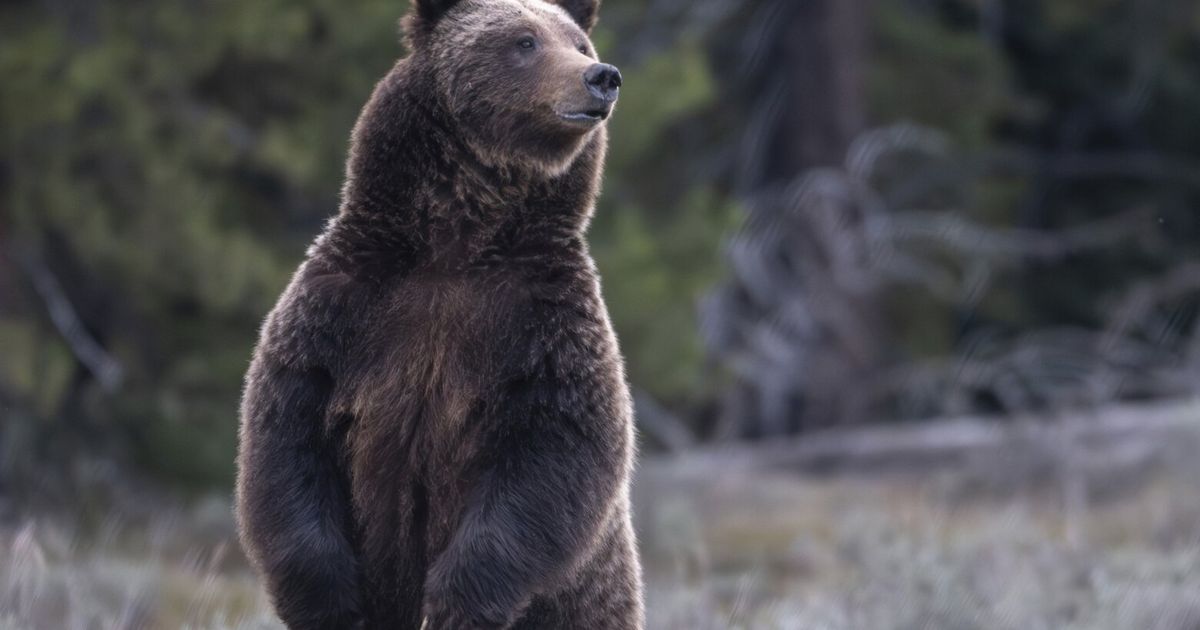
The Endangered Species Act is one of the most effective conservation tools ever conceived. It’s credited with pulling bald eagles, peregrine falcons and gray whales back from the brink, and plays an essential role in ensuring the conservation of wildlife despite serious survival challenges. This is what makes it so galling that the ESA and the species it protects are under threat. That includes the “Great American Bear.”
Yellowstone National Park experienced “abnormally dry” to “severe drought” conditions this year, leaving grizzly bears with scarce foods needed for survival over a long winter. For this reason, grizzly bears ventured beyond park boundaries in search of food — only to be killed in record numbers.
U.S. Geological Survey data show 73 Yellowstone-area grizzly bears were killed in 2024 and 2025, mostly a result of preventable conflicts with domestic farm animals, fatal encounters with elk hunters (who didn’t carry bear spray) or bears’ presence in human-dominated areas. Fourteen bears’ deaths are “under investigation.”
Two consecutive years of record mortality underscore the need for stronger, not lesser, protections. Yet some in Congress are again threatening to eliminate ESA safeguards for grizzly bears through bills and riders attached to spending bills. On top of plans to delist Yellowstone’s bears, the U.S. House of Representatives also planted a “poison pill” rider onto a must-pass appropriations bill to prevent the federal government from effectively creating an experimental population in the North Cascades.
Removing such defenses defies science, disregards public opinion and sidesteps humane solutions. Some Republican lawmakers even want to prevent citizens from seeking protection for imperiled species in the courts. In this regard, Congress set a troubling precedent in 2011 when it stripped Northern Rocky Mountain wolves of their ESA protections and then barred judicial review.
Grizzly bears are a particularly extinction-prone species, with one of the slowest reproductive rates of any animal. It takes 10 years for a female to replace herself in the population. Western grizzly populations remain tiny and isolated, limiting genetic diversity and making bears more vulnerable to disease, droughts and wildfires.
Grizzly bears are valuable. Tourists flock from around the world to view these majestic animals, generating billions of dollars annually for communities in the grizzly bear range states of Idaho, Montana and Wyoming. Yellowstone’s bears alone are worth millions of dollars annually, according to a 2025 study by social scientists employed by the U.S. government. This staggering income stream greatly surpasses the limited returns from selling trophy-hunting tags.
Polls consistently show strong public support for keeping grizzly bears protected. A January 2025 national survey revealed that supermajorities — including rural residents of Idaho, Montana and Wyoming, as well as conservatives, hunters, ranchers and farmers — favor continued federal protections under the ESA. Americans don’t want grizzly bears to die in trophy hunts that 76% of voters oppose.
Compelling cultural and historical arguments deserve greater weight in policymaking circles, too. Grizzly bears are sacred for many Indigenous nations, and the Grizzly Bear Treaty — signed by over 170 First Nations and tribes — opposes delisting and calls for co-management.
Proponents of delisting claim it would enable states to better manage human-bear conflicts — essentially by opening trophy-hunting seasons. But randomly killing bears doesn’t address the root problems driving conflicts. Bears are drawn to unsecured garbage, livestock carcasses, fruit trees, bees and chickens.
The ESA passed in 1973 with bipartisan support because Americans agreed that letting wild species vanish was unacceptable. That’s still true today. Grizzly bears are just a few seasons away from extinction if aggressive state-sponsored killing commences. Stripping their protections now risks decades of progress and millions, if not billions, of dollars in conservation investments.
Protecting grizzly bears is about more than science alone, however; it is also about values, ethics and legacy. Our grandchildren deserve to inherit a world where the Great American Bear roams freely and safely in range states. And Congress should do what it takes to give it to them.
