

News coverage of wildfires and floods raging worldwide and with fuel prices fluctuating wildly, underscore the urgency of climate change and vulnerability of the global economy to one commodity — no less two straits in the Middle East.
With diesel prices exceeding $7 per gallon in Washington, small businesses, farmers, fisherman and truckers are reeling with economic uncertainty — driving up the cost for ports and businesses to move people and goods. The Port of Seattle operates the region’s largest airport and serves as home port for the Alaskan cruise and fishing fleets. In partnership with the Port of Tacoma, the Northwest Seaport Alliance also handles approximately 3 million cargo containers annually.
With 80% of global trade transacted by water, and 10 million to 12 million people flying daily, the maritime and aviation industries together emit approximately 6% of global greenhouse gas emissions — roughly twice Japan’s annual contribution. While the Port of Seattle has reduced its own GHG emissions by 44% since 2005, these heavy industries are the hardest to decarbonize and their emissions will continue to increase unless their engines run on cleaner fuels.
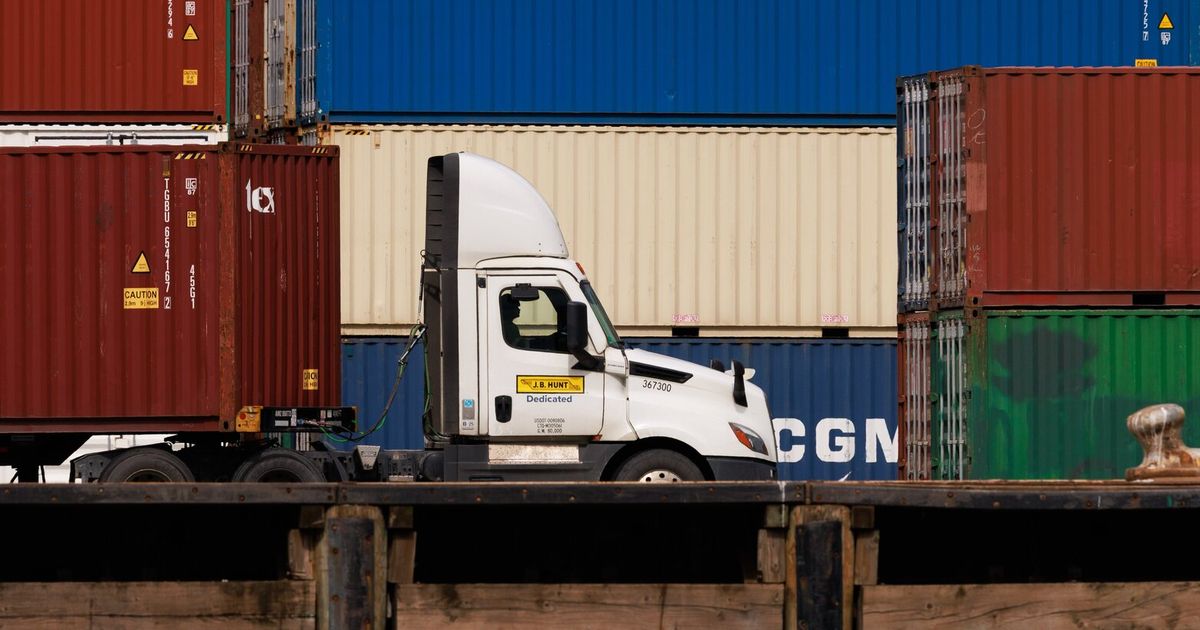
The use of alternative “drop-in” fuels like renewable diesel has already demonstrated progress toward reducing emissions from drayage trucks and cargo-handling equipment — with the potential to replace the 22 million gallons of diesel they consume annually.
Derived from feedstocks such as used cooking oil, animal waste and agricultural byproducts, RD is compatible with existing engines and can be blended with conventional diesel thereby enabling its use to be gradually increased. RD has the potential to reduce GHG emissions by 80% and particulates by 30%, lessening impacts to the climate and near-port communities.
RD is already being used at more than half of the Alliance’s marine cargo terminals. But to accelerate its adoption, RD must be consistently available at or below the cost of conventional diesel and accessible through existing fueling networks. That is already the case in California, where RD is generally available at cost-parity with fossil diesel and routinely represents more than 60% of distillate fuel consumption statewide.
The Climate Commitment Act and Clean Fuel Standard are foundational to creating similar incentives by developing Washington’s carbon market. House Bill 1409 strengthened carbon-reduction targets and should increase the value of clean-fuel credits. Linkage with the California and Quebec markets can further strengthen incentives.
The Port and Cascadia Sustainable Aviation Accelerator in collaboration with the Legislature, agencies, and private sector look forward to identifying the most effective use of these credits to expand the production and use of SAF and RD by providing large fuel users and producers the certainty necessary to make long-term purchase agreements.
Since RD is made from the same feedstocks as sustainable aviation fuel, it creates the opportunity to share the technological, economic and political gains learned from both to reduce carbon emissions from land, air and sea.
Launched earlier this year, with $10 million in support from the state, industry and matched by philanthropic sources, the CSAA is uniquely positioned to do just that. Bringing together the expertise of Boeing, Alaska Airlines, Washington State University, refineries and state lawmakers, the CSAA is working to drive capital investment and policy solutions that promote the production and adoption of SAF and RD in tandem.
CSAA’s goal of having 1 billion gallons of locally produced SAF by 2035 is audacious and will require coordinated and strategic leadership across the entire SAF value chain — from feedstocks to infrastructure — while advancing science and incentives. Like the use of RD on roads and marine terminals, SAF has safely and efficiently powered commercial flights for more than two decades.
In partnership with WSU and Snohomish County, the CSAA is launching a world class research and development facility focused on improving the sustainability and lowering production cost of SAF.
Boeing projects another 40,000+ commercial aircraft will be built by 2045, and the order books for oceangoing vessels continue to grow. The need for low carbon fuels to power their engines will only increase over the 30-year service life of planes and ships.
By bringing together the region’s expertise and entrepreneurship, we can capitalize on the generational economic opportunity of leading the transition to sustainable aviation and maritime fuels — essential to the health of our economy, communities and climate.
