

Public education often gets a bad rap for lack of imagination. But look to Edmonds, where community concerns about homeless students have resulted in a solution that is cost-effective, scholastically sound and should inspire others across the region.
Huzzah!
In this case, Edmonds School District Assistant Superintendent Greg Schwab began talking with Housing Hope, a nonprofit builder, to see if there was any way the 21,000-student district could use its own land to provide shelter for homeless families with kids in Edmonds schools.
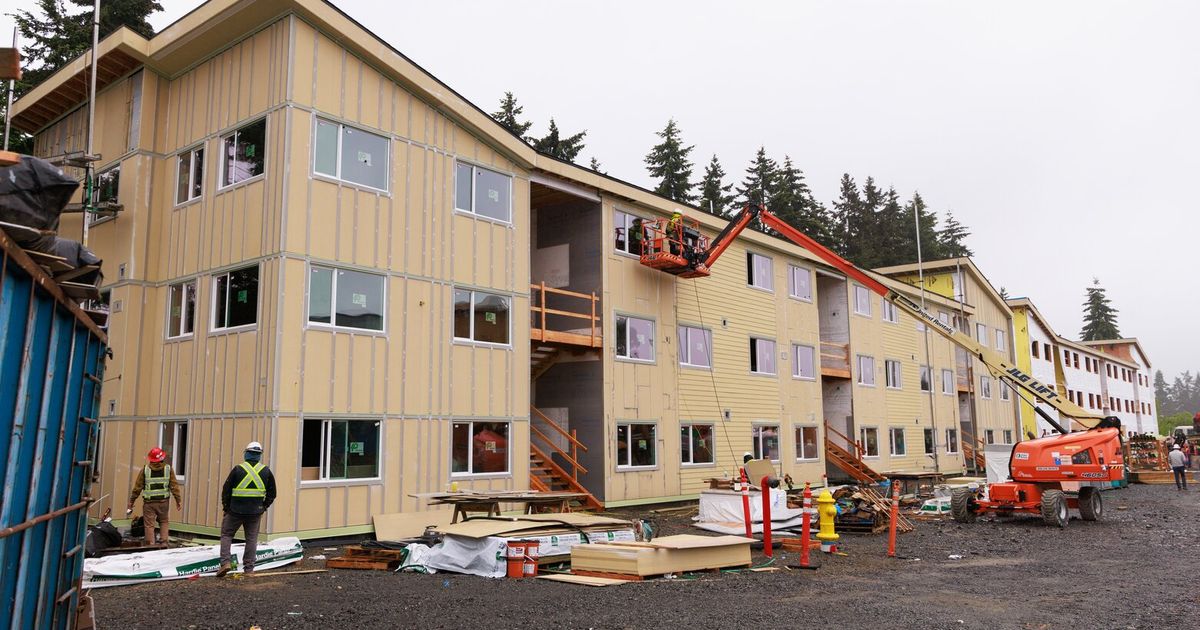
Last fall, five years to the day after their first meeting, shovels were in the ground for a new 52-unit apartment complex called Scriber Place. Next year, families will start moving in. Schwab says more than 700 in the district could qualify.
“We just had this conversation over a Zoom call — ‘what if we did this?’ ” Schwab recalled of his initial conversation with Housing Hope’s then-CEO Fred Safstrom. “What would it look like?”
The two scrolled through an array of possible sites owned by Edmonds and settled on a small baseball field adjacent to an elementary school.
They were spurred to act by passage of a 2020 amendment to state law that frees school districts to rent out surplus properties for affordable housing. Previously, any district that did so had to include language allowing them to “recapture” the property if needed for school use — a major disincentive for builders.
Edmonds is believed to be the first district in the state to take advantage of the new provision. The terms for Housing Hope? One dollar a year to lease the property, for 75 years.
In other words, this is not a moneymaker for Edmonds, just the right thing to do, Schwab said.
But there absolutely could be a financial upside to the school district, on top of benefits to its students. Many homeless families are itinerant, frequently moving in and out of districts, which means a loss of per-pupil dollars from the state for each child who leaves.
In other cases, districts are spending millions of dollars annually to transport homeless students and keep them consistently connected to school.
If Scriber Place works as envisioned, it could improve student stability and district finances simultaneously. That’s a win-win, any way you count.
