

I’m a father, a husband, a veteran and a longtime blue-collar resident of Seattle who has watched this city change in ways that have left many feeling unheard, unprotected and honestly, forgotten.
This isn’t about politics. It’s not about left or right. It’s about the reality families like mine live with every day. It’s about the neighborhoods we raise our kids in, the homes we work so hard to afford and the basic sense of safety that every resident should be able to count on.
I love Seattle. But what’s happening here is breaking people down.
In many parts of this city, crime has become expected instead of shocking. Car prowls, open drug use, stolen vehicles, shoplifting, catalytic converter thefts, burglary, unsafe encampments — we’ve reached a point where most of these crimes are met with no consequences.
One person we spoke with after they experienced a break-in said something I’ll never forget: “He that feels no consequence behaves with no respect.”
That is Seattle right now in one sentence.
Compassion matters. Helping people matters. But there is a point where compassion without boundaries stops being compassion and becomes neglect, neglect of the very people who have held this city together.
Compassion is great, but we’ve had enough compassion without accountability. It’s time to restore balance between helping people in need and protecting the people who live here. We can care deeply about human beings while still expecting behavior that doesn’t destroy neighborhoods. Those two things should not be treated as opposites.
Encampments and RVs are shuffled from one neighborhood to another. Sometimes they’re cleared, sometimes they return a week later. Residents install eco-blocks out of desperation, not cruelty, because they feel like no one is listening to them.
No one feels good about any of this — not the homeowners, not the housed, not the unhoused, not the business owners. This isn’t a solution. It’s a rotation.
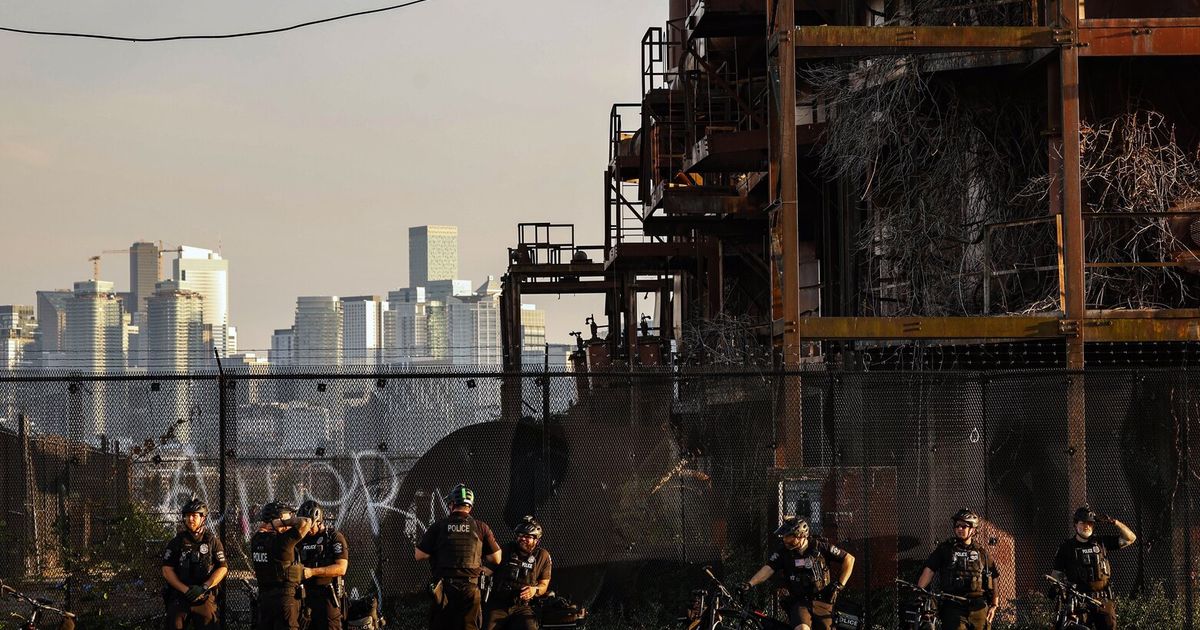
Right now, the Seattle Police Department has one of the lowest ratios of officers per capita in the country. And it shows. We rarely see patrol cars. We rarely see traffic stops. We rarely see someone held accountable for even obvious, visible crimes.
Residents joke, sadly, that the moment you leave Seattle and drive into Shoreline, you suddenly see police everywhere. In stores. In parking lots. On the streets. Doing traffic stops. It shouldn’t be normal that seeing a police officer means you’ve left Seattle. We’re not asking for aggressive policing. We’re asking for basic policing.
My wife and I are raising a young child. We both work long hours. We’re trying to build a stable life. We’re trying to live in a city we once believed in. But it’s becoming harder and harder to feel safe, protected, or supported.
Families shouldn’t have to explain to kids why people are openly using drugs at bus stops. We shouldn’t have to pray that no one breaks into our car again. Working families like mine are doing everything we can to keep our heads up. We need our city to meet us halfway.
We are not asking for the impossible. We are asking for three basic things:
1. Accountability for behavior that harms others: Compassion cannot survive without structure. Helping people is noble. Allowing chaos is not.
2. A police department that can actually respond to residents: Even a small increase in presence would change how neighborhoods feel overnight.
3. A real, long-term plan for homelessness that does more than relocate people: We need housing, treatment, outreach, and yes, expectations and rules.
I believe this city can be better than what it’s become. People like me — the blue-collar families, the veterans, the workers, the parents, the folks who stay here through all the hard times — we need to be heard.
We need safety.
We need accountability.
We need our city back.
And I hope Katie Wilson is the leader who helps us get there.
