

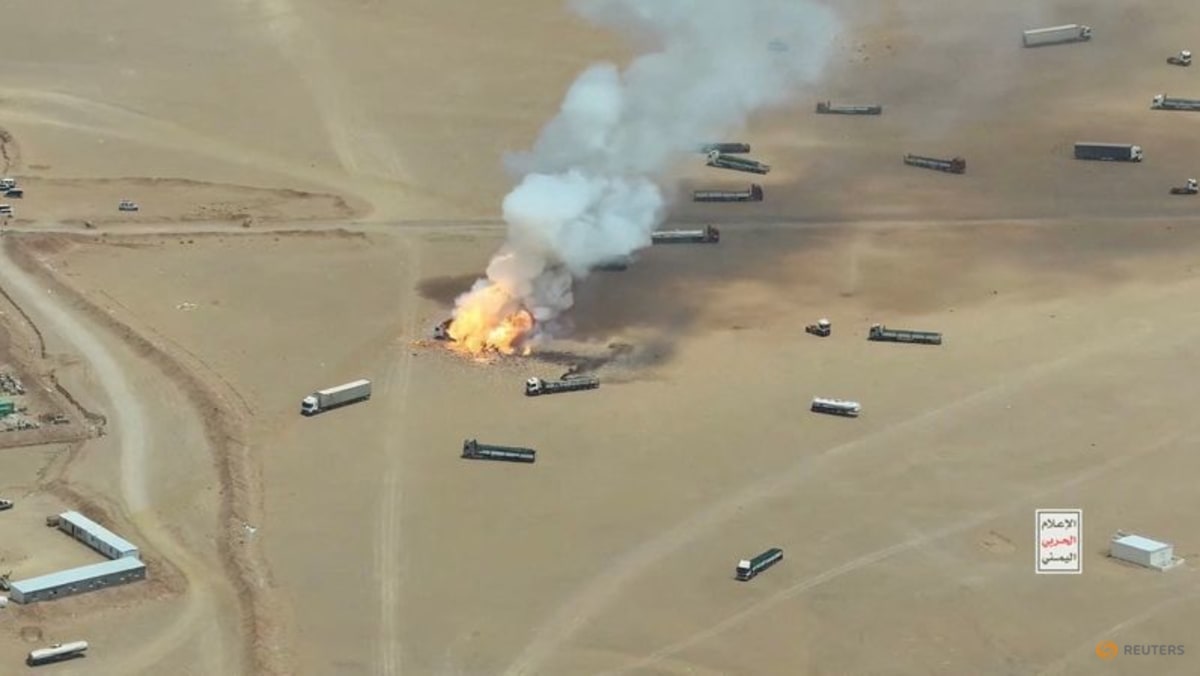
Jizan, on the Red Sea coast just north of Saudi’s Yemen border, has one of the country’s biggest oil refineries with a capacity of 400,000 barrels per day.
According to maritime tracking company Kpler, it was out of action for several weeks until at least Aug 20 following Houthi attacks.
“SPIRAL OF ESCALATION”
The Houthis triggered a return to hostilities in divided Yemen’s civil war in July, when they let an Iranian plane land in defiance of Saudi control of Yemeni airspace. The government retaliated by striking the airport.
The Saudi-led coalition, which has been fighting the Houthis on the government’s behalf since 2015, said it would “take all necessary measures and actions to respond to the sources of the threat and neutralise its danger”.
Andreas Krieg, a Gulf expert from King’s College London, said the Houthi attacks create an “extremely uncomfortable dilemma” for Crown Prince Mohammed bin Salman, the de facto Saudi ruler.
After years of trying to withdraw from the Yemen conflict, “restraint now carries the risk of allowing the Houthis to dictate the spiral of escalation”, he said.
“Saudi Arabia’s immediate response is likely to remain measured, involving airstrikes, intelligence support, and the reinforcement of Yemeni government forces,” added Krieg.
“However, should attacks on Saudi cities persist, maintaining this restraint will become increasingly difficult. In effect, the Houthis are testing exactly where Riyadh’s true red line now lies.”
