

Rachel Feltman: For Scientific American’s Science Quickly, I’m Rachel Feltman.
When it comes to art and creativity, humanity is in kind of a weird place at the moment. Just look at what’s playing at your local movie theater: It feels like studios are wringing the life out of existing IP with franchises, reboots, adaptations and live-action remakes galore. Meanwhile the success of films like Obsession—the low-budget work of a novice filmmaker that’s now one of the most profitable films of all time—sugests that this might be making audiences even more ravenous for stories that feel fresh and unique. But the advent of generative AI, which trains on existing art to produce “new” work, I hope you heard my air quotes, means we could soon be wading through more derivative slop than ever before.
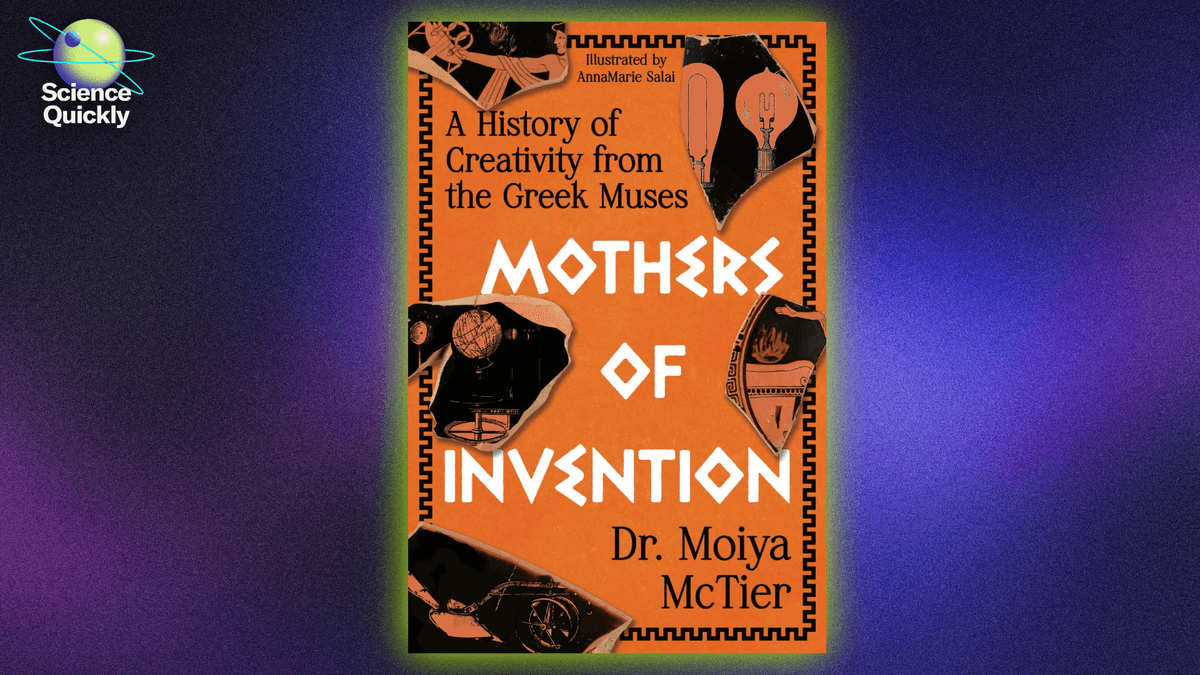
Our guest today looked at that modern creativity crisis and got inspired. Moiya McTier is an astrophysicist, folklorist and the author of Mothers of Invention, a new book that tells the story of human ingenuity throughout history.
On supporting science journalism
If you’re enjoying this article, consider supporting our award-winning journalism by subscribing. By purchasing a subscription you are helping to ensure the future of impactful stories about the discoveries and ideas shaping our world today.
Thank you so much for coming on to chat with us today.
Moiya McTier: Thanks, Rachel. I love talking to you. I’m happy to be here.
Feltman: Oh, my gosh, you’re one of my favorite people to talk to, so thank you so much for saying that. Well, yes, we do already know each other, but for listeners who don’t know you, I would love to start with a little bit about your background because I think you have one of the coolest research areas of expertise of anybody I’ve ever met.
McTier: Thank you. I know I’m biased, but I agree, I have the coolest job ever. I studied both astrophysics and folklore and mythology in college, and then I got a Ph.D. in astronomy studying how planets might be different in different parts of the galaxy, really trying to understand habitability on as many scales as I could.
And so I like to combine them by imagining fictional worlds and the science and fact-driven cultures that would arise on those worlds. And yes, I just really love any excuse I can get to talk about science and the stories we tell about the universe.
Feltman: Well, and that’s a great segue into your latest book, which is all about creativity, invention, imagination. Could you tell us a little bit about the premise?
McTier: I would love to. It’s called Mothers of Invention, A History of Creativity from the Greek Muses, because I love writing from perspectives much bigger and longer lived than my own. And when I wanted to really dig into the question of creativity and how humans have been innovative and invented different things throughout our history, who better to talk about that than the goddesses of inspiration and creativity themselves?
Feltman: So what made you decide to write a book about creativity specifically?
McTier: A few different things. One, for the last three years, I’ve been working as an advocate for artists’ rights in the era of generative AI, trying to get regulations passed for it. But personally, I love art, I love artists, and for the last several years, I’ve been, I’d say, disappointed with the type of art that I see presented to me.
I hate that we’re in the era of reboots, where so much of the media we see is based on preexisting intellectual property. I hate that we’re in an era of regular people not trusting experts in medicine or climate science. I hate that influencers are getting more attention and prestige and credibility than people who have dedicated their lives to understanding a particular topic.
So I saw all of that, and I wanted to write something that helped other people see that same issue and help them see where it started and what we can do to maybe try and get us back on the right path.
Feltman: Well, tell us about some of the surprising things you learned along the way. What’s your favorite historical tidbit about creativity?
McTier: Ooh, about creativity itself. I love thinking about what different cultures throughout time have considered creative. So the ancient Greeks, for example, they didn’t have a word for “to create” or “creative.” They had a word for “to make” that was specifically designated to poetry, “poesis.” And so poetry was the only art form that was considered creative.
Any type of drawing, any type of natural philosophy, that was said to be discovered or given to you by this external guiding spirit, like a muse. Other cultures had their own ideas. Like the Romans said, “No, poetry and drawing and painting, they’re both creative, but everything else, that’s not it.” And I love looking at how it changed over time to where we are now, considering anything creative—how broad the term “creative” is has really expanded.
Feltman: I love thinking about somebody looking at a sculpture and being like, “Well, you saw the thing, and you made it, so …”
McTier: [Laughs.] Exactly.
Feltman: Who really made that?
McTier: God made it. That is what they would have said.
Feltman: Oh, gosh, that’s so funny. So a book from the perspective of the Greek muses; that kind of perspective might not be as surprising to people who have read some of your previous work, but I would love to hear, you know: What does that look like? You know, how do the muses guide us through this story?
McTier: Thank you for bringing up my first book because I think it really sets the context. My first book was about the Milky Way galaxy, written from its own point of view, so it was the galaxy’s autobiography. And what I love about writing from these big perspectives is that I get to divorce the story from my own personal interests. I get to have a creative exercise in putting my brain in someone else’s shoes, and I get to make jokes about humanity as a whole, which is really nice, ’cause the muses love to do that. They’re immortal. They have been here since before humans have been here. And so, setting the scene for the muses interacting with humans in the book gave me the opportunity to explore their different personalities.
There are nine different muses. Four of them, classically, are devoted to poetry. Only one of them is devoted to science. Only one of them devoted to anything in motion. And I wanted to dive into that. Like, what made Terpsichore, the muse of dance, so different from her sisters that she gets to be the lone representative of physical motion?
So in her chapter, she is covering the invention of spandex because, as a dancer, she wants really comfortable clothes that move with her, and she’s driving humanity toward inventing that for her own selfish gains. And all of the other muses have their own motivations for driving humanity toward the inventions that they are pushing for.
Calliope, the muse of epic poetry, is trying to get humans to be able to share their stories through publishing. So in her chapter, she talks about how she helped humans invent writing systems and the printing press and other forms of script before she eventually helps us invent the Internet because that’s a way for us to really share our stories with a wide audience.
Feltman: Yeah. That’s such a fun way of, you know, getting into such a big topic, because the idea of, you know, following something as squishy of an idea as creativity, you know, throughout human history is a big ask. So I’m curious: How have your thoughts about creativity and the act of creating, have they evolved at all, you know, in the course of working on this book?
McTier: Absolutely. The range of art that I’ve exposed myself to in preparation for this book is way bigger than what I would have exposed myself to before the book. I didn’t like jazz music before I started working on this book. There’s an entire chapter devoted to the history of jazz. I intentionally tried looking at different types of art, looking at people who weave glass, people who tell stories in mediums that I never would have imagined.
So it’s not that I developed a greater appreciation for art or anything, but what I consider art is now expanded ’cause I’ve just seen more possibilities. And that is the beauty of creativity, that—the opposite of familiarity—that it is something that forces you to expand your horizons. And, you know, I put that into practice while I was researching for this book.
Feltman: And viewing creation in that lens really does contrast it with generative AI, you know, given that that’s really fueled on what, what already exists. Could you tell me a little bit more about the work you do in that space and how that informed the writing of this book?
McTier: I have been advising the Human Artistry Campaign for three years now, and the campaign has a set of principles that are all artist-centric about how we can have ethical uses of generative AI. And for me, it all boils down to maximizing choice. I wanna make sure that everyone, all of the creatives and all of the people who are enjoyers of art, everyone should get to decide how much they engage with AI. An artist should get to choose if their work is ingested by a model for training, and I should get to be able to choose if I read something or watch something that was made with AI.
So the regulations that we’re pushing for are things like transparency laws—we should be told when something is made with AI, and we should be told what type of art was used to train that model—consent laws around artists’ work being used to train and protections against people’s name and likeness and voice being re-created with digital replicas, like deepfakes and voice clones.
Feltman: Yeah, absolutely. Well, writing a book about creativity is obviously, like, kind of meta. Tell me about the inventions you, you picked and, and why.
McTier: Yes. Each invention was tailored to the muse for what I thought they would find interesting. Erato, being the muse of erotic poetry, I thought obviously would want to help humans be erotic without any sort of big consequence. And so she focuses on the invention of birth control and other medical practices. I actually read your book, Been There, Done That, in preparation for that chapter, so thank you.
Feltman: Thank you for the shout-out, I appreciate it. [Laughs.]
McTier: Of course. And, so I cover eight different inventions. It starts with the invention of the telescope from the muse of astronomy to spandex; jazz music; electricity, which is really fun because that’s by the muse of sacred poetry, Polymnia. And it would’ve been really easy for me to represent her as a pious, kind of quiet woman, but I wanted her to be power hungry. I turned her into a woman who was obsessed with the seat of power that Zeus, their father, had. And she helped humans invent electricity as a way to get a part of that power for herself so that she can usurp her father. And that twist on the pious one made me really happy. I cover flight and birth control, the Internet and the media industry, which is really kind of the climax of the book and really points at the origin of this creativity crisis that we’re having now.
Feltman: Right. Well, let’s talk a little bit more about the creativity crisis. You know, having researched and written this book, what do you think the major problems are with how we engage creatively today, and what do you think the way forward is?
McTier: I think that we have entered a new and damaging phase of our relationship to creativity, where we care much less about the art and more about the artist. We care about seeing an actor that we love. We care about hearing a voice that we’re familiar with more than we care about what we’re actually seeing on the screen or the lyrics or the music in the songs that we’re hearing.
I call this the “age of personality” or “the age of celebrity.” And the way to combat that is to not revere these celebrities and not put them on a pedestal anymore. Recognize them for humans who have been given this gift to create. And what I’ve done, like divorcing the creative responsibility from myself and putting it in the hands of these external muses—which is what a genius originally was; a genius was not originally a person, but it was this external spirit that a person had—I think going back to that thinking would be really helpful for people. Relinquishing the responsibility to create yourself but still showing up and, like, doing the work that it takes to learn your field and hone your skills. But when you divorce that responsibility from yourself, you also can do the same thing for the big creators that we all hear about. I love Beyoncé’s music. I do not have to love Beyoncé.
Feltman: Yeah, very true. Thank you so much for coming on to chat. I’m really excited that our listeners will get to enjoy your book.
McTier: Thank you so much, Rachel. I hope they like it as much as I liked reading yours.
Feltman: That’s all for today’s episode. We’ll be back on Friday to talk about new research on the use of psychedelic mushrooms to treat eating disorders.
Science Quickly is produced by me, Rachel Feltman, along with Fonda Mwangi and Jeff DelViscio. This episode was edited by Alex Sugiura. Marielle Issa and Aaron Shattuck fact-check our show. Our theme music was composed by Dominic Smith. Subscribe to Scientific American for more up-to-date and in-depth science news.
For Scientific American, this is Rachel Feltman. See you next time!
