

Scientists are working to enhance stroke recovery
Craig Boylan
A well-known actor who had experienced a stroke was treated by stroke specialist Sandor Nardai. The actor had been left with aphasia, or an impaired ability to speak – brutal for anyone, but “probably the most devastating thing that could happen to an actor”, says Nardai.
After three months of recovery, though, the actor was able to say some words. After a year, he voiced a commercial. Remarkably, he eventually got well enough to return to live theatre, says Nardai, who is at Semmelweis University in Hungary.
For every happy story like this, though, there are many people who survive stroke but have less encouraging ones. Strokes send the brain into freefall, damaging areas that control cognitive and physical functions. Only an estimated 35 per cent of survivors make a full recovery or live with only minor impairments. The majority have profoundly life-altering issues, like aphasia, paralysis, behavioural changes or cognitive and sensory challenges. The numbers are dizzying: almost 100 million live with the after-effects of a stroke, making it one of the most common causes of disability globally.
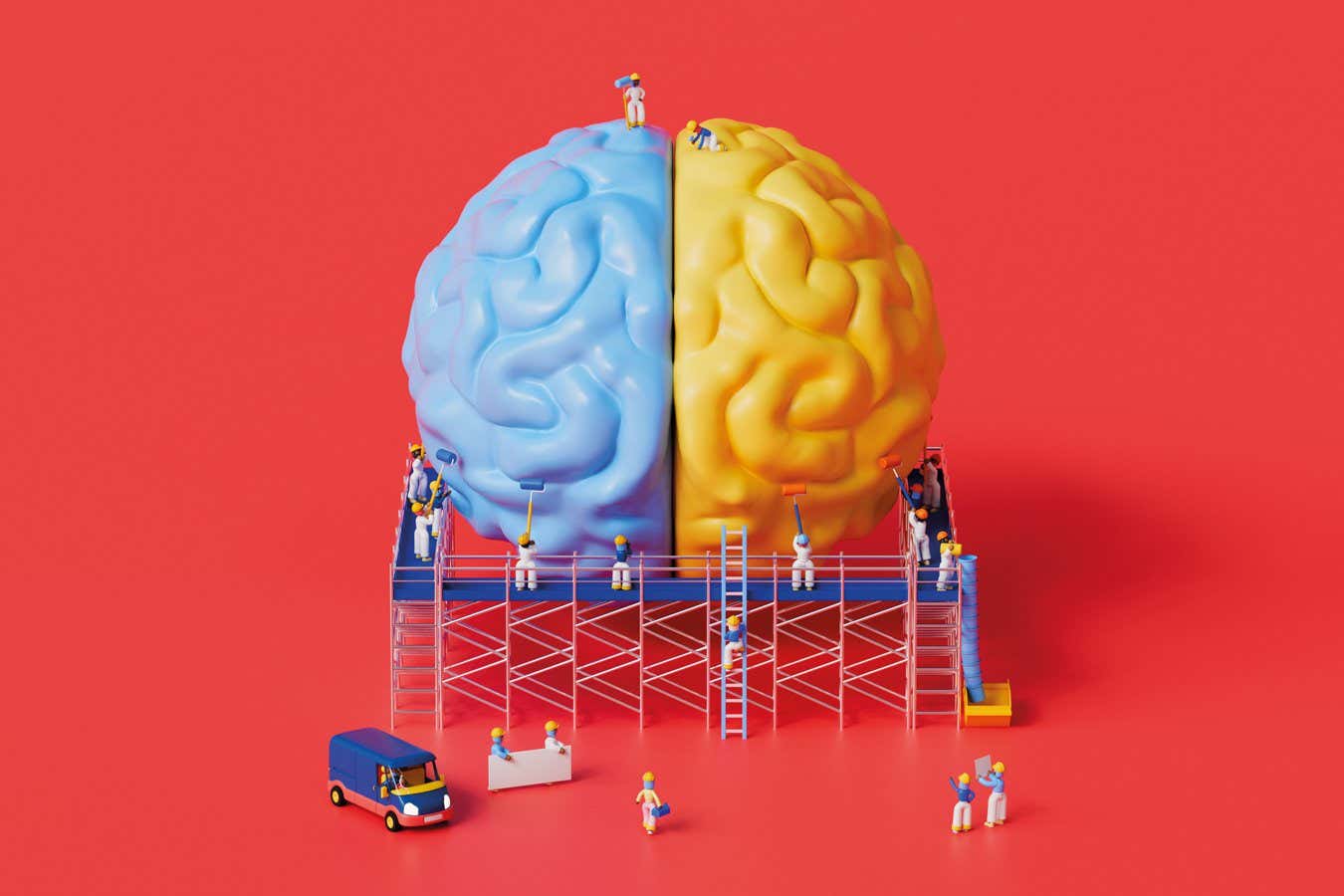
As the actor’s story shows, the brain is capable of extraordinary transformation and restoration after a stroke, but some people reap more of those benefits than others. Now, we are learning why – and with that knowledge, developing new treatments that can help more of us recover.
Why some brains recover after a stroke
A stroke occurs when a blood vessel serving the brain either bursts or is blocked by a clot. That starves the brain of needed oxygen, killing off neurons, which can leave people with severely compromised abilities to reason, learn, communicate and move. In the aftermath, the immune system also cranks up inflammation, potentially causing further damage.
Age, prior health and the extent of stroke damage are all known to influence recovery. But there are so many variables that even a supercomputer couldn’t perfectly predict who will get better, says Pankaj Sharma, a neurologist at Royal Holloway University of London. The majority of people make their most dramatic progress within six months of their stroke. Research suggests that improvement after that point is possible, but it isn’t guaranteed – some people actually deteriorate over the long term. Quick treatment in the acute phase, such as with clot-dissolving medications, can minimise the long-term ramifications, and longer-term rehabilitation, such as speech or physical therapy, can bring continued progress. But to a large degree, the brain is the maestro of its own recovery.
This process is poorly understood, but we are learning more about what happens. Although neurons that die off during a stroke can’t be revived, those that survive can sprout new axons and new connections between brain cells can develop. After a stroke, “new freeways form,” says Sharma, “and they go around the damaged area.”
The long-standing hypothesis is that disparate parts of the brain seem to pitch in to take over the tasks that would normally have been handled by the damaged region, like co-workers covering a shift for an absent colleague, says Argye Hillis, a stroke specialist at Johns Hopkins Medicine in Maryland. However, some research challenges that idea. A 2021 study in mice didn’t find evidence to support this “remapping” effect. When William Zeiger at the University of California, Los Angeles, and his colleagues destroyed some of the mice’s brain cells, other neurons failed to jump in and take over. Instead, the researchers posited that rehabilitation might strengthen some of the surviving neurons in the stroke-affected area, allowing them to perform their old functions.
Brain health before a stroke is an important factor influencing recovery, according to a study published last year by Céline Gillebert, a researcher at the KU Leuven Brain Institute in Belgium, a finding that has also come up in Hillis’s research. Gillebert’s team looked at more than 2000 people and found that the pre-stroke condition of the brain – defined by metrics like brain volume and the health of white matter tracts connecting brain regions – was a strong predictor of cognitive function after a stroke, sometimes even more so than the location of the stroke damage.
It could be that cognitively healthy people have more residual brainpower to spare when one part of the brain is damaged. Conversely, those with more education may have further to fall: a 2025 study found that college-educated people showed steeper drop-offs in high-level brain functioning than their peers without degrees.
Genetics is also an important part of the puzzle. In one review, Sharma connected several genetic variants – including the gene APOE4, which is also linked to the development of Alzheimer’s disease – with poorer recovery from strokes. Conversely, people with certain genetic profiles may have more pliable brains than others. People with a mutation of the CCR5 gene that is disproportionately common among Ashkenazi Jews, as well as some other people with European or West Asian ancestry, recover notably well from strokes, for example.

The lack of blood flow to the brain has a huge effect on the brain
ZEPHYR/SCIENCE PHOTO LIBRARY
The future of stroke treatment
Unravelling what goes on in the brains of lucky stroke survivors, like the actor, is bringing us closer to therapies that can level the playing field. Through a combination of a healthy pre-stroke brain, effective acute treatment and continuing rehab, the actor saw an unusually positive result, says Nardai. Now, he and other researchers are investigating treatments that could help those who aren’t so fortunate.
Take the importance of the CCR5 mutation. This mutation also seems to offer protection against HIV, so a drug currently used in HIV treatment is being studied in the hope that it can duplicate the natural advantages seen among people born with the beneficial mutation. Research is ongoing, but initial results have been promising.
And last year, Naohiko Okabe at the University of California, Los Angeles, and his colleagues reported the discovery of a drug that, at least in mice, appears to bottle the effects of post-stroke rehab.
First, they studied the brains of people who had survived strokes, as well as mice manipulated to have similar impairments, to better understand the effects of physical rehabilitation. They found that successful rehab boosts gamma oscillations, a type of electrical signal that helps brain cells communicate, says Okabe.
Next, the researchers looked for drug compounds that could replicate rehab’s effects by boosting the activity of a type of neuron involved in gamma oscillations. They built upon the work of another UCLA researcher, Istvan Mody, who had developed a gamma-enhancing drug in the hope of treating Alzheimer’s disease. That drug turned out to have the desired post-stroke effects in mice. The next step is testing the drug in humans, a long road with no guaranteed payoff, says Okabe. But if it works, the medication could be an important new element of stroke care. “Not everyone can engage in rehabilitation,” says Okabe. Distilling the practice’s effects into a pill would provide a better option for those limited by symptoms or access.
Treatments that aim to augment the brain’s in-built healing abilities are another potential avenue. Some researchers want to repurpose drugs that are already widely prescribed, such as antidepressants, which may increase the availability of neurotransmitters thought to help maintain the brain’s ability to change. Existing anti-inflammatory drugs are another promising option, since brain inflammation can cause additional damage after a stroke. Researchers at the University of Manchester, UK, are studying whether two inflammation-lowering drugs, including one that is already used to treat conditions including rheumatoid arthritis, could help.
Then there are approaches that sound more like science fiction. Last year, a team at the University of Southern California and the University of Zurich, Switzerland, published a study on stem cell infusions in stroke therapy. Stem cells developed into mature neurons, repaired damage to the blood-brain barrier that helps keep out toxins and microbes, and helped reduce inflammation in mice.
Brain-computer interfaces are also picking up steam. In April, German company CorTec got a “breakthrough device designation” from the US Food and Drug Administration, a step meant to streamline the approval process. CorTec’s brain-computer interface links the brain with external technologies, such as computer systems, so a person’s thoughts can be turned into action. This not only helps restore lost ability, but may also help the brain rewire itself through practice.

CorTec’s brain-computer interface allowed its first patient, Matt Kidd, to move his once-paralysed left arm
CorTec
Psychedelics are another exciting possibility. Hillis’s colleagues at Johns Hopkins are embarking on human trials of psilocybin, the psychoactive compound in magic mushrooms, in the hope of using it to spur growth in the brain. And in a study published last year, Nardai’s team showed that the psychedelic DMT seemed to prevent cell death, support brain rewiring and fight post-stroke inflammation in rats. Nardai says the drug – or maybe a non-psychoactive version of it – could be given immediately after a stroke to head off damage. “My idea,” he says, would be to “give the DMT maybe even in the ambulance” on the way to the hospital, though more research is needed.
Strokes are often devastating, but some people’s stunning neural growth and adaptation, like the actor’s, shows that recovery is possible. As we learn more about which brains recover and why, hopefully, more people will be able to benefit from such transformation.
