

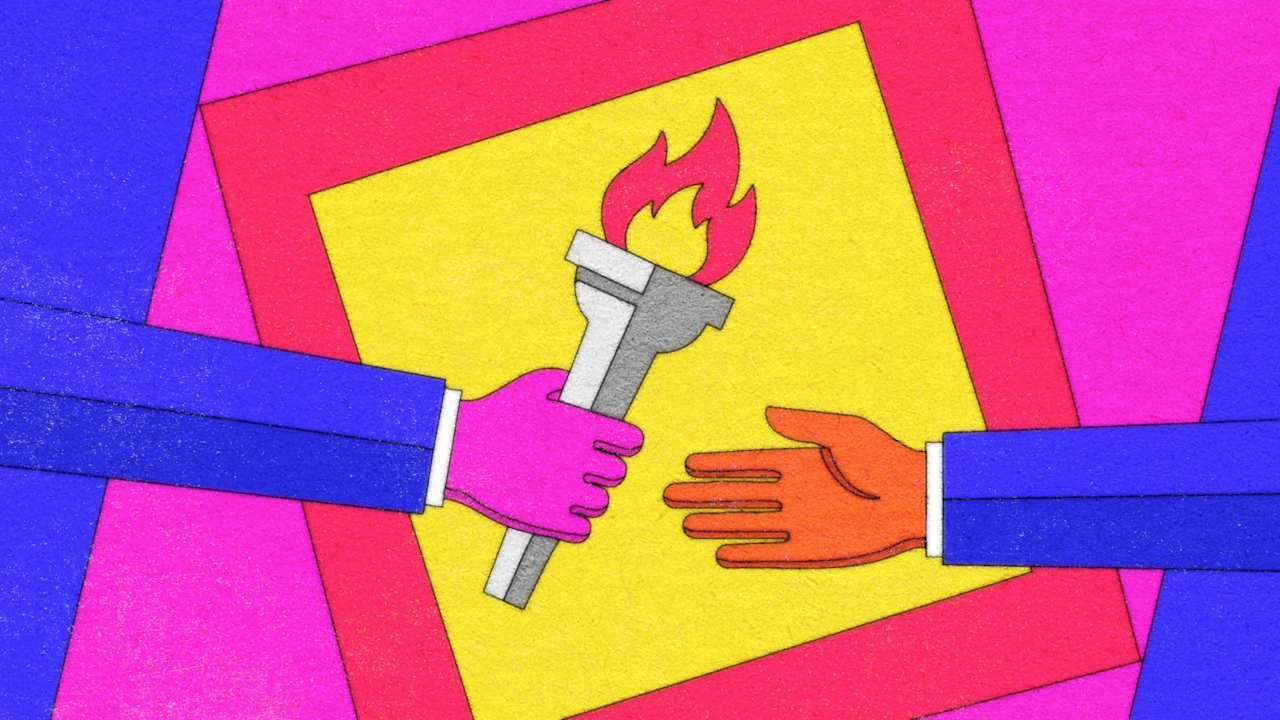
Most founders believe their job is to stay deeply involved as their company grows. But that instinct often becomes the very thing that holds the business back.
As companies scale, what once made them successful—founder-led decision-making, strong creative direction, tight control—can start to create bottlenecks. Teams can’t become truly autonomous, leadership layers struggle to emerge and the organization remains tied to the founder’s perspective instead of evolving beyond it.
I saw this firsthand after a decade of building Kurppa Hosk with business partner Thomas Kurppa. Nothing was broken; we had become a globally renowned creative agency. But growth was becoming constrained in quieter ways. As CEO, in charge of the business side of the agency, my leadership style—direct, hands-on, and rooted in constant dialogue and discussion—made it hard to scale the company.
This growth coincided with the birth of Eidra, a broader consultancy collective that Kurppa Hosk co-founded. Suddenly, the agency was part of a 30-company, 1,400-people partnership that spanned 14 offices, with expertise in strategy, creativity, innovation, and tech. I jumped on the chance to channel my strengths into something new.
The realisation was simple, but difficult to act on: the business didn’t need more of me. It needed a different me. Letting go of the CEO position became a deliberate decision to give the company room to grow and to focus on its future.
This move is not easy; 58% of founders have difficulty letting go of control. But if you’re wondering whether it’s time to step aside, here are five tips for navigating this transition with confidence.
1. Recognise the need for change
Stepping back as a founder is often equated with failure. It’s easy to think of high-profile examples like Groupon’s founder Andrew Mason or WeWork’s Adam Neumann, where founders were forced out after their leadership became detrimental to the business.
But you don’t need a public meltdown to consider stepping aside. A responsible leader recognises when their style no longer serves the company’s growth. For me, it was the realisation that our agency needed a focus on operational rigour to make the most of future opportunities. And my direct and involved approach would not have delivered this.
So always ask yourself: Are decisions slowing down? Is the team overly reliant on you? Are you unintentionally muting other voices or hindering the growth and development of your talent? Asking these questions proactively enables your company to evolve.
2. Don’t just look for competence, look for cultural match
A crucial part of a successful transition is building a leadership team you genuinely trust. This is about more than competence on paper. Trust also has to be about cultural alignment. A new leader must understand and respect your company’s DNA while bringing their own perspective to the table. We were built on a strong internal culture that was a key part of our agency’s identity and success – it needed to be preserved and respected during the leadership transition.
So, if you’re looking for someone to take the reins, consider it as a search for a ‘steward’ of the existing culture, rather than someone to overhaul it. Look for an alignment of values and vision, not just competence and operational excellence.
Finding just that right person is of course hard. At Eidra, we spend a lot of time on succession planning to identify the next generation of leaders that have both the right abilities, values and cultural fit to then train them. Having an increasingly large pool of talent to source from these days, is of course beneficial.
Once new leaders are in place, you then give them the platform and autonomy to succeed. Your job is to support, not overshadow.
3. Empower successors to succeed
Empowerment is the most crucial part here. It’s about giving people the autonomy, mastery and meaning they need to thrive. As a founder, it’s tempting to micromanage. But if you’re constantly involved, you’re not empowering your team, you’re undermining them. Instead, focus on creating an environment where people feel trusted to make decisions, take risks and grow.
For example, at Kurppa Hosk and among the wider Eidra leadership team, we embrace what we call “fruitful friction”. It’s the idea that diverse perspectives and healthy debate fuel innovation, as long as everyone agrees on the company’s overarching vision. Disagreement is fine, but it needs the framework of a shared direction. Your role as a leader is to set the direction and enable people to create the path there together.
4. Redefine your role for the future
Moving out of the way, however, doesn’t always mean moving on completely. Often, it’s about evolving your role to support your company’s next phase more effectively.
For me, this meant shifting from day-to-day operations at Kurppa Hosk to become Co-CEO of Eidra. I focused on scaling what I was good at – creative leadership and vision – while leaving the operational details to others.
That next role can be about adding value in a way that supports the company’s growth. Maybe it’s mentoring the next generation of leaders. Maybe it’s focusing on strategy or exploring new ventures. Whatever it is, make sure it plays to your strengths. And surround yourself with people who complement those.
5. Take care of yourself
Let’s be honest: a decision like this can feel like a personal crisis. For founders, the business is often an extension of their identity. Letting go is a professional challenge, but it’s also an emotional one.
During my transition, I leaned heavily on a coach to help me navigate the shift. I also made a point to prioritise my well-being: spending time with family, exercising, and getting enough sleep. It sounds basic, but when you’re in the middle of a major change, self-care is often the first thing to go.
Remember that stepping toward something new is positive. Focus on what excites you about the next chapter, whether it’s a new role, a new venture, or simply the chance to reclaim a life outside of the business.
It isn’t easy – especially as a founder. It requires humility, self-awareness and a willingness to relinquish control. But if done right, it’s not just good for the business and the next generation of talent, it’s good for you.
