

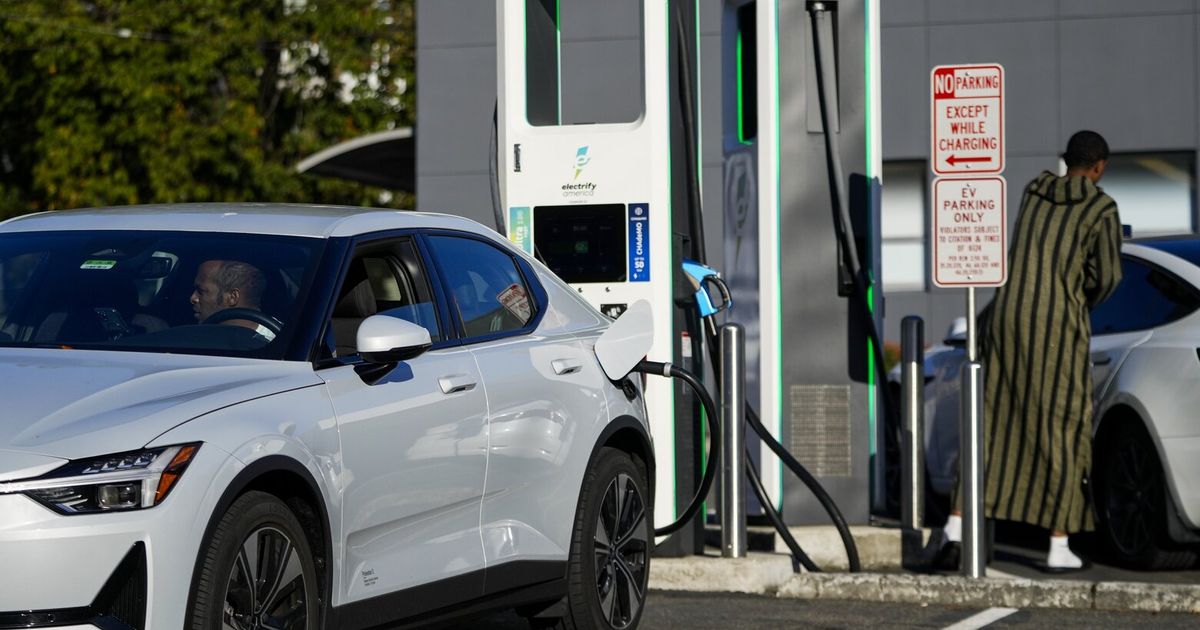
President Donald Trump’s war with Iran has sent global oil prices through the roof. The pain at the pump has reverberated across the world and all the way to Washington state, where a gallon of gas is $1 higher than it was a month ago.
The Iranian choke hold on the Strait of Hormuz, through which 20% of the global oil supply travels, is just the latest shock to this volatile source of energy. It won’t be the last. The episode reinforces the continuing, critical need to reduce dependence on oil. There is a better way to fuel our cars, our homes and our businesses: by increasingly turning to electric power to do the job.
Washington is already moving in that direction. The state has set ambitious climate goals and must continue pursuing infrastructure that shifts its economy away from more shock-susceptible fossil fuels. Political leaders have made the worthy case that carbon emissions come with an adverse cost, producing greenhouse gases that are warming our world. But even without that argument, batteries, motors and other electronics are increasingly practical and even superior across many sectors of the economy — and run on a power source far less volatile than oil.
“The Iran War provides a vivid demonstration that the energy transition isn’t a climate issue — it’s an issue of national security,” the economics columnist and blogger Noah Smith recently wrote on his Substack. “If there’s a silver lining to Trump’s stupid war, it’s that it’ll speed the world’s transition to solar power, wind power, and electric vehicles.”
Enacted in 2021, the state’s Climate Commitment Act is helping tilt Washington to the forefront of an electric age where Strait of Hormuz oil blockades are powerless to stop our economy. By using a cap-and-invest system to put a price on pollution, the Act funds programs that help residents adapt to the transition, including a first-in-the-country statewide free transit strategy for youth. It also funds investments in building out a greener electrical grid and in helping an increasing number of Washingtonians to own EVs and heat pumps.
The Act also galvanizes polluters to decarbonize the way they do business, speeding along the transition and giving Washington pole position in an electric-driven economy.
Yes, that policy adds to the gas price at the pump in Washington state, by about two quarters per gallon. But Washington voters have already shown their own support for this policy direction by rejecting a repeal of the Climate Commitment Act in 2024. More than six in 10 voters defended it at the ballot box, including in many counties east of the Cascades.
The policy isn’t perfect, and elected leaders including Gov. Bob Ferguson and the state Legislature should continue to offer energy rebates and tax credits that help insulate lower income households, ensuring they are not left bearing an unfair share of the cost.
But overall, Washington should treat the current oil shocks as a warning of things to come. The Trump administration’s bizarre attacks on the inevitable build out of wind and solar electricity generation will be ephemeral next to history. The curve is bending toward an electric-powered future and Washington has staked a wise claim within the leading edge of it.
