

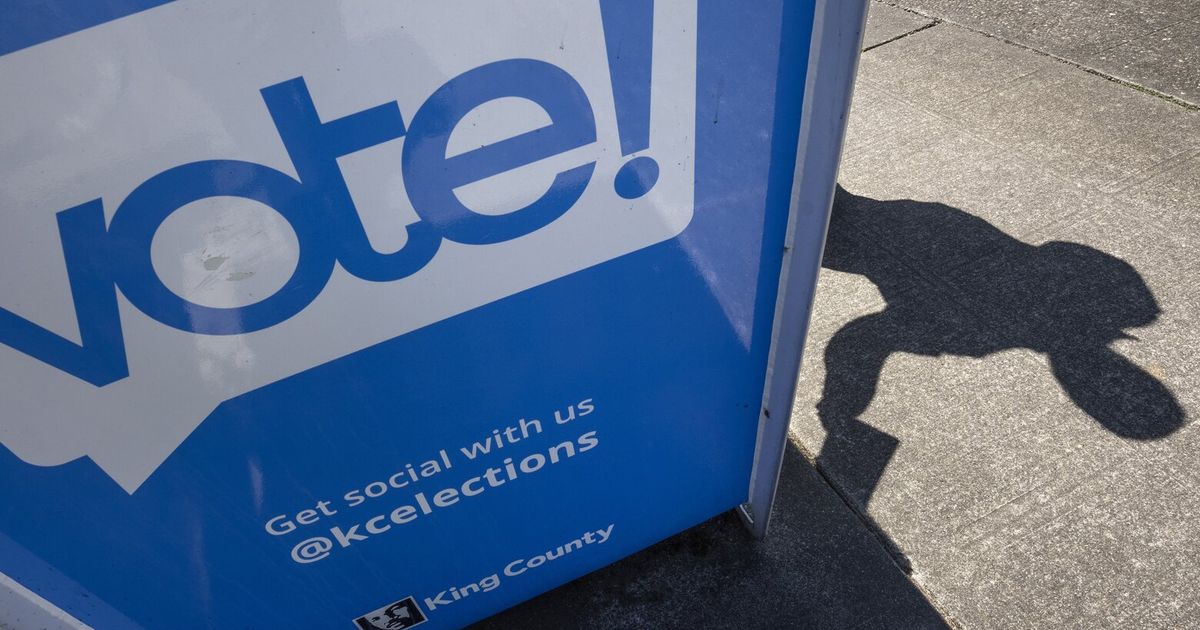
Millions of Washingtonians are affected daily by policies made by those in positions of power, from school board regulations to educational cuts at the state level, to gun laws and college affordability. However, the voices of many residents affected by these decisions — those ages 16-18 — repeatedly go unheard in these decisions. Many teens work, are taxed, drive and have expanded legal responsibility. So when will the right to vote be next?
Lowering the voting age to 16 for local and statewide elections would strengthen democracy by giving representation to more residents who are directly affected by policymaking.
First, allowing teens to vote would increase democratic participation. Austria provides a key example. After the voting age was lowered to 16 in 2007, Austria saw a first-timer voting boost, and the turnout rate among youth was comparable to or slightly higher than that for older first-time voters, surpassing expectations. Other studies have found that those who vote at a young age are more likely to turn out in later elections as well, creating lifelong habitual voters. With stronger civic participation, a democracy becomes more representative.
Secondly, students already serve as key parts of their communities with legal responsibilities; so why shouldn’t they be able to vote? Students hold many responsibilities, including working, sometimes to support their families, and they’re also trusted to start making key decisions about their futures, including if/where they’ll go to college. We trust 16- and 17-year-olds to begin paying into a system that they have no say in, and we trust lawmakers to make decisions impacting people who have no say in what happens to them. Older teenagers are directly impacted by education policy, school safety laws, climate policy, and transportation and youth employment laws; few know the impacts better than the students who live under them.
Think about the school board: Why is it that students who live with the decisions made by these governing bodies every day have no say in who’s making these decisions? In 50 years, who will be more impacted by the climate policy being made now by our state legislators: the 17-year-old whom we don’t allow to vote, or the 75-year-old voter? If a high schooler can have responsibility, they should have representation.
Others may believe teens are impulsive, and can’t be trusted with the monumental civic responsibility of voting, but the truth is that they can and they should be. The voting system has never required a maturity test; we don’t restrict the voting rights of every adult who votes with limited information, spontaneously or emotionally. There are plenty of uninformed voters in Washington, but voting is a right, not a competency test.
The young people of our generation are some of the most involved and informed of any, and unlike older voters, have grown up in a system that constantly feeds them information about the world. Additionally, high schoolers aren’t the irrational voters opponents think they may be. Research published by psychiatry professor Laurence Steinberg found that by around age 16, logical reasoning, memory, and information processing are all nearly adult-level yet rights and responsibilities are allowed inconsistently. High schoolers have the logical thinking they need to vote, yet we continue to restrict their voting rights.
Sixteen- and 17-year-olds should not just be the future of our democracy; they should have a say in it now. For too long, young people have been affected by decisions made at every level of government without meaningful representation. In 1971, Congress passed the 26th Amendment, lowering the voting age from 21 to 18 for millions of Americans who they believed could shoulder the responsibility of voting and participating in the democratic process. Today, hundreds of thousands more should have this civic right extended to them.
