

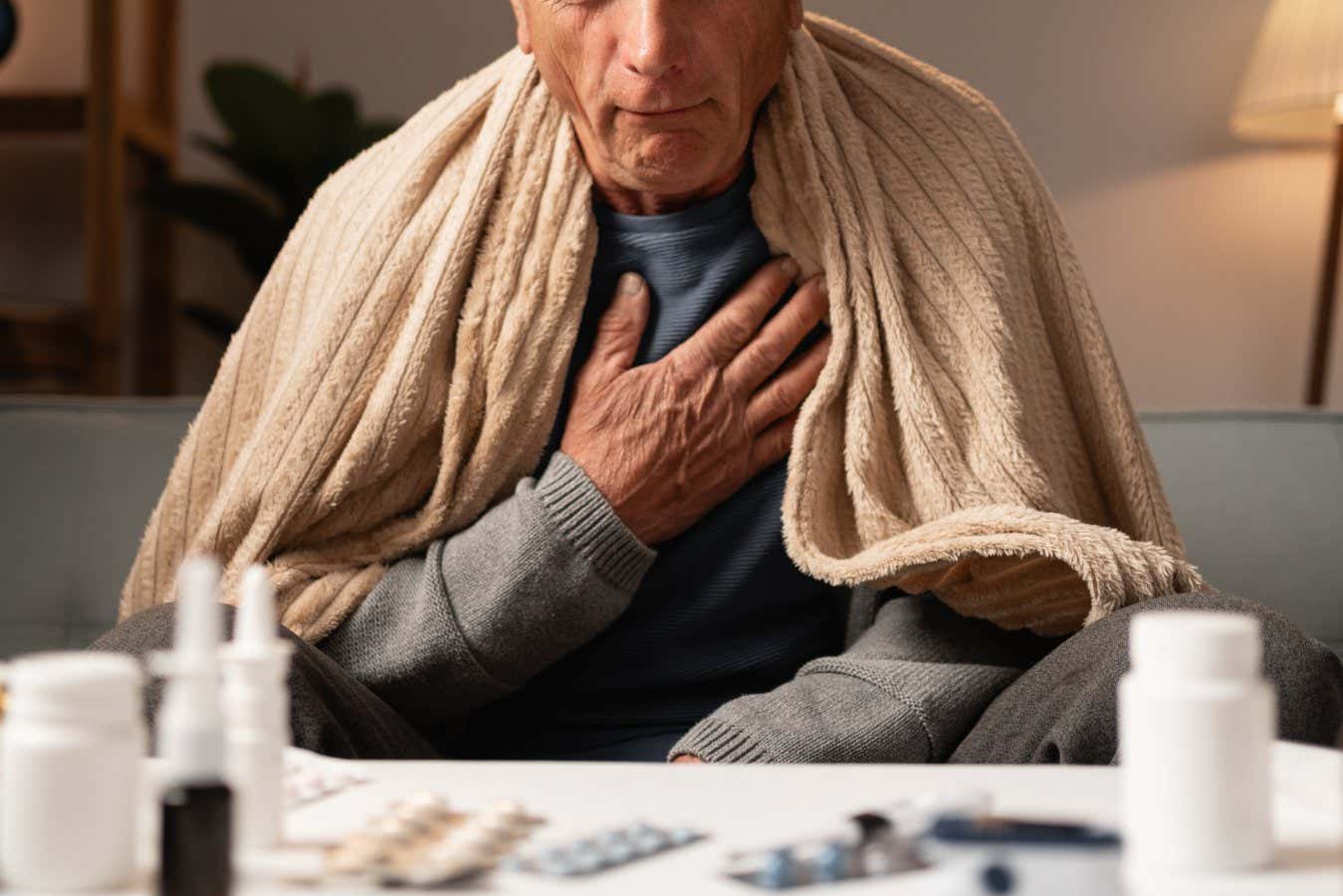
Inflammation of the airways could result from smoking or air pollution exposure
Lysenko Andrii/Shutterstock
Severe airway inflammation impairs the ability of mice to learn when a dangerous situation is no longer a threat, suggesting that the lungs influence emotions and behaviour. This lung-brain connection might also help explain why only a fraction of people who experience trauma develop post-traumatic stress disorder (PTSD).
“A lot of us see trauma, but only about 5 to 10 per cent of trauma-exposed people actually get PTSD,” says Renu Sah at the University of Cincinnati in Ohio. Previous research indicates that inflammation, particularly in the lungs, could play a role. For instance, in military veterans, those with PTSD are about eight times more likely to have asthma.
Sah and her colleagues further investigated this link in eight mice with severe asthma-like symptoms. They exposed the animals’ lungs to house dust mites, which triggered an allergic reaction and inflammation. Three days later, they placed the mice in a cage and gave them three mild electric shocks.
For the next six days, the researchers returned the mice to the cage for 5 minutes daily, recording how long they stood frozen in fear. On average, they spent about 40 per cent of their final session frozen – twice as much time as a separate group of 11 mice that didn’t have lung inflammation and were also exposed to electric shocks.
There was no difference in freezing between the two groups the day after the shocks, indicating that both developed a fear response. Yet the fact that the first group of mice were so much more fearful days later suggests that severe airway inflammation interferes with the brain‘s ability to recognise when a previous threat has passed. “In patients with PTSD, this process isn’t functioning well, which is why they have prolonged fear memory,” says Sah.
The researchers repeated this experiment in a separate group of mice with severe lung inflammation, but this time administered a drug that blocks the activity of an inflammatory molecule called interleukin-17A. During their final session in the cage where they had previously received the shocks, these animals spent about half the amount of time frozen in fear as those that didn’t get the drug.
Further tests found that immune cells in a brain region known as the subfornical organ have receptors for this molecule. Unlike most of the brain, the subfornical organ lacks a blood-brain barrier, the tightly sealed layer of cells that prevents most substances in the blood from reaching neurons. As such, it acts like a “window on the brain”, allowing it to keep tabs on what is happening in the body and respond accordingly, says Sah.
She and her colleagues found that immune cells in this region detect inflammatory molecules from the lungs, which activates nearby neurons. These then signal to the infralimbic cortex, a brain area involved in recognising when a threat has passed.
The researchers inhibited this pathway in mice with severe lung inflammation using specialised drugs, a technique called chemogenetics, which significantly lessened the amount of time they froze in fear days after being shocked.
“So, in a nutshell, lung inflammation, especially severe lung inflammation, can impact higher cortical function and your ability to process traumatic experiences,” says Sah. A similar pathway probably exists in people, because the brain circuitry that governs fear is similar between the two species, she says.
Other studies have found that chronic psychological stress dampens immune responses. Sah suspects the opposite is happening here: that a heightened immune response diminishes psychological functions, such as recognising when a threat has passed. That may be because the body is redirecting its resources away from the brain to deal with the threat in the lungs, she says.
“This research is important for better understanding how the body and the mind are connected,” says Douglas Vanderbilt at the Children’s Hospital Los Angeles. It could also explain why his own research has shown that children with severe asthma have more severe PTSD symptoms. “But I think what we’re learning is these brain-body interactions are very complicated, so this is probably not the only pathway.” For instance, psychological stress from asthma attacks might also influence PTSD risk, he says.
The study only used male mice, so the pathways may also differ in females, says Sah, and therefore might also vary between men and women, which requires further study.
Still, these findings could help us better identify people who are more vulnerable to PTSD. For example, doctors may want to screen children with severe asthma for the mental health condition, says Vanderbilt. It could also lead to new PTSD treatments, such as immune therapies that dampen inflammation, he says.
Topics:
