

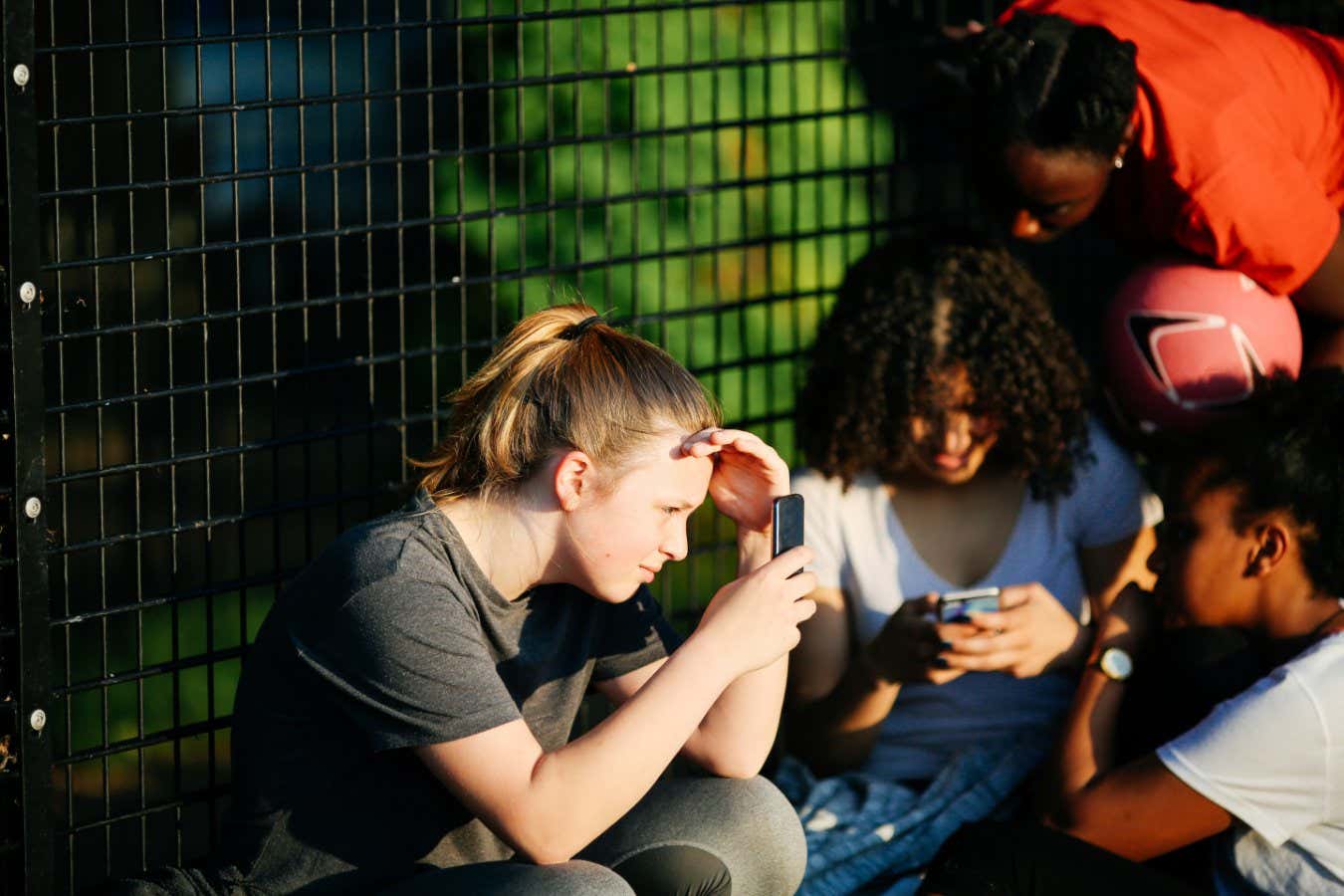
Social media can bombard adolescents with people to judge themselves harshly against
Alys Tomlinson/Getty Images
How We Grow Up
Matt Richtel (Mariner Books)
The true story at the start of How We Grow Up, the latest book by Pulitzer-winning journalist Matt Richtel, is chilling to read as a parent of children nearing adolescence.
Elaniv was a happy, effervescent girl. But when puberty kicked in, she began to change wildly, and for no obvious reason. She couldn’t concentrate on her studies and became depressed. Medication didn’t seem to help. Despite her parents’ efforts, she eventually ended her own life. “It was not for a lack of personal relationship, nor for lack of treatment,” her father tells Richtel. “I did the very best I could for my daughter.”
In How We Grow Up, Richtel searches for the roots of a possible mental health crisis among young people today, combining interviews, scientific research, historical data and the voices of key researchers. The book paints a vivid picture of the changes our modern world has wrought on this pivotal transition to adulthood, bringing fresh, formidable challenges.
Adolescence is linked to the onset of puberty and a shift in the balance of key brain chemicals. As young people strive to work out who they want to be, they can become rebellious, moody and impulsive. But adolescence is starting earlier and lasting longer in many nations, with serious consequences, Richtel writes. Two centuries ago, puberty arrived for children in the US some four years later than it does today, for instance. Since 1900, the average age at which girls in the US have their first period has dropped from 14 to 12. Much of that change is down to better nutrition, allowing the body to develop faster, he writes.
The world has also transformed in that time: our planet is well mapped and technology has left most people physically safer and better fed. The spaces in which adolescents can rebel have become more cerebral – our identities and ethics – and ever-more interaction happens online, where there is more information to process and more people to judge yourself against, argues Richtel.
Dramatic drops in binge drinking and drunk-driving accidents among teenagers in the US may be linked to this reduced focus on the external world, says Richtel, but there is a flip side: reduced physical activity, less sleep and an increase in loneliness. Covid-19 lockdowns also isolated some adolescents – who Richtel says need in-person interaction to develop emotional intelligence – as support networks changed and sometimes vanished.
All this means that adolescents’ bodies are maturing faster while their brains remain immature, he writes, alongside which they must deal with the mentally challenging environment of modern life. For most, there will be no serious misadventures, but the online world’s impact is far from uniform.
Data on the mental health effects of social media is mixed, but How We Grow Up contends that it works like a volume knob that amplifies an existing emotional state. Courtney, an interviewee who had their first period at age 10, sums this up well: “I feel like if I was born in 2000 BC in the Alps, I’d still be depressive, but I think it’s wildly exacerbated by the climate we live in.”
Scary, illuminating and hopeful by turns, How We Grow Up clears up some of the realities of adolescence and how to handle them better, whether you are an adolescent or a parent. For me, it helped to read that the rebellions of adolescence have a profound purpose – not just to establish independence, but to remake the future in the image of the next generation.
Chris Simms is a writer based in Somerset, UK
Need a listening ear? UK Samaritans: 116123 (samaritans.org); US Suicide & Crisis Lifeline: 988 (988lifeline.org). Visit bit.ly/SuicideHelplines for services in other countries.
Love reading? Come and join our friendly group of fellow book lovers. Every six weeks, we delve into an exciting new title, with members given free access to extracts from our books, articles from our authors and video interviews. Topics:
New Scientist book club
