

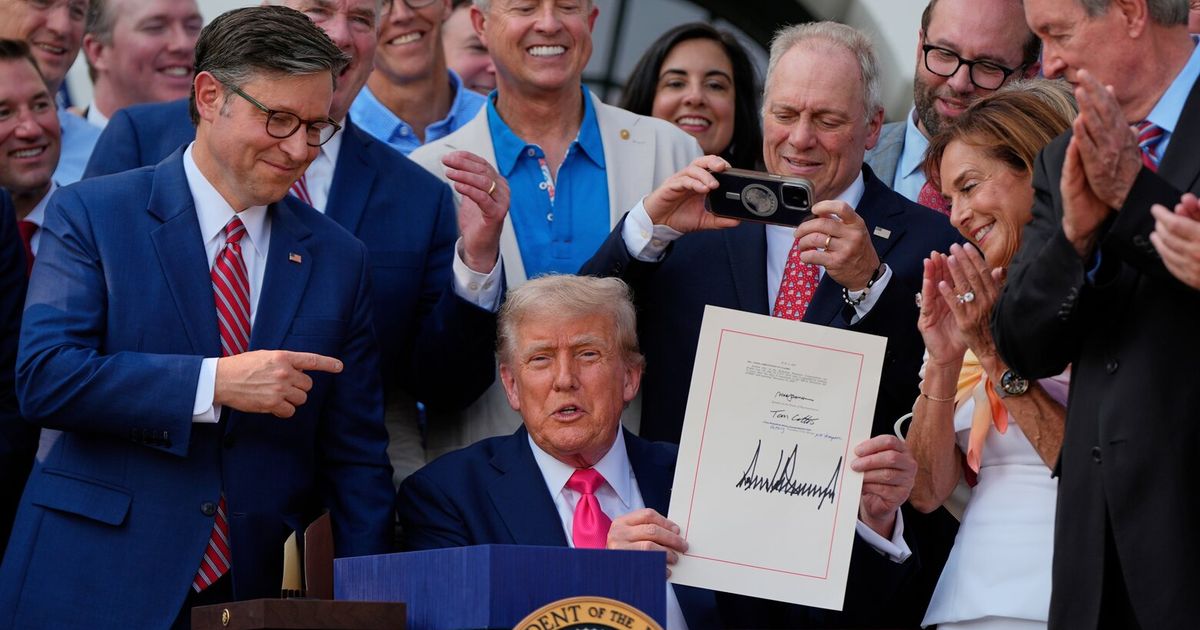
Although President Donald Trump signed his big spending bill last year that cut nearly $1 trillion from Medicaid, the effects continue to reverberate in several states, including Washington. Last week, more than 280,000 immigrants legally living in the United States were kicked off Medicaid, as prescribed by the bill.
Called the Big Beautiful Bill Act, the legislation will result in roughly $2.3 trillion in tax cuts over the next 10 years for households in the top 10% income bracket. That was made possible, in part, by reducing the number of Medicaid recipients.
As a result, about 11,000 Washingtonians who are recipients of Apple Health will go without medical care coverage. That number was reduced from 14,000, thanks to intervention by the Washington State Health Care Authority that reached out to clients directly and through community organizations to have recipients update their immigration status. Still, the loss of medical coverage will have a ripple effect across the state’s healthcare system.
“This is a period of a lot of fear for individuals,” said Ryan Moran, director of the Health Care Authority, which oversees the state’s administration of Medicaid. “The state expects for individuals who lose coverage that they will delay care, and when they delay care their only line of access, at times, can be a hospital emergency department. Loss of coverage doesn’t just impact those individuals. It impacts every single Washingtonian. Because as the ED becomes a source for people to go to, we all will experience potential longer wait times.”
Trump’s bill is projected to reduce federal reimbursement to Washington medical providers, including hospitals, by nearly $500 million in fiscal year 2027 and a total of $3.7 billion over the 2027-2029 biennium, according to Gov. Bob Ferguson’s office. In addition, new work requirements for Medicaid eligibility will kick in next year. That could affect up to 200,000 Washingtonians.
Among those who are no longer eligible for Apple Health are those seeking asylum from political persecution, sex trafficking and violence, refugees of war and interpreters who assisted the United States in the war in Afghanistan.
“It just feels like there’s this culture of cruelty and retribution, whether it’s against immigrants or anyone who opposes the president,” 8th Congressional District Rep. Kim Schrier, a Democrat and a pediatrician, told The Times editorial board.
Meanwhile, as a result of a lawsuit, a federal judge in Seattle has temporarily allowed 800 of those 11,000 Washingtonians to keep their medical coverage because they qualify for Social Security Income in Washington. The state filed an amicus brief to support the lawsuit.
Washington’s Republican U.S. Reps. Michael Baumgartner of Spokane and Dan Newhouse of Sunnyside joined a majority of Republicans who voted for the bill.
As Election Day nears, Washington voters should be mindful of the decisions made under the Trump administration and how they will continue to impact Washington and Washingtonians.
