

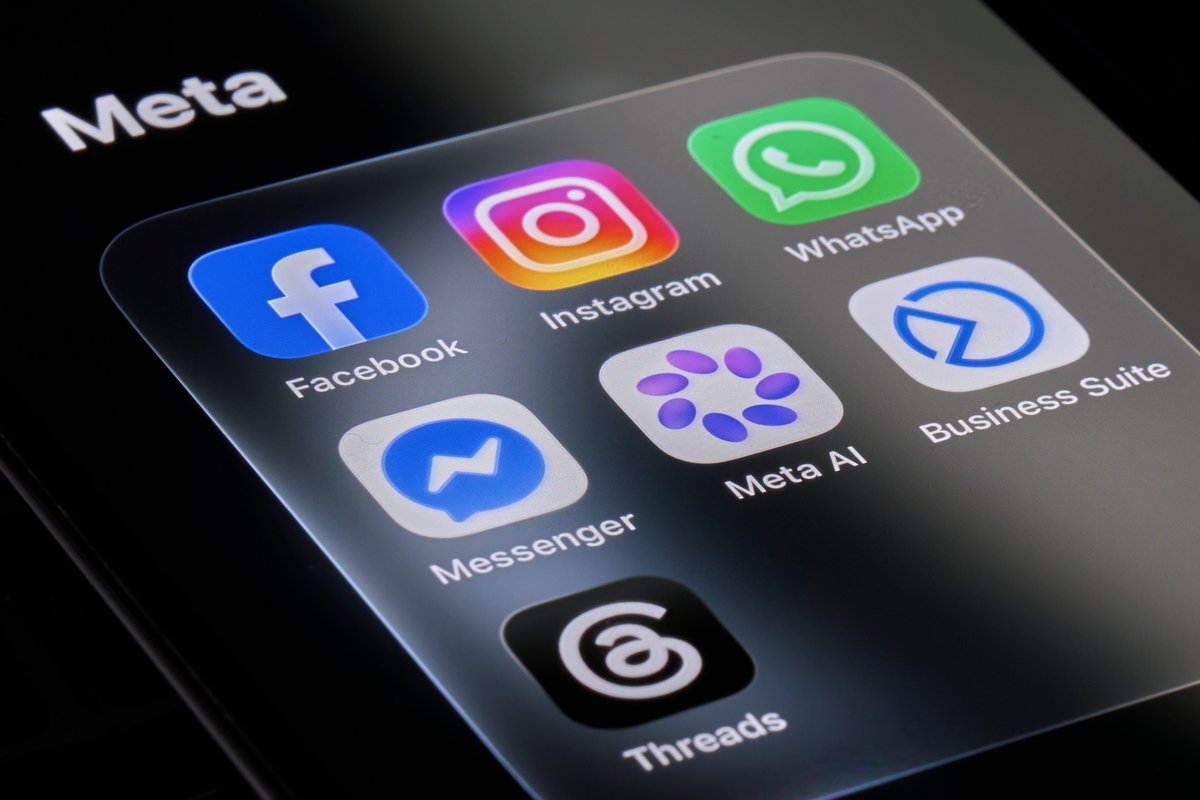
On Wednesday Meta agreed to pay almost $18 billion and implement a host of new safety features for children to settle a long-running lawsuit, filed by dozens of states, that alleged the company’s products harm children. Meta denied all wrongdoing.
The lawsuit was initially filed in 2021 by a bipartisan group of attorneys general from 29 states; 18 more states, as well as Washington, D.C., and several U.S. territories, joined later. The lawsuit alleged that Meta designed and deployed features it knew could have a negative effect on young users and that the Mark Zuckerberg–run company misled the public about those risks.
Virginia’s state attorney general Jay Jones said in a statement that the settlement will “put an end to these dangerous practices and deliver meaningful relief that will protect children from online harm.”
On supporting science journalism
If you’re enjoying this article, consider supporting our award-winning journalism by subscribing. By purchasing a subscription you are helping to ensure the future of impactful stories about the discoveries and ideas shaping our world today.
“I think it’s a win-win situation for both the states and Meta, as well as for parents and minors,” says Clay Calvert, a nonresident senior fellow at the American Enterprise Institute, whose research focuses on social media platform regulation. “It’s a very creative settlement.”
Alongside the financial penalty, the agreement requires Meta to implement new safety features across its platforms. These include a default time limit of two hours per day on Facebook and Instagram for all users under the age of 18, as well as prompts after every 15 minutes of continuous use. Apps will also be restricted by default for minors between the hours of midnight and 6 A.M. It’s unclear how exactly Meta will change its apps in order to roll out these features.
The company will also turn off push notifications on children’s accounts during school hours and do more to verify users’ ages. And Meta will implement stronger safeguards to protect against cyberbullying and to block content that promotes harmful behaviors. Additionally, it will hide likes on teens’ and other users’ posts by default.
Meta’s compliance with these measures will be monitored by an independent auditor and the settling states. A social media research foundation will also be set up to study teenagers’ well-being online.
In the settlement, which was filed in the District Court for the Northern District of California on Wednesday, the company agreed to pay roughly $12.7 billion to the participating states and territories over a 10-year period. A further $5.3 billion will be paid out if YouTube and TikTok agree to one-hour daily limits, a nighttime safety mode, and age verification measures and if both companies also agree to match the $5.3 billion, Meta said in a statement.
“I think [TikTok and YouTube] have every incentive to join in rather than face a lawsuit from the states’ attorney[s] general in the future,” says Calvert.
Meta said its goal is “to ensure teens benefit from this new industry standard” and that the new protections will only have a real effect if they are also implemented by its competitors, TikTok and YouTube.
“While this is an important step, the fact is that teens move fluidly between dozens of apps a day,” the company said in the same statement. “All platforms should empower parents and support teens by putting the same measures in place, because we know that when teens are restricted on one app, they simply move to another.”
While some research points to social media having an addictive effect that’s roughly akin to gambling, with children and young people being particularly vulnerable, other studies have found some benefits. For example, there is evidence that young people who use social media apps in moderation have higher scores on overall well-being than non-users.
The settlement comes after a Los Angeles jury, in March, found that Meta and Google acted negligently when they designed features such as infinite scroll and autoplay for Instagram and YouTube, respectively, and failed to warn users about risks. The case’s plaintiffs were awarded $6 million; the two companies have appealed the decision.
Additional reporting by Allison Parshall.
Editor’s Note (8/26/26): This is a breaking news story and may be updated.
It’s Time to Stand Up for Science
If you enjoyed this article, I’d like to ask for your support. Scientific American has served as an advocate for science and industry for 180 years, and right now may be the most critical moment in that two-century history.
SciAm always educates and delights me, and inspires a sense of awe for our vast, beautiful universe. I hope it does that for you, too.
If you subscribe to Scientific American, you help ensure that our coverage is centered on meaningful research and discovery; that we have the resources to report on the decisions that threaten labs across the U.S.; and that we support both budding and working scientists at a time when the value of science itself too often goes unrecognized.
In return, you get essential news, captivating podcasts, brilliant infographics, can’t-miss newsletters, must-watch videos, challenging games, and the science world’s best writing and reporting. You can even gift someone a subscription.
There has never been a more important time for us to stand up and show why science matters. I hope you’ll support us in that mission.
