

After the usual round of strategy conversations, my client sat down to write his strategy document. It had been percolating in his head for days. Then, when he sat down, nothing happened.
Strategy and strategic thinking are of the utmost importance as the bedrock and guidance for organizations, but creating them requires your brain to work well.
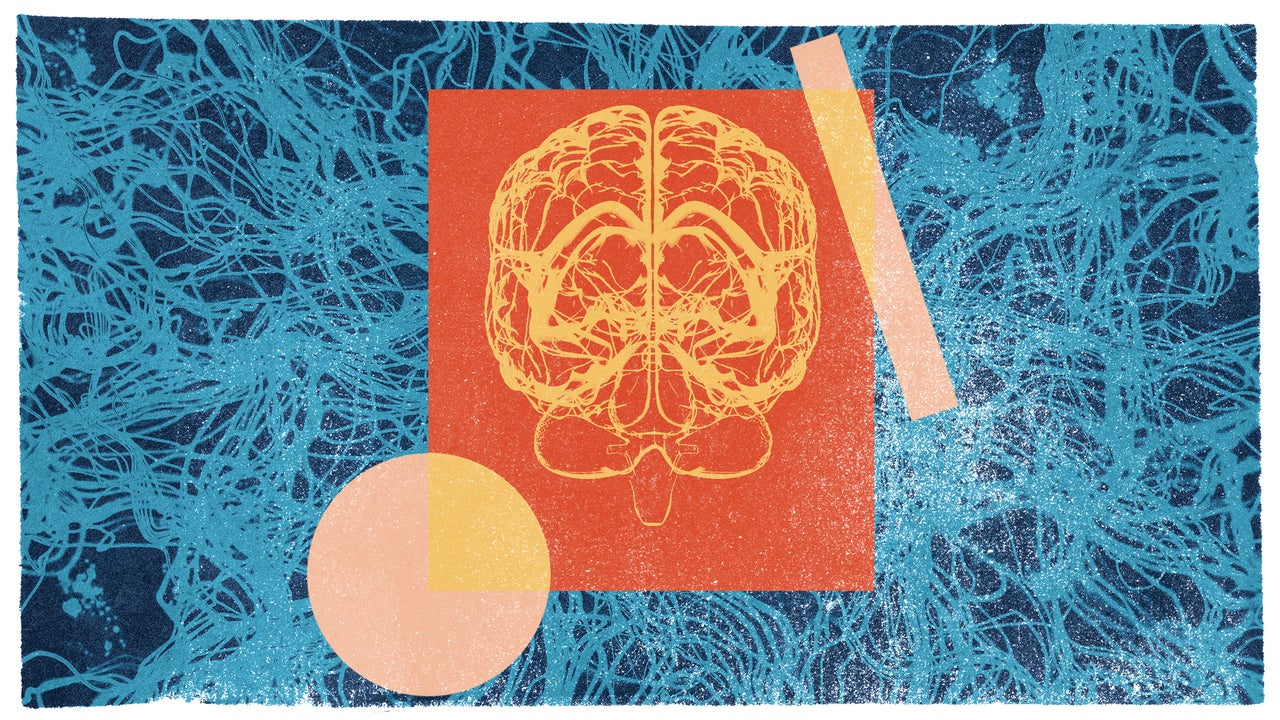
Understanding how the brain supports performance is useful not only for strategy work but also across many leadership tasks. Although the brain contains around 80 billion neurons with countless connections, two systems matter most here: the analytic network and the limbic system.
2 systems
The analytic, or task-positive, network is responsible for complex thinking and decision-making. Sitting mainly in the prefrontal cortex (PFC), it’s where brain-area integration occurs. Therefore, to write a strategy, we draw on working memory (the brain’s project management system), language processing and production, information synthesis, and the visual and motor coordination needed to put ideas into words. For this to happen effectively, the system needs freedom from interference. That interference can come from the limbic system, located at the back of the brain above the brain stem.
The limbic system—really a collection of areas including the thalamus, hypothalamus, and the amygdala—acts as our reaction and alarm centers. When receiving huge amounts of data about what’s happening to us, and what we predict is about to happen, it triggers our fight or flight responses to keep us safe. Neurobiologists think that, given the highly technological and uncertain times we live in, the limbic system is more stimulated than ever before. And here’s the important connection—when the limbic system is this active, it inhibits functionality of the analytical network. This they call a “threat state.”
My client couldn’t write that strategy most likely because he was in a “threat state”: He was overwhelmed, stressed, beginning to doubt his ability, and becoming anxious that he would not get it done in time. In threat states, we find it hard to act, to be logical, and we’re likely to be biased and make mistakes. We experience emotional arousal and behavior change, where we’re less able to attend to others.
Knowing this is good. It means we can do something about it. We can deliberately guide our brain to enter the opposite state, the “reward state,” where limbic system activity is lower and the analytic network is fully accessible. In the reward state, we can perform. We need to be in the reward state to do the hardest tasks of leadership: being strategic, making difficult decisions, delivering hard news and feedback, creating accountability and momentum, managing conflict, and sustaining focus by filtering out the noise. Luckily, there are four fairly simple activities we can engage in to reach this functioning position.
What to do
First, engage with our core purposes. Focusing on why over what and how is good for brain function. When we concentrate on meaningful purpose, prefrontal cortex activity improves, telling our limbic system, “I’m okay.” Purposes, plural, are key because several are at work simultaneously: There is the personal purpose to do that role, the overarching organizational purpose, the local purpose (why we’re focusing on something specific), and the “now” purpose (the why of what we are doing right now). Attuning and clarifying these purposes to ourselves, and communicating these to others, helps.
Second, use some emotional regulation techniques. We each have a toolbox full of these. This is the moment to use them to calm the limbic system by sending it signals to say we are not in a threat situation, and all is under control. Classic ones are breathing, mindfulness, and self-affirmations. Saying emotions out loud, tapping, and focusing on nature are also proven ways to reduce limbic system noise.
Third, seek social support. Engaging in a positive relational experience, such as talking with a confidante or coach, creates oxytocin, a powerful neurotransmitter substance that calms limbic system activity. Alternatively, ask curious questions to those around you, listening carefully to answers, or even talk to your dog! Social support is considered the biggest correlate of resilience at work, and is crucial to help with the loneliness of leadership.
Finally, there are several ways to push the prefrontal cortex to work despite limbic overload. Use a “third brain,” a depository for all the noise, such as journaling or a good list system (or make even better use of your executive assistant), and replenish your energy—as these complex leadership tasks are highly energy-consuming. It’s important to keep hydrated and eat! Checking for evidence and bias—asking “what’s the evidence for this?” or “what’s missing?”—are cognitive management techniques that keep the analytical system working.
Once my client created a “reward state,” his strategy flew out of his head, demonstrating that brains, not just strategies, drive performance.
