

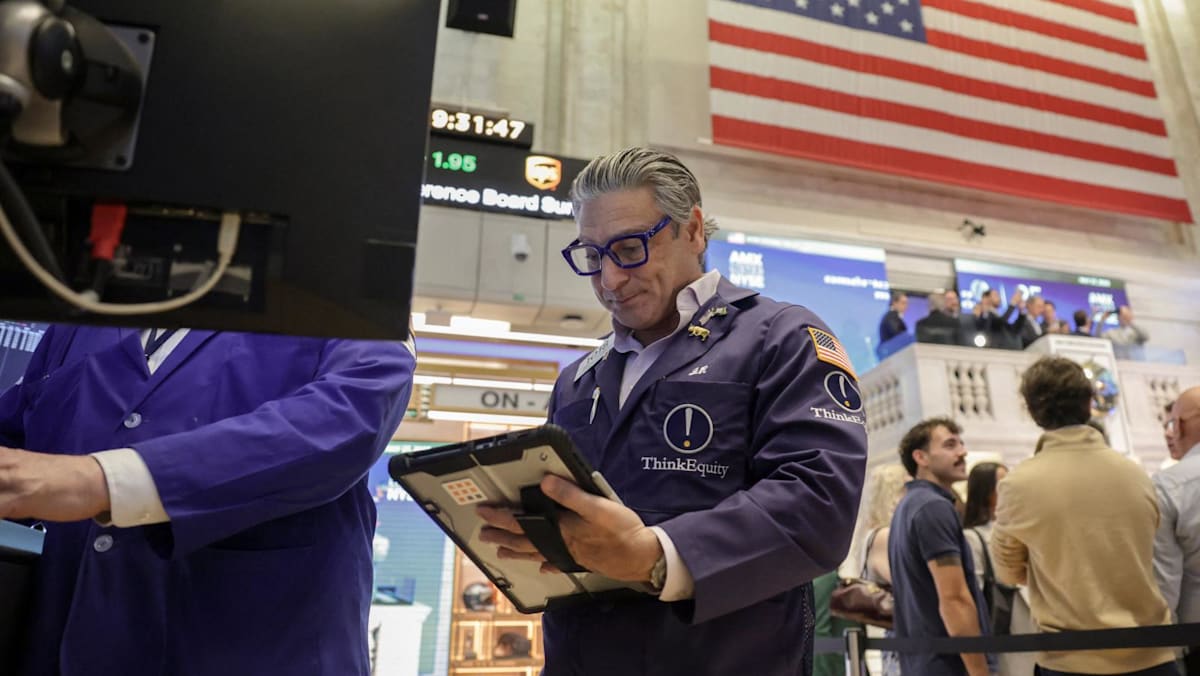
Major European indices closed in the red as London lost 0.8 per cent while Frankfurt and Paris also pulled back.
Wall Street’s gains came despite several gloomy indicators, with the Federal Reserve’s preferred inflation gauge rising in April to its highest since 2023 and first quarter economic growth being revised lower.
The personal consumption expenditures (PCE) price index jumped 3.8 per cent from a year ago, the Commerce Department said, in line with expectations and up from 3.5 per cent in March as the economic fallout of Trump’s Iran war continued to hit Americans.
The world’s biggest economy also revised its first-quarter GDP growth to an annual rate of 1.6 percent from 2.0 percent, on lower-than-estimated investment and consumer spending.
The combination of persistent inflation and slowing growth lowers the chances of interest rate cuts by the Fed, despite Trump’s repeated calls for lower rates to boost the economy.
“Even after stripping out energy prices, core PCE is sitting at a multi-year high. In response, the Fed has already taken on a more hawkish posturing in response to higher inflation,” said Bret Kenwell, US investment analyst at eToro.
“The concern now is whether higher energy prices begin to filter into non-energy categories, making inflation harder for both consumers and the Fed to look through,” he said.
Asian markets meanwhile saw losses, with the main benchmarks in Hong Kong, Taipei and Sydney closing down more than one percent. Shanghai was the sole major exchange to buck the trend, adding just 0.1 per cent.
