

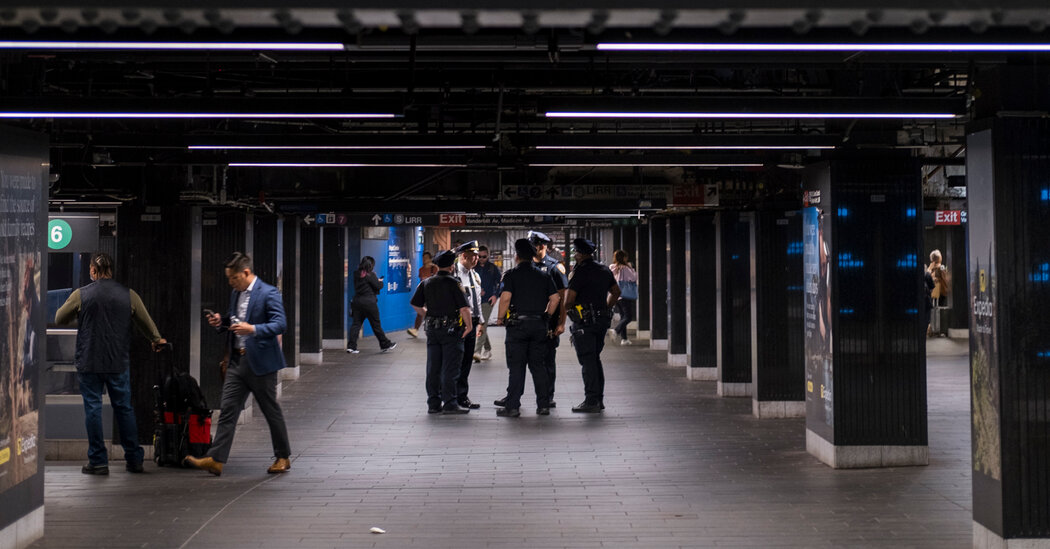
As for the three obvious facts, first, the public is concerned about subway violence and disorder, and rightly so. Even though they have fallen from pandemic rates, violent subway felonies in 2024 were well above the lows that long persisted before 2020 — 14 percent above 2019 levels, even as post-pandemic ridership lags.
The nature of the crime has changed, too, rattling riders: Last year’s felony assaults, many of them committed by repeat violent offenders, without warning or provocation, were 55 percent above 2019 levels, higher than at any time since at least 1997. Last year’s 10 recorded murders, plus one apparently justified homicide during a violent robbery and one violent death after a fight, were also the highest in that time span. Through 2019, it took six years to rack up such a murder toll.
Second, part of returning to pre-2020 levels of public safety must be policing — but not the stopgap policing that Mr. Adams has engaged in. Continuing a policy that actually started in the final year of Bill de Blasio’s mayoralty, Mr. Adams, with Gov. Kathy Hochul’s financial support, has relied on overtime shifts and redeployed street officers to periodically surge the police presence in the subways. When sensational crime temporarily abates, the extra cops disappear; rinse and repeat.
The city relies on overtime and redeployments because the transit-police contingent of the New York Police Department, budgeted at about 2,700 officers, is well below the 4,100 in the mid-1990s, a time when crime sharply fell from its peak a few years earlier. Mr. Adams, despite his own 2021 pledge to cut subway crime, has never proposed a real solution to the staffing issue.
Mr. Cuomo says he’ll bring the Police Department’s transit ranks up to 4,000, to consistently enforce transit rules against behaviors such as lying across seats and smoking. Police Commissioner Jessica Tisch is doing some of this work, to early good results, but without more transit officers, she cannot keep it up.
