

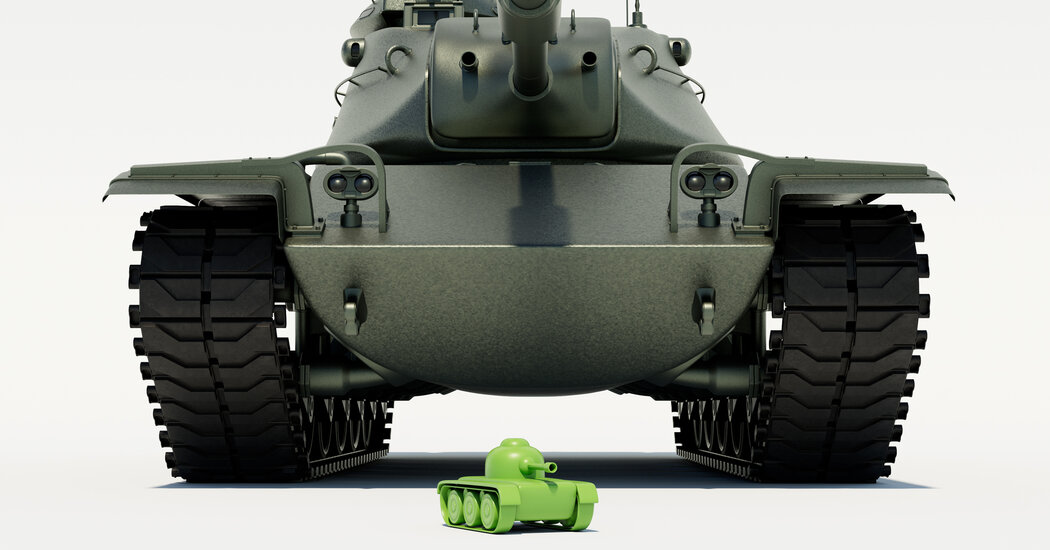
There is a condition that can befall small states kept too long under the protection of great powers.
When the protection is generous enough, they can become both militarily formidable but also strategically undisciplined. They grow fluent in force and illiterate in consequence. They acquire the manners of sovereignty without its restraint, because the costs of that sovereignty are borne elsewhere — in arms shipments, guarantees, Security Council vetoes and the patron’s diplomacy. Over time, strategy atrophies. In its place comes the belief that force can substitute for statecraft.
Israel suffers from such a condition. Its attack on Iran, carried out alongside the United States, was meant to restore Israel’s command of the region. It may instead be remembered for exposing its limits.
Iran has been battered, but not transformed. Its nuclear program was damaged, not dismantled. Its regime endures. Instead of a new Iran, Israel may now face something worse: the old one, bloodied and hardened by survival. The memorandum of understanding signed last week by the United States and Iran seeks to halt hostilities on terms set by those countries, revealing the bounds of Israel’s achievement. Israel could fight a war alongside the United States, but it could not dictate the endgame.
That is the calamity beneath Israel’s operational successes. Israel has shown that it can reach Iran and punish it, but reach is not resolution. What remains is strategic drift, diplomatic sidelining and a dependence on the United States that is deeper than Israel’s leaders can acknowledge, perhaps even to themselves.
For decades, Israel has spoken in the idiom of self-reliance while living inside the architecture of American protection. Its leaders repeated the promise that Israel would always be able to “defend itself, by itself.” Behind the creed stood American weapons, intelligence cooperation and wartime replenishment of arms, and $3.8 billion a year in U.S. military assistance. The deeper the dependence became, the more fiercely Israel insisted it stood alone.
The problem was not the “special relationship” as such. It was the extent to which it had become unconditional. Thus, the occupation could be managed rather than ended. Palestinian national claims could be deferred, diluted and finally recast as an existential threat to be defeated rather than a political demand to be answered. In the West Bank, settlements could spread and settler pogroms could terrorize Palestinian villagers, not merely beyond the state’s reach but increasingly enabled by the state. Gaza could be sealed off, immiserated and left without a political horizon because Washington could help absorb the diplomatic cost, even as that cost rose.
That system could be mistaken for stability until the day it collapsed. On Oct. 7, Israel met atrocity with a war. The scale and character of the devastation that followed made the charge of genocide part of the world’s indictment of Israel. Whatever the final legal judgment, Israel can no longer dismiss the accusation as mere calumny.
The devastation has also accelerated a rupture that was already underway in the United States. The consensus behind unconditional support for Israel had been weakening before Oct. 7, under pressure from generational change, a skeptical left and an isolationist right. Israel’s assault on Gaza made the break with unconditional support harder to contain. When an American vice president reaches for the ledger, reminding Israel who pays for much of its defense and warning it not to alienate its only powerful ally, he is not inventing a rupture. He is likely saying in public what Washington had long confined to closed rooms.
Until now, the risk in the relationship seemed mostly America’s: being drawn into wars that its client began or escalated, or being implicated in actions carried out under the cover of American arms, money and diplomacy. But the liability runs both ways. For Israel, the danger is not only that its patron may step back; it is that protection has spared it too long from the discipline that should come with power. Israelis are right to find the prospect of abandonment frightening. Their enemies are real, and solitude is not the same as maturity. American distance will not, by itself, make Israel wiser or safer; it may deepen the siege mentality it is meant to alleviate.
The result of continuing this course is already in view — a fortress state, armed beyond measure, striking widely, trusted narrowly, leaning on a patron whose own public is questioning the relationship that Israel treats as assured. That is not sovereignty. It is dependency with a loud voice.
Zionism began in a longing to return the Jews to history, to make them actors and not supplicants, answerable for power because they had at last acquired it. From the start, some of Zionism’s Jewish critics raised the possibility that statehood, meant to abolish the ghetto, might reproduce it in national form. Contemporary Israel has given that warning a tragic shape: A state armed like a regional power, yet increasingly unable to imagine a political future beyond force, has narrowed the Zionist promise into a garrison and mistaken that narrowing for security.
American distance, should it come, need not be merely abandonment. It may also be the moment Israel must bear the full weight of what it does.
To Israelis who see American backing not as indulgence but as insurance against real enemies, that will sound dangerously naïve. But the deeper naïveté is the belief that the present arrangement can run forever — that Israel can rule millions of Palestinians without end, strike across the region at will, divide the politics of its patron and still count on Washington to convert raw power into legitimacy.
It cannot.
The end of Israel’s American dependency will be painful. Dependencies tend to end that way. But the tragedy would not lie in the loss of indulgence. It would lie in losing it and learning nothing from the loss. If America is now withdrawing the certainty of unconditional rescue, that may be the last gift it can give. What follows will test not Israel’s might, which is not in doubt, but whether it can learn the discipline that sovereignty demands.
