

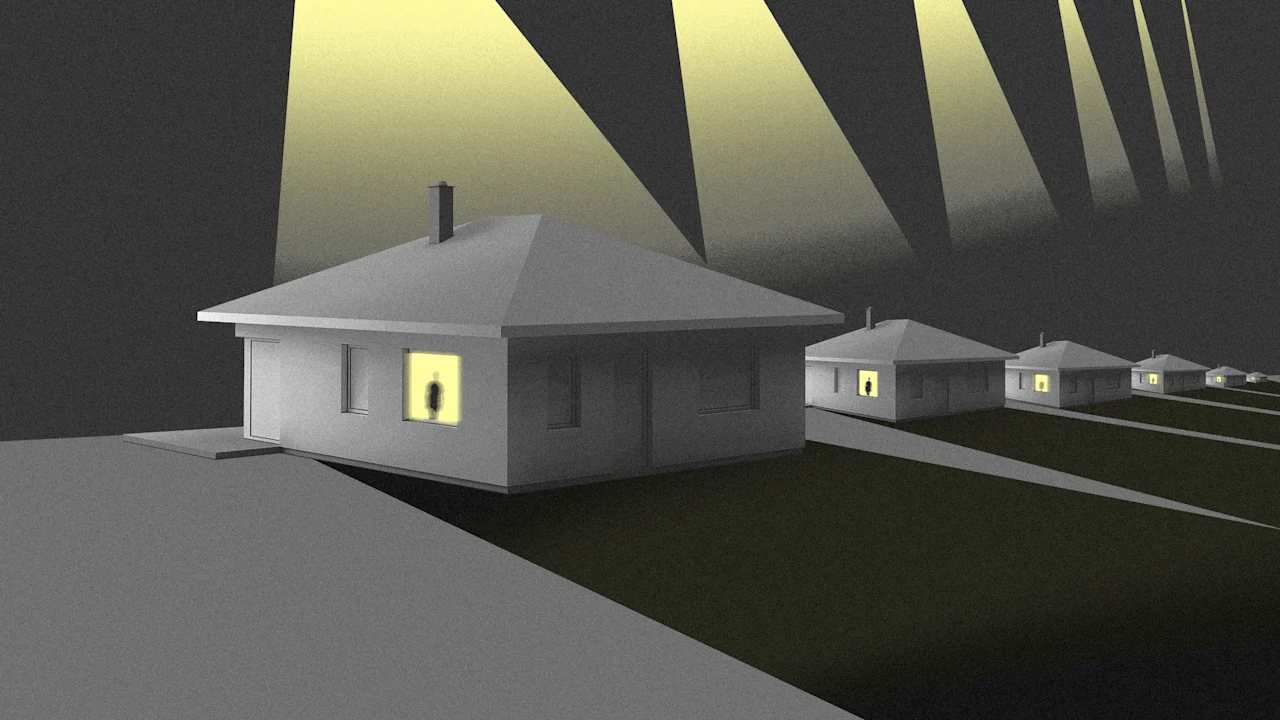
I’ve said it before and I’m sure I’ll say it again: Our built environment contributes to a mental health crisis.
The built environment as we know it—buildings and the spaces between—does direct damage to our minds. Communities developed slowly for thousands of years, but in 20th century America, the end of World War II introduced a massive population and construction boom.
Land use planning has had devastating impacts on Americans—economically, socially, and culturally. But I’m not a doomer and I know these things are fixable. Not overnight reversible, but certainly fixable.
Spreading us out
Typical land use rules are written, updated, and enforced at the local government level. Agencies copied each other over the years—because why wouldn’t they? Much of what I’ve learned as an adult (podcasting, publishing, propaganda making, etc.) has been taught by generous people who themselves had learned tips and tricks. So, of course, public agencies copied each other. “Hey, that worked for a similar river city. Let’s try it here.”
{“blockType”:”mv-promo-block”,”data”:{“imageDesktopUrl”:”https://images.fastcompany.com/image/upload/f_webp,q_auto,c_fit/wp-cms-2/2025/12/speakeasy-desktop.png”,”imageMobileUrl”:”https://images.fastcompany.com/image/upload/f_webp,q_auto,c_fit/wp-cms-2/2025/12/speakeasy-mobile.png”,”eyebrow”:””,”headline”:”u003Cstrongu003ESubscribe to Urbanism Speakeasyu003C/strongu003E”,”dek”:”Join Andy Boenau as he explores ideas that the infrastructure status quo would rather keep quiet. To learn more, visit u003Ca href=u0022http://urbanismspeakeasy.com/u0022u003Eurbanismspeakeasy.com.u003C/au003E”,”subhed”:””,”description”:””,”ctaText”:”SIGN UP”,”ctaUrl”:”http://urbanismspeakeasy.com/”,”theme”:{“bg”:”#f5f5f5″,”text”:”#000000″,”eyebrow”:”#9aa2aa”,”subhed”:”#ffffff”,”buttonBg”:”#000000″,”buttonHoverBg”:”#3b3f46″,”buttonText”:”#ffffff”},”imageDesktopId”:91453933,”imageMobileId”:91453932,”shareable”:false,”slug”:””}}
Planning departments at city and county levels weren’t setting out to guide development in a way that would purposefully harm us. Quite the opposite. If a new Sears distribution center was coming to town, they’d want to map out a plan to accommodate all the new employees and subsequent traffic. In the middle of the 20th century, planners were still very much concerned about separating dirty and/or dangerous land uses from residential areas.
The result was that all across the country, local development rules required or incentivized development patterns that spread everyone and everything across the landscape: work zone, school zone, shopping zone, entertainment zone, and sleep zone. And then each major category started getting more prescriptive subcategories. “Residential” morphed into single-family, multifamily (apartments), and condos. But wait, there’s more!
Residential land uses started to be regulated by local governments according to lot size: garden apartments, planned unit developments, and subdivisions were each given rules. Residential use was also regulated by the type of people living in a place: public housing, group dwellings, age-restricted dwellings, renters, and owners.
Promoting sprawl
Local regulations created (and continue to create) sprawl in cities and the suburbs. Land use planning requires traffic engineering analysis, a process prioritizing car movement above all else. Wider roads and intersections are not just suggested but required, with the express goal to move car traffic from zone to zone as quickly as possible. When in doubt, they add more car lanes. This has been going on for nearly 100 years—without taking a foot off the brake.
Cars and loneliness
The obvious outcome of modern land use planning is that Americans drive everywhere all the time. Not just work commutes, but all the errands before, during, and after work. Half of our car trips are less than a few miles long. A quarter are less than a mile. Less than a mile in a car by ourselves.
Driving is forced on Americans as the only reasonable way to get around. For most, it’s terrifying or deadly to walk or ride a bicycle, even for those errands that are less than a mile away. We’re in a car-first environment because of the organized zones developed by planners and approved by local leaders. Life in a single-occupant vehicle has its perks, like singing along to music or listening to podcasts uninterrupted. It also has its pains, like separation from other humans and mental deterioration.
Loneliness is a significant variable affecting depression. It’s a predisposing factor. Cigna conducted a study of 20,000 Americans and reported a jaw-dropping finding: Nearly half of adults sometimes or always feel alone. More than 40% said their relationships aren’t meaningful and they feel isolated. Actual and perceived social isolation are associated with early death. Your mind tells your body that it’s just not worth living.
Julianne Holt-Lunstad is a professor of psychology and neuroscience at Brigham Young University. She says the health risks of missing out on social connection are like smoking 15 cigarettes a day. Worse yet, there’s a causal relationship between social isolation and suicide. Conversely, having a crew (“social support” in doctor jargon) has a protective effect against suicide. For every suicidal death, another 20 people attempted suicide.
What to do
So what do you do with all this heavy information?
First, remember that the built environment is deliberately planned for us to drive in cars from zone to zone. Planners aren’t trying to destroy our minds, but the built environment increases anxiety, depression, isolation, loneliness, and suicide. Humans are not meant to be alone all the time. Even when you’re hauling kids from school to soccer to the tutor to dinner to whatever else, you’re isolated from social interactions. The kids are watching videos or scrolling through their phones.
Second, understand the land use catastrophes are reversible. Compact development won’t be legalized overnight, but reform can come as quickly as local leaders are willing. There’s no need to wait on a national referendum or the president representing your favorite team. Walk-friendly, bike-friendly, and transit-friendly places are good medicine, and they’re made possible at the local level.
Third, share your car-life stories with me. I’m producing a documentary about unhealthy infrastructure. Specifically, I’m focused on ways our minds and bodies are crumbling because of how places and spaces are planned and built. If you’re interested in sharing what it’s like to be dependent on a car, or what it’s like having to wait 45 minutes for a bus, I’m all ears.
Finally, know that things get better in the end. The mental health crisis is tragic, but we can turn this around with something as boring as reforming land use planning.
{“blockType”:”mv-promo-block”,”data”:{“imageDesktopUrl”:”https://images.fastcompany.com/image/upload/f_webp,q_auto,c_fit/wp-cms-2/2025/12/speakeasy-desktop.png”,”imageMobileUrl”:”https://images.fastcompany.com/image/upload/f_webp,q_auto,c_fit/wp-cms-2/2025/12/speakeasy-mobile.png”,”eyebrow”:””,”headline”:”u003Cstrongu003ESubscribe to Urbanism Speakeasyu003C/strongu003E”,”dek”:”Join Andy Boenau as he explores ideas that the infrastructure status quo would rather keep quiet. To learn more, visit u003Ca href=u0022http://urbanismspeakeasy.com/u0022u003Eurbanismspeakeasy.com.u003C/au003E”,”subhed”:””,”description”:””,”ctaText”:”SIGN UP”,”ctaUrl”:”http://urbanismspeakeasy.com/”,”theme”:{“bg”:”#f5f5f5″,”text”:”#000000″,”eyebrow”:”#9aa2aa”,”subhed”:”#ffffff”,”buttonBg”:”#000000″,”buttonHoverBg”:”#3b3f46″,”buttonText”:”#ffffff”},”imageDesktopId”:91453933,”imageMobileId”:91453932,”shareable”:false,”slug”:””}}
