

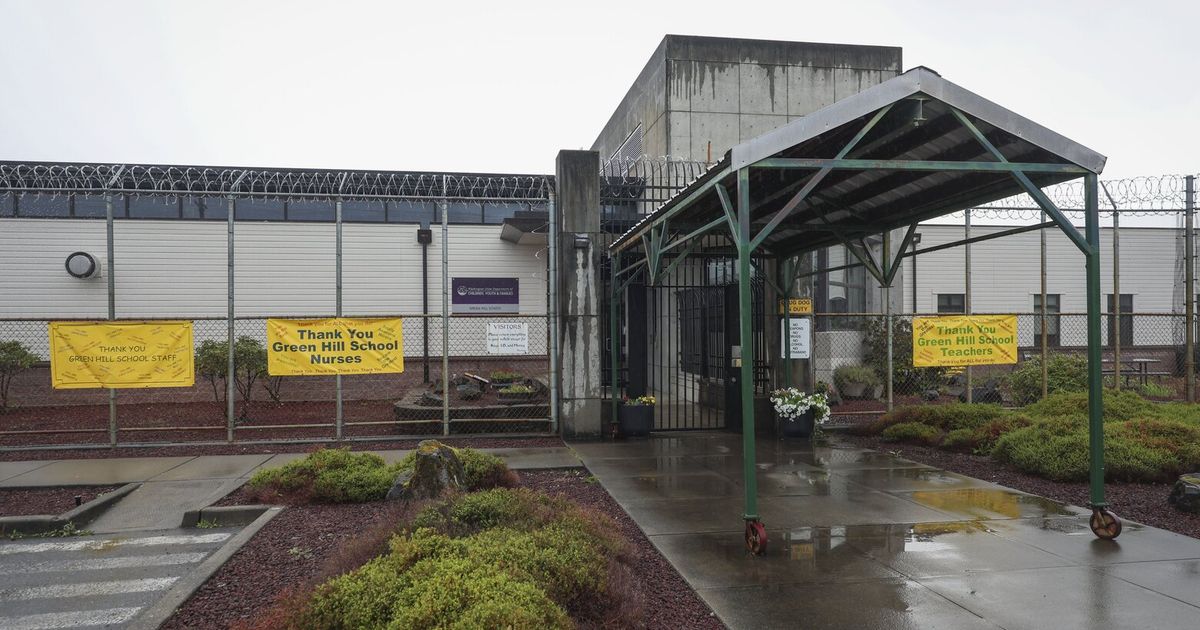
There is no sugarcoating it. When Tana Senn took the helm at the Department of Children, Youth and Families last year, she walked into a quagmire.
A new and damning audit of DCYF’s youth prison system, known as the division of Juvenile Rehabilitation, begins with the word: “Problems.” It goes on to present a 74-page litany of deficits showing quite clearly that this name is euphemistic, to put it politely.
State Rep. Gerry Pollet, chairing the mid-July hearing where the report was presented, shook his head, seemingly stunned. He called it a “serious critique.” He used the terms “dismal” and “failing.”
No wonder. DCYF’s two youth prisons, which together hold about 410 young people, have been overcrowded and understaffed for years, resulting in multiple class action lawsuits. Beyond detailing this well-documented fact, the report points out that using large, prison-style lockups for young people is wildly out of step with what other states are doing to handle this population — less expensively and more successfully. Meanwhile, the budget for Juvenile Rehabilitation skyrocketed 71% in five years.
Worse, the tools used by DCYF to evaluate young people — including on whether they can be safely released to less secure group homes — are unvalidated. In plain English: “The tools are not reliable and do not accurately predict risk,” the researchers said.
A “validated” risk assessment is one that has been statistically tested to confirm its predictions on, for example, a youth’s likelihood of committing new crimes. Using one that is unvalidated can overstate, or understate, the risk. It’s also against state law.
This has real meaning on the ground. Overcrowding at Green Hill School — which has resulted in enormous staff churn, assaults, and new charges for young people supposedly being rehabilitated — might never have happened if caseworkers had a tool for properly identifying which kids really needed to be there and which could have been safely released to community settings.
Secretary Senn, always gracious, told Pollet’s audit committee it had been “a wonderful experience” to work with the researchers who wrote this report. She plans to issue a formal response in August.
But her reply to lawmakers’ questions about using unvalidated risk assessments? Silence. Nor did she address the department’s yearslong lack of college courses for incarcerated young women — which itself sounds like grounds for yet another lawsuit.
She attributed these difficulties to Washington being a pioneer, since the state allows young people to remain in its juvenile prison system until age 25.
“We are charting new territory,” Senn told Rep. Pollet. “We are the only state in the country” doing this, so there’s “not a lot for us to copy.”
Incorrect, and certainly disingenuous. Utah holds young people in its youth facilities up to age 25. California, Montana, Oregon and Wisconsin, go up to 24. Kansas and New York, 22. In fact, a majority of states have extended juvenile court jurisdictions to at least age 20.
The auditors made eight pointed recommendations — one for lawmakers (address overcrowding) and seven for DCYF. Some of them are gallingly basic: collect accurate data; match programs to the needs of the population; use validated assessments.
You know, all the things Washington would do if this state was serious about “Juvenile Rehabilitation.”
