


Education producer
 Getty Images
A bill that had suggested banning smartphones in schools and addictive algorithms aimed at young teenagers has been watered down to gain government support.
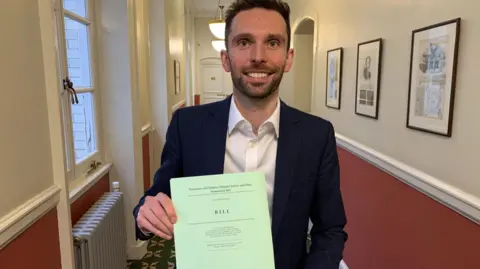
Labour MP Josh MacAlister, who brought the private members’ bill, told MPs during a parliamentary debate on Friday that reducing smartphone use in law would be a “process”, not one “big bang” event.
The proposed legislation calls for the government to say within a year whether it will raise the digital age of consent from 13 to 16 – meaning companies could not receive children’s data without parental permission until that age.
Data Protection and Telecoms Minister Chris Bryant said the bill’s recommendations “very much chime with what we intend to do”.
The bill also says parents need further guidance on smartphone use by children and urges the government to come up with a plan for research into the impact of use of social media on children within 12 months.
Bryant said his department had asked the University of Cambridge to run a feasibility study into the impact of smartphones and social media – and that it would work to “roughly the same timetable” as the bill was calling for.
He added that measures from the Online Safety Act due to be implemented in the coming months, would help protect children online. The act puts a duty on social media companies to protect children from harmful content.
Bryant concluded his speech by telling MPs “inaction is not an option” for the government, adding that it was “not the end of the matter”.
The debate on the bill was adjourned until 11 July.
Private members’ bills rarely make it into law without government backing, but they are an opportunity for backbenchers to raise an issue’s profile.
When the legislation was initially proposed in October, it outlined plans to give head teachers legal backing to make schools mobile free, and strengthen Ofcom’s powers to prevent children being exposed to apps and services “addictive by design”.
In Friday’s debate, Conservative Kit Malthouse, a former education secretary, told the House of Commons the watering down amounted to the “gutting of what could have been a landmark bill”.
He said parents were “screaming for help” from lawmakers, and that “this government, like the last, has dithered, diluted and capitulated” on the issue.
When asked about the changes, MacAlister, a former teacher, said he had “been working really closely with the government” to put forward “practical measures”, and was “optimistic” ministers would support it.
Responding to criticism of the bill’s watering down in Parliament, MacAlister said it was important that MPs made progress on the issue “at every possible opportunity”.
There have been growing calls to restrict children’s smartphone use, including local schools combining to revise their phone policies and parent groups joining forces to delay giving their child a smartphone.
However, some of those in favour of smartphones say they provide opportunities for child development, including socialising, and there is little evidence supporting restrictions of devices in schools.
MacAlister, the Labour MP for Whitehaven and Workington, said the proposal to ban smart phones in schools was dropped from the bill after the government signalled it “was not something they were going to consider”.

 Hamish Phelan
The safer phones bill is calling for:
- chief medical officers to put out guidance on the use of smartphones and social media use by children within 12 months
- the education secretary to come up with a plan for research into the impact of use of social media on children within 12 months
- the government to come back within a year to say whether it will raise the digital age of consent from 13 to 16
An earlier version of the bill in October 2024 originally included proposals for:
- a legal requirement for all schools to be mobile-free zones
- the age online companies can receive data consent from children without permission from parents to be raised from 13 to 16
- Ofcom’s powers to be strengthened so it can enforce a code of conduct to prevent children being exposed to apps and services “addictive by design”
- further regulation of the design, supply, marketing and use of mobile phones by under-16s, if needed
Joe Ryrie, leader of the Smartphone Free Childhood campaign, said the final provisions in the bill were “nowhere near enough”.
The Liberal Democrats accused the government of making “ponderous progress” on the issue, and suggested ministers had succeeded in pushing for the bill to be “watered down”.
MacAlister said he “wanted this campaign to be a campaign of persuasion to put this issue right at the centre of the national debate and bring that debate into Parliament”.
He added: “I think what we’ll see in the government’s response to the bill is that they’re prepared to take some positive steps forward on this issue and that they’re committed to further action and I think that’s really positive.”
Friday’s debate in the Commons comes as a report suggested the majority of young people support the idea of placing stricter rules on social media, with more than 60% saying they believe it does more harm than good.
The study, from think tank The New Britain Project and polling firm More in Common surveyed more than 1,600 people aged 16 to 24.
It found that three-quarters said stronger rules were needed to protect young people from social media harms, and social media was named as the most negative influence on teens’ mental health.

