

(Editor’s note: This column is part of a Seattle Times Opinion series exploring the First Amendment and its five freedoms.)
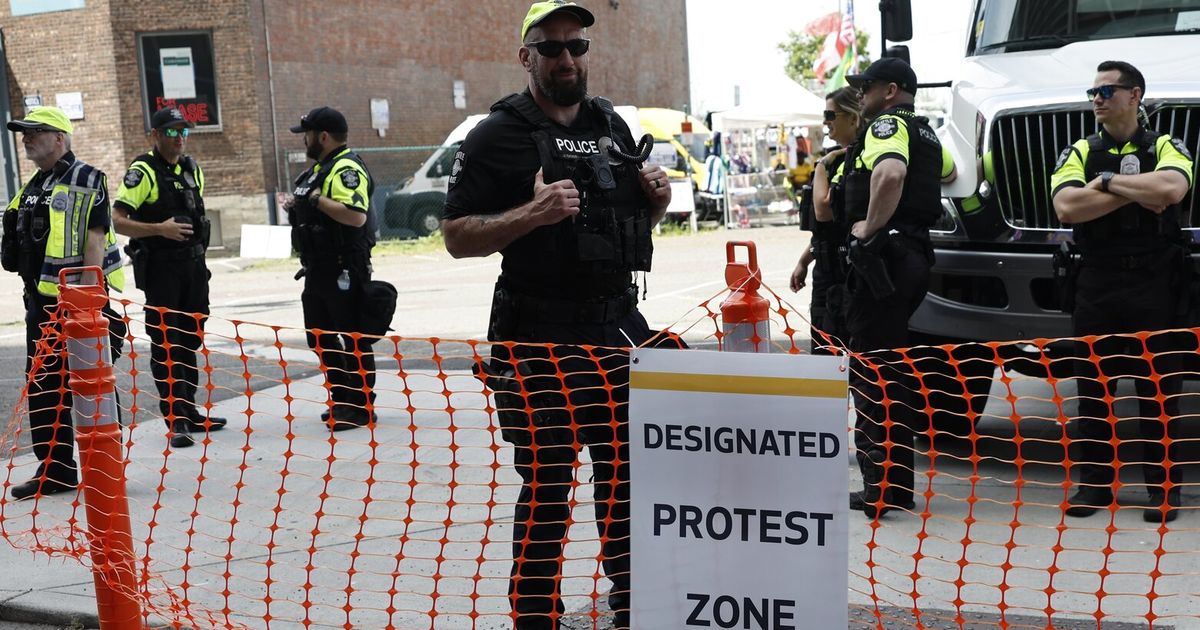
When it comes to the First Amendment and its five protections, uniformed police — the most visible and consequential representatives of local government — have a dual role. They are charged not only with preserving public order but also with protecting people from government overreach, abuse and the suppression of minority voices.
The paradox is heightened by the fact that policing in the United States remains a staunchly local responsibility, with few national standards, even though officers are charged with protecting the civil rights guaranteed by the federal Constitution.
Community and government leaders often voice strong support for First Amendment rights but overlook the practical challenge of balancing protesters’ freedoms with the public’s need to move safely through the community.
Seattle experienced a catastrophic failure of that responsibility in 1999 during the World Trade Organization Ministerial Conference. Infamously known as “The Battle in Seattle,” police leaders’ hubris and political officials’ naiveté contributed to a collapse in public safety that damaged the city’s reputation for decades.
The painful lesson was clear: Ideology is no substitute for strategy when balancing public safety and civil rights.
Thankfully, the Seattle Police Department took the lessons of 1999 to heart. Over the next two decades, it developed best practices and became a national model for crowd management. But in 2020, those practices proved insufficient: Failures of leadership in city government and the police department left front-line officers without clear direction, allowed part of the city to descend into violent chaos, and left officers broken and demoralized.
Best practices cannot overcome the absence of leadership.
Free speech and peaceful assembly can flourish only when established best practices are supported by consistent, courageous leadership in both the police department and local government.
After those two major learning opportunities, the Seattle Police Department developed robust training and practices that allowed the 2026 World Cup — and the accompanying protests and demonstrations — to proceed with minimal disruption, little property damage and no loss of life.
A key factor in that success was a deliberate cultural shift driven by internal police leaders: Away from maintaining order through the implied threat of overwhelming force and toward empowering self-management by the protest leaders and organizers. Research and experience show that people at protests generally fall into three groups: Those exercising their right to be heard, those observing and those intending to cause harm or property damage.
Unfortunately, the third group often draws most of the attention, and for too long police strategy focused on that small group at the expense of the larger peaceful majority.
Those who come to demonstrate or observe do not need police force, or the threat of it, to remain peaceful. They need a clear plan and direction from march organizers and leaders. The most effective way to address troublemakers is for march leaders and police to work together to identify those intent on causing harm, allowing officers to remove them so the peaceful exercise of free speech can continue.
This strategy requires police to build cooperative relationships with protest leaders before an event begins and maintain strong communication until it is over. That is the hardest — and most important — part of ensuring a successful demonstration. It is also where police culture and leadership matter most.
Commanders and front-line supervisors must be committed to facilitating free speech without regard to its content. That commitment is especially difficult in our deeply divisive national climate, where identity politics have made balanced debate increasingly rare, but it must remain the priority.
When police help demonstrators amplify their message without judging it, they can often negotiate practical compromises, such as allowing limited traffic disruption to draw public attention without creating unsafe conditions.
This is a demanding but reasonable expectation for police. Protecting civil rights is difficult work.
The Seattle Police Department’s Police Outreach and Engagement Team, known as POET, has shown that these obstacles can be overcome, even in a contentious political climate. Through early planning, outreach, constant communication, and sustained relationship-building, POET sets officers up to lead with dialogue rather than gas masks and shields during demonstrations.
The goal is to equip and empower protest leaders to manage their own groups while police facilitate the group’s First Amendment rights.
Communication is the central tool. SPD has used this approach successfully for several years, and every new officer is now required to complete an eight-hour POET course during basic training. That investment matters. Training officers to reach out to community members before incidents, communicate consistently and build rapport creates the foundation for effective, trust-centered policing in every arena.
Protecting First Amendment rights has strengthened SPD. For many officers, especially military veterans, this work has deepened their understanding of patriotism and the responsibility of upholding the Constitution. As a result, many have become leading advocates for making the protection of free speech and assembly a priority.
