

Virtual- and augmented-reality setups already modify the way users see and hear the world around them. Add in haptic feedback for a sense of touch and a VR version of Smell-O-Vision, and only one major sense remains: taste.
To fill the gap, researchers at the City University of Hong Kong have developed a new interface to simulate taste in virtual and other extended reality (XR). The group previously worked on other systems for wearable interfaces, such as haptic and olfactory feedback. To create a more “immersive VR experience,” they turned to adding taste sensations, says Yiming Liu, a coauthor of the group’s research paper published today in the Proceedings of the National Academy of Sciences.
The lollipop-shaped lickable device can produce nine different flavors: sugar, salt, citric acid, cherry, passion fruit, green tea, milk, durian, and grapefruit. Each flavor is produced by food-grade chemicals embedded in a pocket of agarose gel. When a voltage is applied to the gel, the chemicals are transported to the surface in a liquid that then mixes with saliva on the tongue like a real lollipop. Increase the voltage, and get a stronger flavor.
Initially, the researchers tested several methods for simulating taste, including electrostimulating the tongue. The other methods each came with limitations, such as being too bulky or less safe, so the researchers opted for chemical delivery through a process called iontophoresis, which moves chemicals and ions through hydrogels and has a low electrical-power requirement. With a 2-volt maximum, the device is well within the human safety limit of 30 V, which is considered enough to deliver a substantial shock in some situations.
Delivering the chemical stimuli of taste and smell is one of the main challenges for XR systems, says Alessandro Tonacci, a biomedical engineer for Italy’s National Research Council, who chairs the IEEE Consumer Systems for Healthcare and Wellbeing technical committee. XR systems “are capable of providing feedback consisting of physical stimulations (sight, touch, hearing), but, due to technological constraints, still fail when dealing with chemical stimuli,” Tonacci says.
The researchers’ approach has been prototyped by others, but they have made the technology more usable by improving the taste quality and consistency, and providing a portable, user-friendly interface, Tonacci says. At this point, he adds, the major challenge will be user acceptance.
A Taste for VR
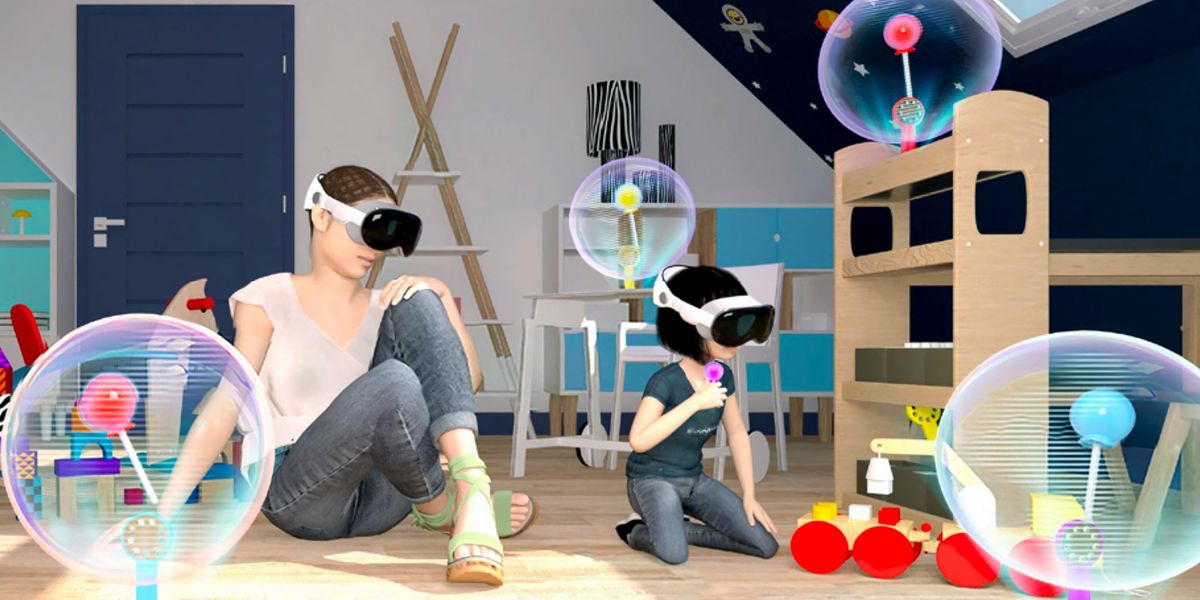
The researchers imagine three possible uses for “tasteful” extended reality: standardized gustation tests, similar to a hearing or vision test; online shopping in virtual grocery stores; and mixed-reality environments where, for example, a child could explore the flavors of different foods.
To further enhance the taste experience in these scenarios, the researchers drew on the strong connection between smell and taste by adding an olfactory component. In addition to the taste generating gels, they added seven channels for odors.
Motion sensors are used to pair the lollipop’s location in the virtual and physical worlds, creating a more immersive experience. Liu et al./PNAS
For better usability, it’s also important for the device to be small and portable. The researchers used ultrathin printed circuit boards and a 3D-printed nylon exterior to keep the weight down. Once loaded with all nine gels, the lollipop weighs about 15 grams—about the same as a Tootsie Pop. (The researchers also tested versions with fewer gels, which allows for a greater volume of each gel and therefore more intense flavor. The trade-off is between intensity and complexity of possible flavors.)
One of the major limitations of the current interface is that it can be used for only one hour before the chemical-infused gels effectively run out. The gels continuously shrink during use, so after an hour, the flavor-generation rate will be extremely low and the gel should be replaced, says Liu.
Going forward, the research group plans to further develop the system to address the short operation time, as well as the limited number of flavor channels and constraints on how it is used. In other words, consider this just a taste of XR interfaces to come.
From Your Site Articles
Related Articles Around the Web
