
Close Menu
    National News Brief
    Saturday, September 5
    • Home
    • Business
    • Lifestyle
    • Science
    • Technology
    • International
    • Arts & Entertainment
    • Sports
    National News Brief
    Home » Russia’s jet-powered drones overwhelm Ukraine, killing dozens | Russia-Ukraine war News

    Russia’s jet-powered drones overwhelm Ukraine, killing dozens | Russia-Ukraine war News

    Team_NationalNewsBriefBy Team_NationalNewsBriefSeptember 4, 2026 Latest News No Comments5 Mins Read
    Share
    Facebook Twitter LinkedIn Pinterest Email


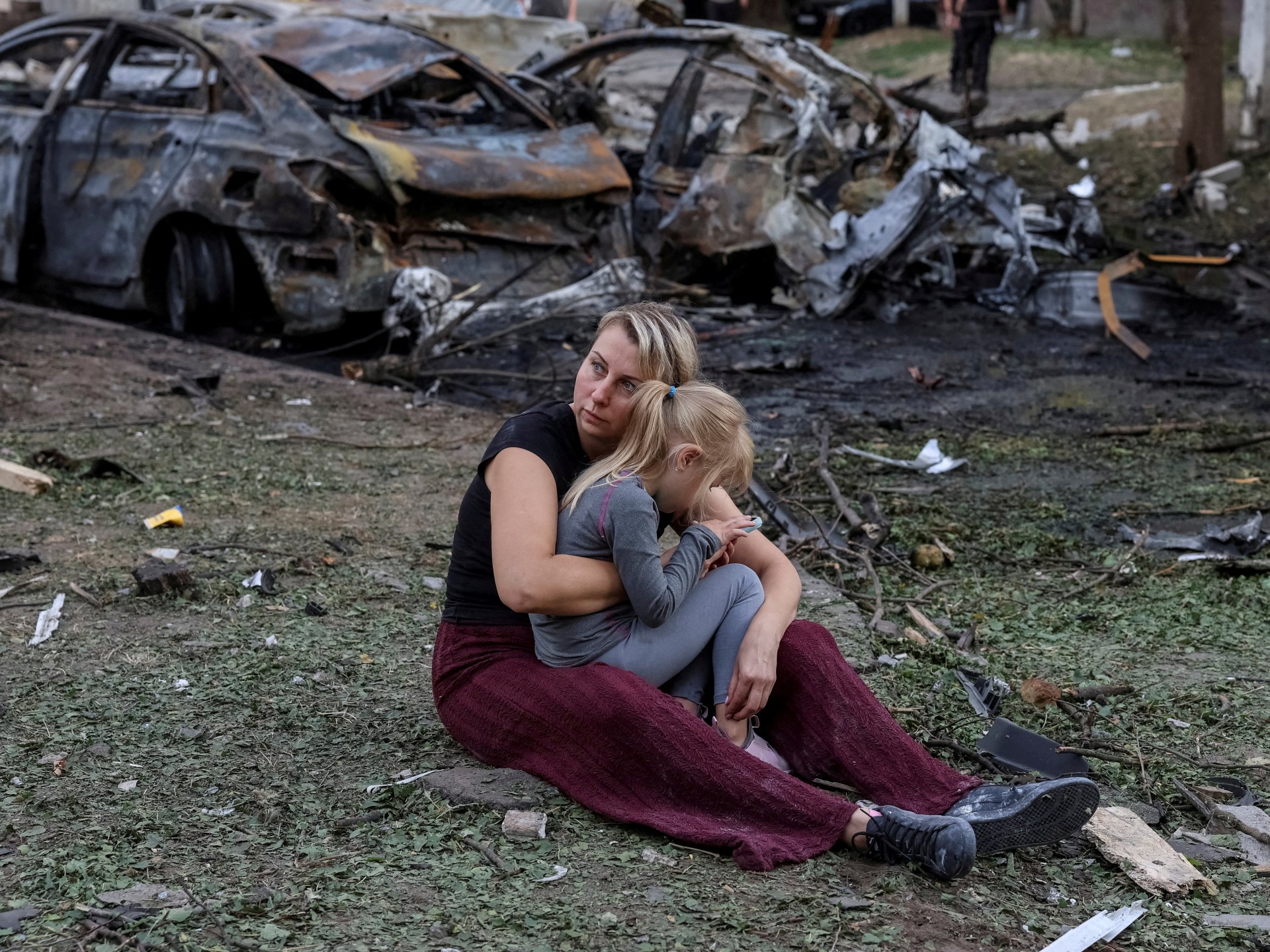
    As the war drags on in Ukraine, its civilians suffer the most.

    Thirty-eight people were killed in the village of Myla on August 29, when a Russian drone attack struck an ammunition depot. Another 12 were killed in attacks across the country on September 1.

    Recommended Stories

    list of 4 itemsend of list

    Civilian deaths have sharply increased this summer as Russia is using jet-powered drones, which fly at about half the speed of a passenger jet and are more difficult to intercept than propeller-powered drones.

    Jet-powered drones numbered about 2,800 in August, said Ukraine Air Force spokesman Yurii Ihnat, compared with about 1,500 in July, several times the number launched in June. Ukraine has an interception rate of more than 90 percent against propeller-powered drones, but only 60 percent against the jet-powered variant, Ihnat said.

    (Al Jazeera)

    Meanwhile, Russian forces suffered 42,020 casualties last month, Ukraine claimed, as Moscow’s territorial gains dropped to a fraction of last year’s rate of advance.

    General Staff of the Armed Forces of Ukraine figures showed Russia’s monthly casualties were only slightly below July’s 42,860, and well above June’s 39,290.

    Al Jazeera cannot independently verify casualty estimates by either side, but if accurate, these summer figures – 25.8 percent higher than the casualties Ukraine inflicted in the spring – suggest the high Russian casualty rate is not a passing event.

    Russian recruitment rates are thought to be well below these figures, estimated by Ukraine at about 32,500 a month this year.

    People visit a McDonald's restaurant which was the first to open in Ukraine in 1997, located in an area that was hit by numerous missile attacks, amid Russia's attack on Ukraine, in Kyiv, Ukraine, September 1, 2026. REUTERS/Gleb Garanich TPX IMAGES OF THE DAY
    People visit a McDonald’s restaurant, the first to open in Ukraine in 1997, located in an area hit by numerous missile attacks in Kyiv, Ukraine, on September 1, 2026 [Gleb Garanich/Reuters]

    Ukrainian President Volodymyr Zelenskyy has publicly shared intelligence suggesting Russian leader Vladimir Putin will conscript 300,000 or more troops this October.

    Zelenskyy has said up to 80 percent of Russian casualties were inflicted in Kostiantynivka, the southernmost of Ukraine’s “fortress belt” of cities in the eastern Donetsk region, whose capture Putin has repeatedly prioritised.

    Russian forces are thought to control only a portion of the city, but have infiltrated more than 70 percent of it with scattered individual troops sent to drop supplies and await reinforcements. Ukrainian drone operators have been targeting them steadily as Russia replenishes them, keeping Kostiantynivka a grey area for months.

    This week it was revealed that Ukrainian commander-in-chief Mykhailo Drapatyi reinforced the Donetsk front around Sloviansk and Dobropillia, north and south of Kostiantynivka, respectively, but kept the Kostiantynivka front largely unchanged, suggesting Ukraine may be adopting the tactic of fighting a prolonged rearguard in this urban landscape to inflict attritional losses, as it did in the battles of Bakhmut, Pokrovsk and Chasiv Yar.

    Police officers inspect parts of a Russian drone, at the site of an apartment building damaged by a Russian drone strike, amid Russia's attack on Ukraine, in Kyiv, Ukraine September 1, 2026. REUTERS/Gleb Garanich TPX IMAGES OF THE DAY
    Police officers inspect parts of a Russian drone at the site of an apartment building in Kyiv, Ukraine, on September 1, 2026 [Gleb Garanich/Reuters]

    The fight for Kostiantynivka has sapped troop strength elsewhere on the front line, where Ukraine has liberated 130sq km (50 square miles) of its land in August, limiting Russia’s overall advance.

    Russia seized just over 90 square kilometres (35 square miles) in August, the Institute for the Study of War, a Washington-based think tank that assesses territorial gains using open-source geolocated sources, estimated.

    While still a net gain, this is less than a fifth of the land Russia seized in August 2025.

    During June, July and August this year, the ISW assessed that Russia gained firm control of 160sq km (60 square miles), compared with 1,440 in the summer months of 2025 (560 square miles) – a 90 percent drop in performance.

    Family members attend the funeral of local villages’ community head Taras Didych, who was among 38 people killed in a Russian drone strike on the village of Myla on August 28, amid Russia's attack on Ukraine, in the village of Dmytrivka, Kyiv region, Ukraine August 31, 2026. REUTERS/Alina Smutko TPX IMAGES OF THE DAY
    Family members attend the funeral of local village leader Taras Didych, who was among 38 people killed in a Russian drone strike in the village of Myla on August 28, in Dmytrivka, Kyiv region, Ukraine, on August 31, 2026 [Alina Smutko/Reuters]

    Ukraine’s response

    Ukraine has turned its focus from Russian refineries to strikes against Russian air defences, radar systems and drone launch sites.

    Ukraine’s Unmanned Systems Forces (SBS) destroyed 33 air defence elements in August, bringing the annual total to 263.

    Ukraine also kept up some strikes on refineries, hitting 12 in August, along with two gas-processing plants and three oil transshipment terminals, according to its defence ministry.

    During the past week, it struck the Yanos refinery in Yaroslavl, and the Kirishi and Ust-Luga refineries near Leningrad, all 800km (500 miles) from its border.

    Petro Ionov reacts near a grave of his son Yevhenii Ionov after a burial ceremony on a cemetery in the town of Bilohorodka, amid Russia's attack on Ukraine, in Kyiv region, Ukraine August 25, 2026. Yevhenii Ionov was among at least seventeen people killed by Russian missile and drone strikes towards Kyiv on August 20, according to mayor Vitali Klitschko. Civilian casualties from Russia's full-scale invasion rose sharply in July as missiles and drones struck cities far from the front lines, the United Nations said in a report published on August 14. The U.N. Human Rights Monitoring Mission in Ukraine said it had confirmed at least 437 civilians killed and 2,610 injured during the month, a 30% increase from June and the highest toll since May 2022.REUTERS/Anatolii Stepanov TPX IMAGES OF THE DAY
    Petro Ionov reacts near a grave of his son Yevhenii Ionov after a burial ceremony in the town of Bilohorodka, in Kyiv region, Ukraine, on August 25, 2026 [Anatolii Stepanov/Reuters]

    These strikes have caused petrol shortages, further hurting Russia’s economy.

    Ukraine’s military intelligence reported that certain Russian exports had fallen by 80 percent compared with pre-war levels. Oil has been among the hardest hit, as Ukraine has struck terminals and hundreds of tankers carrying Russian oil in the Black and Azov seas.

    Russian oil exports from the Black Sea port of Novorossiysk fell from 800,000 barrels a day in July to 350,000 barrels a day in August, said Ukraine’s Foreign Intelligence Service.

    “The Russian side acknowledges that its Black Sea Fleet ships are effectively blockaded in Novorossiysk due to our drone strikes and are unable to operate at sea,” said Zelenskyy.

    “Since the Russian fleet is unable to provide escorts for the commercial and shadow fleet …  one of the solutions being considered is to equip civilian ships with small arms, electronic warfare (EW) equipment, and military personnel,” he said. “We will prepare appropriate countermeasures.”

    The strikes on the oil industry have not only reduced exports. They have reverberated across the Russian economy, creating queues at petrol stations and raising prices for consumers.

    This week Russia extended a ban on diesel exports to the end of September, in order to keep its army and transport industry supplied, and sought to import petrol.

    Occupied Crimea, where petrol distribution has been restricted to state vehicles, has been hard hit.

    The Russian-appointed governor of the region, Sergei Aksyonov, said on September 2: “Fuel supplies to the region are currently not fully meeting the needs of the residents. Unfortunately, some residents of Crimea will, at this stage, face limited access to gasoline.”


    Source link

    Team_NationalNewsBrief
    • Website

    Keep Reading

    Why is Argentina reigniting the Falklands dispute? | Border Disputes News

    Haaland heads Man City to the top of Premier League with win over Coventry | Football

    At least 5 killed in Russian attacks on Ukraine as US envoys visit Moscow | Russia-Ukraine war News

    US imposes sanctions on Turkish bank, prompting legal threat | Banks News

    EU official Marta Kos cancels Serbia trip over planned Mladic tribute | Crimes Against Humanity News

    Will Europe pay the US to provide military aid to Ukraine? | Russia-Ukraine war News

    Add A Comment

    Comments are closed.

    Editors Picks

    The Tragic Truth Behind Diane Keaton’s Sudden Death Emerges

    October 17, 2025

    Elon Musk’s X to clamp down on parody accounts

    April 20, 2025

    66 housing markets enter spring 2026 above a key inventory threshold that benefits homebuyers

    March 23, 2026

    Zelenskyy tells aides to reject U.S. pitch for 50% of Ukraine’s rare earth minerals

    February 17, 2025

    UK police to review misconduct claims after Mandelson’s leaks to Epstein | Business and Economy News

    February 3, 2026
    Categories
    • Arts & Entertainment
    • Business
    • International
    • Latest News
    • Lifestyle
    • Opinions
    • Politics
    • Science
    • Sports
    • Technology
    • Top Stories
    • Trending News
    • World Economy
    About us

    Welcome to National News Brief, your one-stop destination for staying informed on the latest developments from around the globe. Our mission is to provide readers with up-to-the-minute coverage across a wide range of topics, ensuring you never miss out on the stories that matter most.

    At National News Brief, we cover World News, delivering accurate and insightful reports on global events and issues shaping the future. Our Tech News section keeps you informed about cutting-edge technologies, trends in AI, and innovations transforming industries. Stay ahead of the curve with updates on the World Economy, including financial markets, economic policies, and international trade.

    Editors Picks

    SpaceX Joins Treasury Asset Trend

    September 5, 2026

    Alba Fears Much-Younger Boyfriend’s Eye Will Wander

    September 5, 2026

    Commentary: The pushback against AI songs is music to my ears

    September 5, 2026

    Why is Argentina reigniting the Falklands dispute? | Border Disputes News

    September 5, 2026
    Categories
    • Arts & Entertainment
    • Business
    • International
    • Latest News
    • Lifestyle
    • Opinions
    • Politics
    • Science
    • Sports
    • Technology
    • Top Stories
    • Trending News
    • World Economy
    • Privacy Policy
    • Disclaimer
    • Terms and Conditions
    • About us
    • Contact us
    Copyright © 2024 Nationalnewsbrief.com All Rights Reserved.

    Type above and press Enter to search. Press Esc to cancel.