

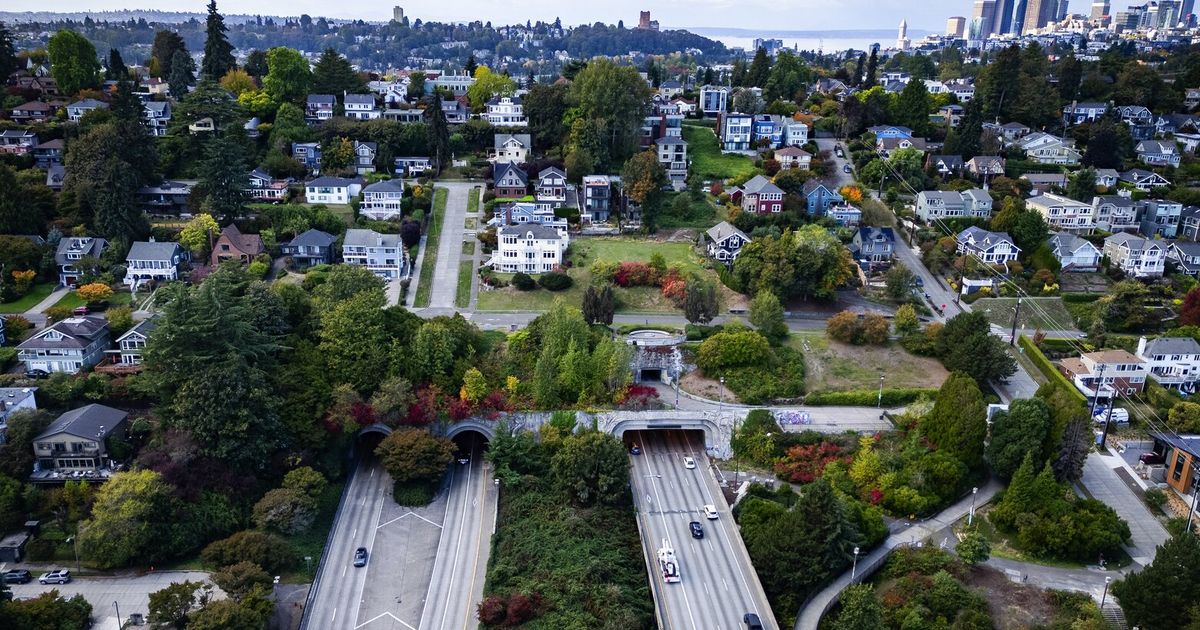
Beginning three days of vote-a-rama on Sept. 17, the Seattle City Council is expected to take up land-use changes impacting every residential property in every neighborhood.
At stake is the livability of the Emerald City. Done right, the One Seattle Comprehensive Plan can meet various disparate needs — more housing, greater affordability, fidelity to our region’s environmental values. Bad decisions will lead to continued displacement of working families, inefficient use of residential lots and an urban landscape that will make Phoenix look verdant by comparison.
One way to ensure Seattle takes the right path is to protect the city’s threatened big trees.
Among the 100-plus amendments to the Comprehensive Plan council members are considering, two tree protection measures stand out and deserve support.
Amendment 93 modifies lot requirements to allow more space for trees to grow. It also allows bigger, taller homes on lots where at least one substantial tree is preserved.
“Without it, lots could be nearly fully paved or hard-scaped — up to 95% coverage,” wrote Tree Action Seattle, a sponsored organization of the Seattle Parks Foundation, in a letter to council members. “This amendment is especially important for front-line communities, which are heavily deforested and depend on new plantings to achieve tree equity.”
Amendment 102 authorizes planners with the city Construction and Inspections Department to require alternative site plans showing how trees could be retained. It would also revise rules around tree protection areas during development.
This would close current loopholes that allow lots to be completely clear-cut, according to Tree Action Seattle, which is arguing for tweaks to both amendments to make them stronger.
Councilmember Maritza Rivera sponsored both proposals and deserves credit for championing what opinion polls show is overwhelming public support to protect Seattle’s urban tree canopy.
“It’s really important to constituents and I’ve been saying all along, ‘Yes, we need more housing, but we can have development and we can protect trees.’ Both are true,” she said in an interview.
For years, builders have argued that saving trees makes housing more expensive. But when they tried to present their case in a 2022 legal challenge to then-proposed tree rules, the Hearing Examiner determined that the industry’s charge was “based on speculation, not any actual quantitative analysis. …”
The city’s construction department estimates that 4,613 trees have been removed since the end of 2023.
If you wonder how effectively current land use laws protect Seattle’s last remaining giants, take a walk. Look around your neighborhood. When you see a new residential development, do you see any tall trees? Or has the lot been scraped and dotted with ornamental species that offer little respite from blistering summer heat, insignificant carbon sequestration and essentially nonexistent stormwater filtration?
On Sept. 12 — just a few days before the council begins voting on the Comprehensive Plan — there will be an all-day public hearing on the proposals and the many amendments. Make your voice heard. If you can’t attend virtually or in-person, call City Hall and share your opinion.
Council members have an opportunity to do the right thing. Grow the city and do it in a way that holds true to Seattle’s environmental ethic, now and for future generations.
