

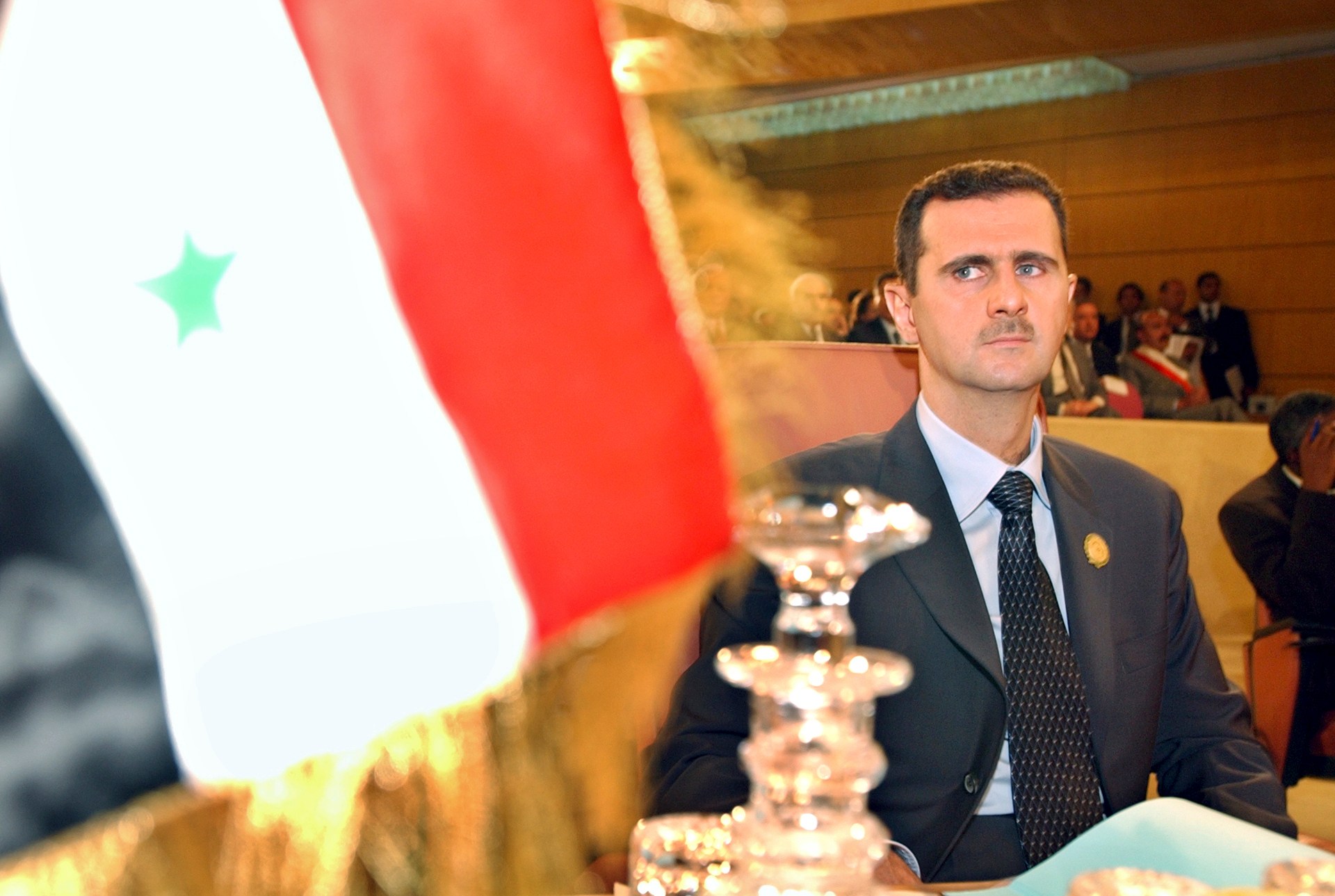
After more than 13 years of war, hundreds of thousands of people killed and millions displaced, the 24-year rule of Syrian President Bashar al-Assad is over.
Large crowds on Sunday gathered in the streets of Damascus to celebrate, after opposition forces took control of the capital in a stunning advance that saw them seize several key cities in a matter of days.
Al-Assad reportedly fled the country on an aeroplane, bringing an end to more than 53 years of his family’s authoritarian rule over Syria.
His departure leaves a country in ruins and millions of Syrians wondering what’s next.
A man who wasn’t meant to lead
When al-Assad inherited power in 2000 after the death of his father, Hafez, there was cautious optimism for political change in Syria.
Originally an eye doctor studying in London, al-Assad was never meant to become president. He was called back to Syria after the death of his older brother, Basil. In order for Bashar to assume the presidency, the parliament had to lower the minimum age for candidates from 40 to 34. He won a referendum with more than 97 percent of the vote, where he was the only candidate.
The quiet, reserved man initially generated hopes for reform, but aside from a few limited economic changes, his rule closely resembled his father’s 30 years of authoritarian governance.
The Syrian uprising
A decade later, in March 2011, al-Assad faced his first major challenge as Syrians took to the streets demanding democracy, civil liberties and the release of political prisoners.
Al-Assad dismissed the uprising as a foreign conspiracy, labelling his opponents as “terrorists”.
As leader of the country’s only legal political power, the Baath Party, and commander-in-chief of the armed forces, his response was a brutal crackdown.
This only intensified the protests, which quickly escalated.
In 2012, the government used heavy weapons against rebel groups, including air raids. The unrest spread, prompting an armed rebellion that drew in regional and international powers.
Clinging to power
In the years that followed, the al-Assad government clung to power with the political and military backing of Russia and Iran, as well as the Tehran-backed Lebanese group Hezbollah.
Al-Assad gradually managed to win back most of the territory his forces had initially lost. But he ruled over a fractured nation, with only partial control and a narrow base of support, particularly from the Alawite minority of which his family is part.
A truce was declared in March 2020 following an agreement between Russia and neighbouring Turkiye, which has historically supported some opposition groups in Syria.
But Syria continued to suffer from frequent bombardments and fighting, while al-Assad ignored a United Nations-led political process to bring about a democratic transition.
For years, al-Assad presented himself as the protector of Syria’s minorities, positioning himself as a bulwark against “extremism” and the only force capable of restoring stability to the war-torn country.
In several elections held over the years, including during the war in government-controlled areas, official results showed al-Assad winning the overwhelming majority of the vote. In May 2021, he was re-elected for a fourth term with 95.1 percent of the ballots cast.
But his government was unable to regain legitimacy in the eyes of much of the international community, with a number of countries and human rights groups alleging that the polls were neither free nor fair.
Meanwhile, his government faced accusations of killing and imprisoning thousands, as well as starving entire communities in besieged rebel-held areas during the war. It was also accused on numerous occasions of using chemical weapons against its own people, charges al-Assad denied.
In 2023, the Organisation for the Prohibition of Chemical Weapons concluded there were “reasonable grounds to believe” that the Syrian government used chemical weapons in attacks on April 7, 2018 in Douma, near Damascus.
In November 2023, France issued an international arrest warrant for al-Assad, accusing him of complicity in crimes against humanity related to chemical attacks blamed on his government in 2013. The following day, the International Court of Justice, the UN top court, ordered the Syrian government to put an end to torture and other forms of cruel, inhumane, or degrading treatment.
“For Syrians, [al-Assad] will always be remembered as the president who exhibited poor leadership, destroyed his country, and displaced his own people,” said Syrian policy analyst Marwan Kabalan.
“He not only lost his rule, but he lost an entire homeland.”
In 2023, after more than 12 years of war, al-Assad was welcomed back into the Arab League by the same Arab states that had once shunned him. The decision to reinstate Syria’s membership marked a dramatic diplomatic reversal as several Arab nations sought to re-engage with al-Assad.
But the situation on the ground remained the same. Syrians, who were hoping for a new beginning, were still living in economic collapse and a humanitarian crisis.
And over the past 10 days, the long-stagnant war came roaring back with the rapid advance of opposition fighters, who quickly took control of several major cities at a time when al-Assad’s allies were busy with their own conflicts elsewhere.
“For decades, this regime has been a source of oppression, instability and devastation,” Fadel Abdulghani, the executive director of the Syrian Network for Human Rights, told Al Jazeera.
He said while the task of rebuilding Syria is huge, he remained hopeful.
“I’m optimistic and I think we can build on that further towards establishing a democratic state.”
