

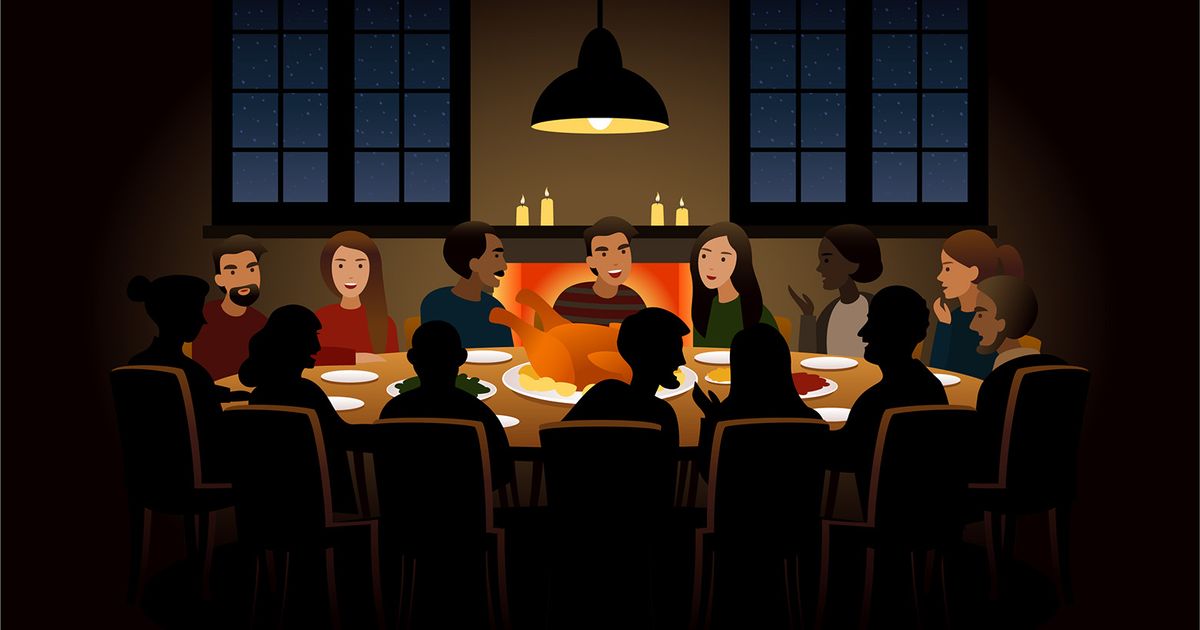
Growing up as I did in 1950s lower-middle-class splendor, I was not one for celebrating Thanksgiving without some J.D. Salinger-esque teen angst. We’d been told to clean our plates because we had less fortunate counterparts in Europe, orphans who went to bed hungry. We were not to waste food. The word “sinful” wasn’t used, but it was implied.
It made me wonder about the good luck/bad luck of life’s reward system and about how we could sit around a table stuffing ourselves, a mere aside to the “less fortunate.” The contrast of our bounty against much of the world’s hunger concerned me. I tried to bring up the concept, but people kept suggesting that I pass the gravy. The aunts and uncles who gathered wanted funny stories, not adolescent conundrums.
By the way, who exactly were we thanking? In those days, I was beginning to think about God — if there were such an entity, was it a he or a she. Had the Almighty intentionally gifted us with decent lives, spared us from worse outcomes? I’d been learning about “unfortunate” people. Hungry people. Impoverished people. By what standard, measurement, judgment, method, had we been gathered for turkey dinner, selected for prosperity? Good night and good luck, Edward R. Murrow used to say, and you had to apply that mantra to time and place. It worked well in white Manhattan. Less so in Harlem. Not at all, I later learned, in the Khmer Rouge’s Cambodia. Or for some young friends, gifted, graced, positioned and gone before they could appreciate their own possibilities. (A tip of the hat to randomness: Two of these people died before they reached majority; they’d been born in 1946, same as me; same as President Donald Trump). Luck is randomly distributed, don’t you think?
My parents were not big on discussing manners. Generally, Mom and Dad modeled courtesy and assumed their behavior would set an example. Theirs was a practical civility. Nothing courtly. Out and about, a nod was often sufficient acknowledgment to show modest appreciation. It became obvious that you used the term “thank you” in response to an intentional act of kindness. If a guy abandoned his seat because he was about to exit the bus, he wasn’t doing you a favor. You sat down before someone beat you to it, appreciating the situation, not the departing passenger. I applied the principle to my Thanksgiving philosophy; I distinguish feeling fortunate from feeling thankful.
Thankful comes with footnotes and fine print. I’m betting some folks huddled around the table in 1945 were giving thanks for the atomic bomb. Wonder if you can retract a “thank you.” I’d rather feel fortunate that my life is relatively comfortable than thank anyone, or nature, or a deity for allowing me more than my share while others struggle. I’d prefer to believe the world is random and that I got lucky.
I’m grateful for the moment — this one. The people I love, the memories I cherish, whether or not they accurately reflect anything other than my version of the past. Grateful also for the hopes I have right now. They make me feel good, and it would be nice if they’d come to pass.
I’m thankful that my parents and close relatives found a way, year after year, politics and dispositions aside, to spend many a Sunday, and a certain Thursday in November, advancing well-established conversations. Following up on various ongoing situations, remembering to avoid discussing others. And occasionally, as I grew into my place at the table, asking me for my opinion.
