

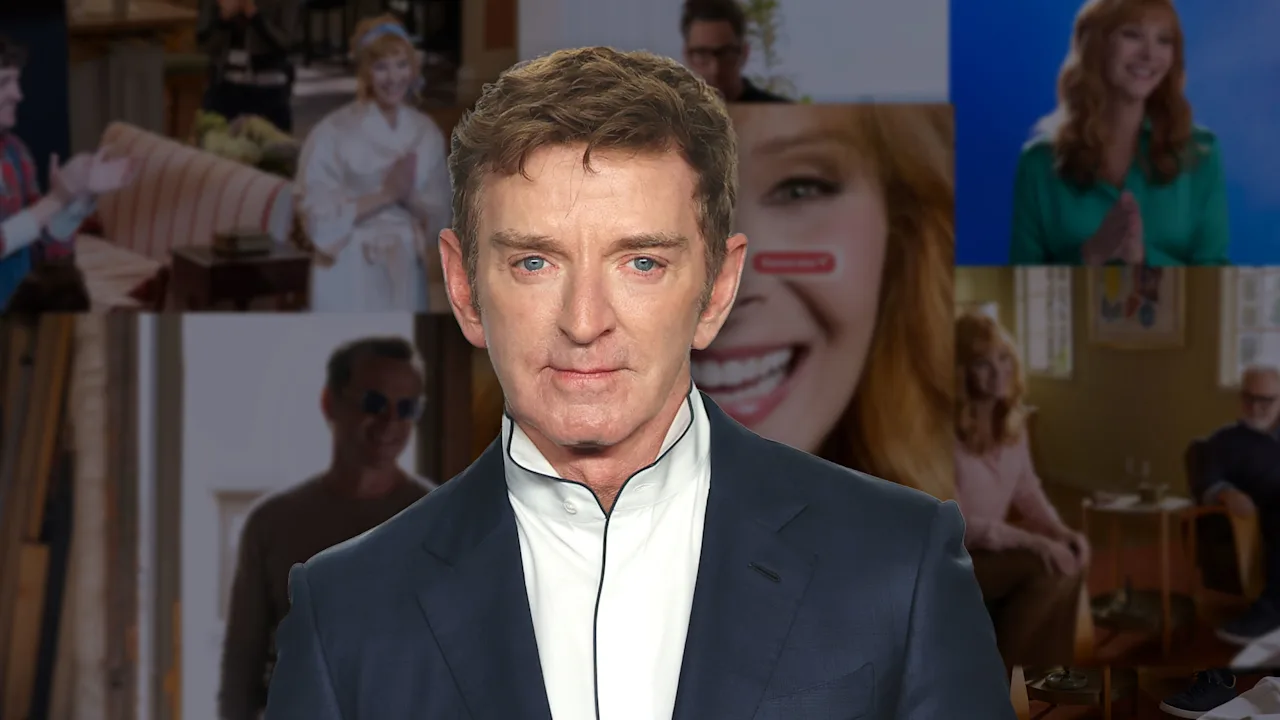
Michael Patrick King has spent decades writing about people navigating worlds where everything feels transactional. With the colossally successful Sex and the City, which spawned multiple films and the sequel series And Just Like That…, King explored how identity, romance, and status become tangled up in consumerism and self-invention. In the long-running sitcom 2 Broke Girls, the focus shifted toward economic precarity and the humiliations of trying to survive in a world where money shapes nearly every relationship.
But King’s sharpest work may be The Comeback, the HBO cult classic he co-created with Lisa Kudrow, who stars as Valerie Cherish, a washed-up sitcom actress whose relentless pursuit of relevance forms the series’ backbone. Across its three-season run, with each installment arriving roughly a decade apart, King, who is 71, has managed to satirize whatever fresh indignity Hollywood has devised for itself.
The original 2005 season targeted the rise of reality television. The 2014 revival turned its attention toward prestige cable auteurs and the absurdity lurking beneath television’s so-called golden age. And now, with its newly completed third season, we follow Valerie as she signs on to star in a sitcom secretly written by AI, turning the entertainment industry’s anxiety over automation into perhaps the show’s bleakest punch line yet.
Plenty of shows have started poking at AI anxiety. (HBO stablemate Hacks aired an anti-LLM episode just a few weeks ago.) But The Comeback approaches the subject from a darker and, in some ways, more uncomfortable angle. King and Kudrow are less interested in warning viewers about rogue technology than in examining the human appetite that makes this kind of technological displacement possible in the first place.
In a spoiler-filled conversation, King spoke with me about why artificial intelligence could be an extinction event for writing, the enduring appeal of the sitcom, and Scranton, Pennsylvania’s track record of producing great playwrights. The interview has been edited for length and clarity.
I wish I’d had my recorder on for the 10 minutes while we talked about both growing up in Scranton.
Come on, like all you journalists, you can make it up!
You’re right, I’ll just make something up.
There’s a very good young playwright from Scranton, Stephen Karam. He wrote The Humans, about a family from Scranton who come to New York to see their daughter, who lives in Chinatown. It was so scary and great.
Don’t forget, we’ve also got the priest from The Exorcist in our ranks.
Jason Miller, of course. People say to me, “Where’s your plaque in Scranton?” I say, “Well, I guess I never defeated the devil, so I don’t get one.”
Actually, Scranton loves Jason Miller because he wrote That Championship Season, a play about a high school basketball coach in Scranton and the players coming back 10 years later. It was a big deal. It won the Pulitzer. And he died an alcoholic! What more do you need from Scranton? [Laughs]
I could talk Scranton for hours, but we should probably jump into The Comeback. Was the AI theme in this season always present from the moment you and Lisa Kudrow sat down, or did it emerge as you started writing the season?
It emerged. Lisa and I did the first season, then it was canceled. And 10 years later, HBO basically said, “We made a mistake, come back.” The idea for season 2 was to go very meta and have Valerie go to HBO. It became a very big critical success; suddenly everybody was on board. After that, everybody said, “You’re done,” and we thought we were. But Lisa and I would still get together every so often for lunch and talk about Valerie. We’d come up with funny things for her to do.
Right before we started writing this season, Lisa said, “It’s too bad Valerie wasn’t around during the writers’ strike. She would’ve been hilarious.” I agreed, and then I remembered the most shocking thing about the end of the 2023 strike—hearing “We’re going to have to revisit this negotiation in three years because of AI.” The second that thought came into my head, I knew immediately: Valerie against AI.
It had the same terror and dark prediction that existed in the first season, where reality television was going to eclipse narrative television and take everybody’s jobs away. This felt like that, times a million. Not just another phase of television, but potentially an extinction event. Our goal was to get on the air before the reality of all this fully arrived.
Do you feel like you achieved that?
Yeah. One of the most important things we learned talking to experts was that the public doesn’t really push back on AI for financial or clerical things, or even personal organization. The pushback comes when people realize it’s making art.
That insight gave us the whole thriller aspect of the season: Valerie is starring in an AI-generated show, but it’s a secret. Nobody would openly admit they were using AI creatively unless they knew it worked.
It’s interesting you say that, because one thing I really liked about the show is that it doesn’t let the public off the hook. It’s not just blaming the tech companies or studio executives. The audience is implicated too.
Lisa has a degree in microbiology from Vassar, so her approach is very scientific. We wanted to get as much information as possible and not invent ridiculous things that would immediately feel false. The predictions in the show are intentionally very grounded and local to writing, because that’s something we understood.
And one thing we learned is that AI is already much further along than people think. ChatGPT is already a three-year-old award show joke. That’s why we didn’t want the jokes in the show to feel broad or clunky. We wanted them to feel plausible.
There’s a moment in episode 4 where the writers reject a joke because they prefer their own, but then they use one from the AI program, and the audience laughs at it. There’s a sadness on the writers’ faces because the audience will respond to the formula.
Was it difficult writing something that’s almost speculative sci-fi in a comedy format?
The Comeback has always been slightly off-brand as a comedy. It never really fit conventional comedy rhythms. Part of why the first season had a rough reception is that nothing in the performance or the structure tells the audience when to laugh. There are no cues. It’s comic and tragic at the same time.
So doing something that’s part comedy, part thriller actually felt natural for the show. And again, all of that came from one researcher saying people react differently when AI enters the world of art. That’s the great thing about being a writer: You hear information everybody else could hear, but it hits you in a specific way.
I’ve also heard you say in other interviews that audiences ultimately decide what works and what doesn’t. Do you worry that, with AI, audiences are going to acclimate themselves to lower standards?
It’s complicated, because truly excellent work can also go unrecognized. There’s an entire silo of reality TV that people watch without thinking of it as quality. It’s more like candy or fast food. Then occasionally something comes along—Succession, Baby Reindeer, Adolescence—where everybody recognizes something special. Then there are smaller, devoted audiences, which is what The Comeback started as and still is in many ways.
What I worry about more is how quickly online opinion shapes people’s reactions now. Somebody says something is bad, and suddenly everyone watches it with that dent already in their mind. There have always been critics, but now there are just infinitely more opinions everywhere.
The season also seems to argue that sitcoms still matter, especially in this era of prestige dramas and limited series.
The good sitcom still matters. There’s something comforting about familiar people you like. Friends is the obvious example. Honestly, I keep wondering why nobody has fully cracked the modern sitcom again. It’s the most financially efficient format there is. Five sets, five actors, no special effects.
The conventional wisdom became that networks deadened sitcoms with notes. A few great ones got through, but there was also so much demand for content that plenty of mediocre sitcoms existed too. Now we’re in a moment where streamers can do almost anything, and yet nobody really seems interested in reinventing the sitcom form. People mostly revisit the old ones.
There are so many shows now that have the sheen of prestige TV without necessarily having the substance.
There was a New York Times article a few years ago saying you used to be able to tell if something was good by the way it looked. Now everything looks good, so you can’t tell anymore.
Everything has quality now. Everything has gloss. You can get halfway through something and realize, “Wait, this actually isn’t good.”
One thing I noticed rewatching The Comeback is that scenes are allowed to breathe. People walk in and out of frame. You settle into the scene. That feels rare now.
The danger is, you better have somebody worth watching. You can’t just let time pass. You need compelling performances or story or tension. But yes, weirdly, the innovation now is simply allowing a scene to play out.
On the subject of evolution, there’s that scene in the finale where Jane says, “I feel like I’m seeing you for the first time.” Valerie, in return, says: “Well, maybe that’s why you can’t get this doc right. You’ve been telling the wrong story. Now tell the one about Valerie Cherish.” I’m curious what that moment means to you.
Lisa and I were always surprised people initially saw Valerie as a victim. We saw her more like Charlie Chaplin, somebody who gets run over and keeps going.
This season, Lisa articulated something important: Valerie never actually felt humiliated. She never agreed to be humiliated. People can say cruel things to you, but you don’t have to accept their version of you. And that became the emotional core of the season. Humans adapt. Valerie adapts. That’s what survival is.
The final episode title is simply “Valerie Cherish.” Every other episode title begins with Valerie doing something. This one is just her name; it’s finally her story. When we filmed that final scene, it was the last scene of the last day, and unexpectedly emotional for both of us.
So, does that mean the show is really done?
Oh, it’s done. Lisa and I really feel like this is the ending. We got an extraordinary gift. Most canceled shows never get another chance, and we got to come back twice, 10 years apart. We don’t want to cheapen that by continuing just because people want more.
Back to AI for a second: Do you see any genuinely useful applications for AI in the creative process?
Absolutely. The transcript tools are shockingly efficient. You can have a Zoom meeting and instantly get 40 pages of transcript. That used to be somebody’s job.
The summaries are what worry me more. AI creates the illusion that you’re further along creatively than you really are. It summarizes and organizes things in a way that can flatten them. Writing is often an archaeological dig. You discover things accidentally. AI tends to only give you exactly what you ask for.
Do you use it outside work at all?
Not really. I know somebody using it to redecorate their house. They upload a photo of a room and say, “Forest green walls, London farmhouse furniture,” and suddenly they can see it. But no, I don’t use it for shopping lists or chatbot therapists.
But the reality is, this technology is coming whether we like it or not. It would be ridiculous for human beings not to adapt. The question is, what happens creatively. Executives would probably love not having to deal with writers’ feelings, but the feelings are part of the process. That’s part of the dance.
I also think that when it comes to writing, at least, the struggle to make something is itself kind of the point. There’s intrinsic value in just figuring out what you want to say, and how you want to say it.
Exactly. People ask me if I like writing. I always say, “No, but I love having written.”
