

The US-Israeli war on Iran and the closure of the Strait of Hormuz have had a seismic effect across the world. In Southeast Asia, economies have been paralysed due to shortages of oil, liquified petroleum gas and other essential products usually exported through the strait.
The Philippines was the first country to declare a state of emergency as a result, but that has done little to alleviate shortages. The country has seen repeated protests against the spike in prices.
But the impact of the Iran war has not been confined to the socioeconomic sphere. The conflict has also affected Muslim communities in the country, particularly in the Bangsamoro Autonomous Region. It has deepened polarisation among local Islamic scholars, threatening community cohesion.
When the war began, reactions on social media and in public were swift. Broadly, two camps emerged. One camp supported Iran’s retaliatory actions against the United States and its targeting of bases in neighbouring countries. For example, one member of the Muslim community wrote in a social media post that Muslims’ prayers for Gaza were being answered through Iran’s force and retaliation against Israel; another wrote that Tehran is instrumental in restoring the shattered respect and dignity of Muslims.
The other camp opposed Iran, pointing out that it is a Shia nation and therefore hostile to Sunni communities. A scholar from this camp shared the view that the Shia are akin to Zionists, describing the former as a subtle enemy and the latter as a visible one.
This dynamic of clashing perspectives is nothing new among Bangsamoro’s Islamic scholars. An increasingly visible pattern of division emerged after the Abraham Accords established diplomatic relations between Israel and several Arab nations. Such disagreement on a geopolitical issue in the Middle East had never been seen before. This also led to a divide on the Palestinian issue.
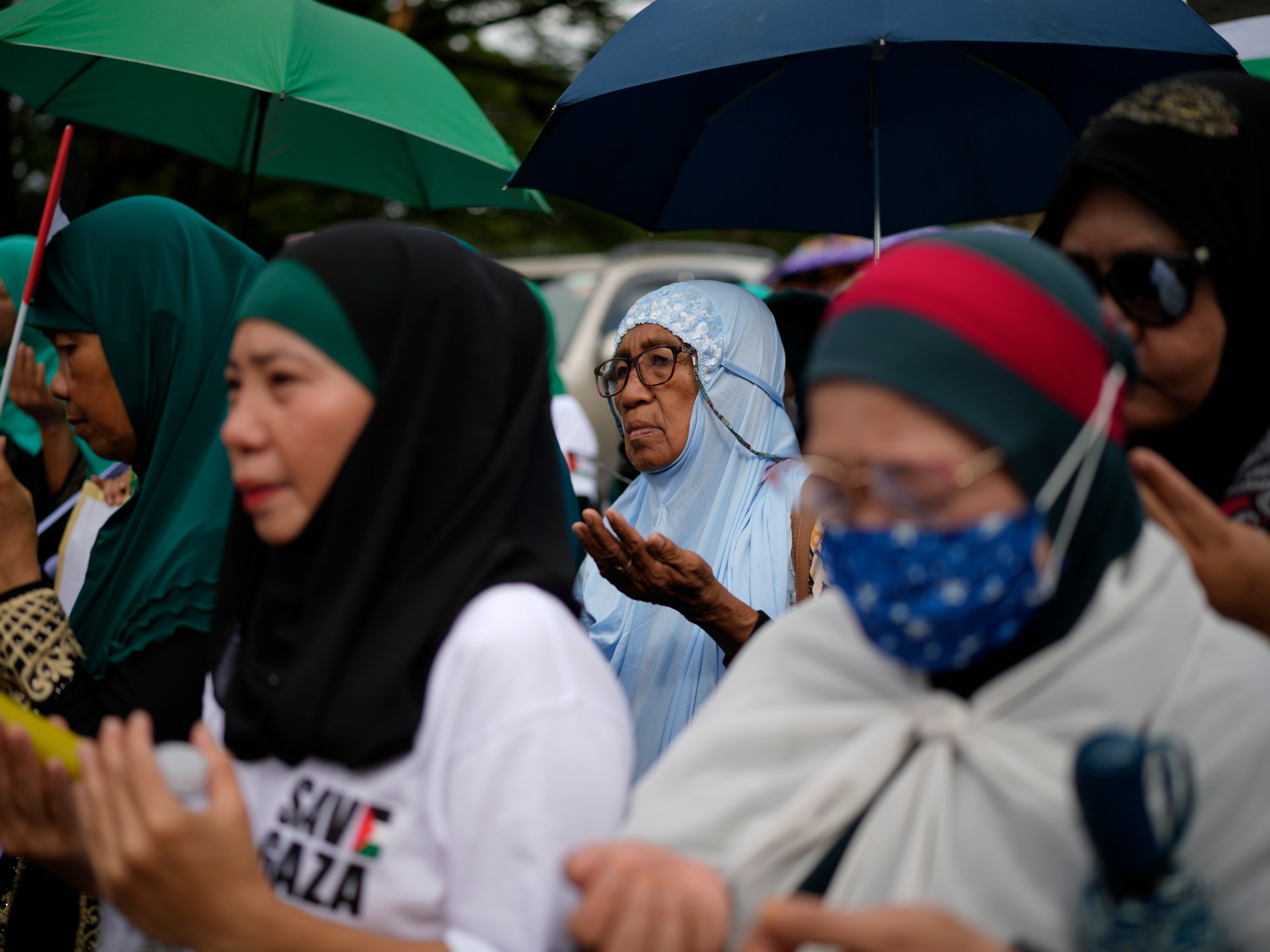
It is important to note here that the Philippines has had a long history of solidarity with Palestine. Demonstrations organised by both Muslim and non-Muslim activists, from the local to the national level, have happened regularly.
However, after the normalisation process, there were unprecedented statements from some Bangsamoro scholars presenting mobilisation for Palestine as an Iranian plot. They argued that the Palestinian resistance movement was an ally of Iran and therefore were deviants and a political tool of Shia power.
When Hamas carried out an attack on Israel on October 7, 2023, the narrative clash deepened. Some scholars echoed Western media and pro-Zionist narratives. They presented the attack as a singular event and ignored the decades-long oppression of the Palestinians by the colonial regime of Israel. The other camp supported Palestinian resistance.
Although Islamic scholars are involved in this clash of narratives, this is not a mere theological debate but a manifestation of the entanglement of politics and religion.
In a postcolonial era, it is normal for politics and religion to be intertwined in various ways. However, in the Bangsamoro context, where central authority remains fragile, external forces and dominant politico-theological frameworks from Arab countries are increasingly being imported into local discourse.
This is largely because some scholars, who are aligned with an anti-Iran position, were educated in certain Gulf countries. This dynamic is affecting the local context, reflecting a typical tendency in which students trained in authoritarian-leaning educational systems reproduce ideologies aligned with that state upon returning to their countries of origin.
This continuing saga has internal significant consequences.
First, the entanglement of religion and politics as practised by Muslim scholars with massive social media followings creates an indirect assumption among their followers that these scholars hold reliable authority in the domain of geopolitics, even if they may not.
This contradicts the Quranic principle of seeking advice from the people of the message, “ahl al dhikr”. The principle points to the distributive nature of knowledge: that no human being has the sole authority of all-encompassing knowledge.
Second, this clash has led to deepening polarisation among Muslim scholars in a region navigating a fragile post-conflict transition. Since the 1970s, Muslims in the southern Philippines have struggled and fought for self-determination, and they are now navigating a complex situation that demands a strong and unified identity. This polarisation weakens the formation of a cohesive identity in an already fragile political context.
Third, some scholars take an extreme view towards their opposing side, labelling them as “deviants”. This kind of thinking may lead to radicalisation.
To address this situation, there are several considerations that must be made.
First, differences in the discursive domain must be dealt with on ethical grounds, not by lambasting others with whom we disagree just because they differ from you in political opinion. It is wrong to label someone as “deviant” for holding a different political opinion.
Second, when addressing the Palestinian question and the US-Israeli wars in the Middle East, it is important to remember our own background. Bangsamoro has a historical legacy of fighting systems of oppression and injustice. Remaining committed to our humanity means opposing injustice elsewhere in the world.
Third, divisive discourse on foreign issues could damage community cohesion and the critical thinking needed for a future of unity and self-determination.
Muslim communities in Bangsamoro should not fall for divisive narratives and ground their beliefs in Islam and in their own history and identity.
The views expressed in this article are the author’s own and do not necessarily reflect Al Jazeera’s editorial stance.
