Many people have asked how bad it will get. Will there be civil war and blood in the streets? I do not see a revolution in the United States in the sense that one side is all-powerful and seeks to eradicate its opponent. The risk that the United States will break up, as in Canada and Europe, does not imply outright civil war. The break will likely come first, and it will form along the lines of the LEFT vs. the RIGHT.
The good news is that the fall of the West is inevitable since no political state lasts forever. However, this time it is different, for it is not people rising up against tyranny that produces the blood in the streets as in the American and French Revolutions. Here we are dealing with the facade of Republican forms of government worldwide that have become unresponsive to the people, but are economically crumbling from within at their very foundations.
This is the Sovereign Debt Crisis. The fall of the West can be largely silent, much like the fall of the Soviet Union. As I have said many times, Russia collapsed all by itself because COMMUNISM was not economically sustainable. Here in the West, rising “progressive” movements are also undermining the economy; like the USSR, they are economically inefficient.
A USSR-style collapse of the United States, a sudden, negotiated dissolution of the entire federal union into separate successor states, without a civil war, is highly unlikely without a Sovereign Default. The key is the government’s ability to muster forces against the people. That requires the fiscal capability that becomes nonexistent in the middle of a Sovereign Debt Default. Therefore, a non-violent collapse is not theoretically impossible. The historical conditions that allowed the Soviet Union to dissolve peacefully are largely absent in the American context, and most scholarly assessments point toward either continued institutional decay or a violent rupture rather than a clean “velvet divorce.”
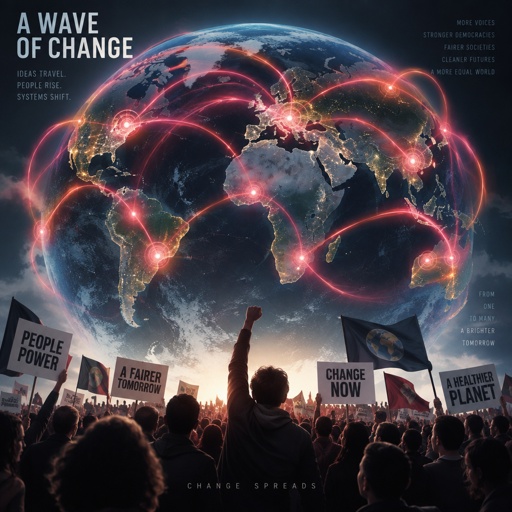
What is not considered is the CONTAGION effect. As I have said many times, the prevailing view is that Greek political ideas, including democratic theory, influenced Rome, not the other way around. Roman political theory and practice developed later and in dialogue with Greek thought. Cicero, Rome’s great political theorist, drew heavily on Greek philosophy and political models.
Plato and Aristotle’s ideal cities drew on a mix of Athenian democracy and the Roman constitution, showing that Greek thinkers were aware of and analyzing Rome, but the foundational democratic ideas were Greek.
The events were nearly simultaneous, a CONTAGION effect, but the Roman Republic was an aristocratic republic, not a democracy in the Athenian sense. Patrician families and the Senate dominated it, with only limited popular participation through assemblies. Unfortunately, the Founding Fathers adopted the Roman model, limiting the people’s role.
Many other Greek city-states adopted democracy after Athens, though it is important to understand that Athenian democracy was not the sole origin of the idea, and the “CONTAGION” was more of a political wave than a simple export. Scholarship has identified numerous city-states (poleis) that experienced democratic government during the Classical period (roughly 480–323BC).
We see this same wave of political change sweep Europe with the French Revolution following the American Revolution. Fast forward to Tiananmen Square and the Berlin Wall falls within weeks. Our computer has identified these waves of political change that sweep the world. It doesn’t even have to start in the United States. You are witnessing a rising separatist movement in Canada and even the UK. The same will happen in Europe.
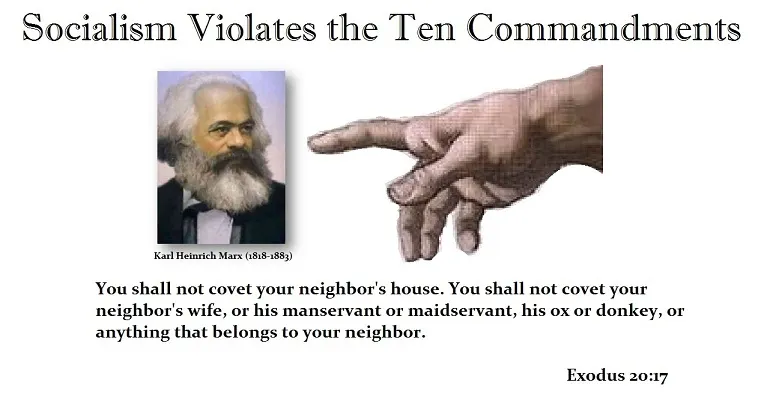
This idea of always attacking the rich has been humanity’s dark side for thousands of years. Ancient Sparta was a communist state that never issued coins, denying wealth to its citizens. Even societies that have advanced required (1) a disparity of wealth that becomes the excess pool to invest in startups, and (2) a financial market to provide liquidity. Every society that provided that since ancient times rose to the top. Those that did not remained as third-world city-states.
The entire Marxist Agenda tried desperately to eliminate the business cycle by altering human nature. This created economic unsustainability, a fundamental cause of the Soviet Union’s collapse from within. The system suffered from deep, long-term structural flaws that made it unable to adapt, and specific policy failures in the 1980s accelerated its decline. Even Trump, in his attempt to make America Great Again, fails to understand a very basic cause for the loss of manufacturing.
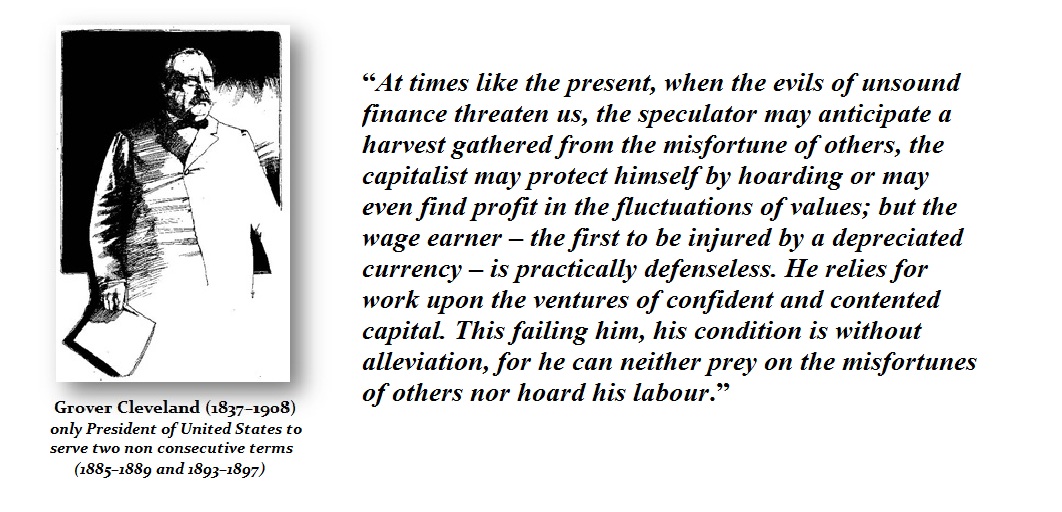
President Grover Cleveland was the only one who understood the direction the growing progressive movement in the late 1890s was setting in motion. Unsound finance can force capital to flee. As a result, who is left to pay the taxes: the working class, who cannot put their labor offshore without migrating?
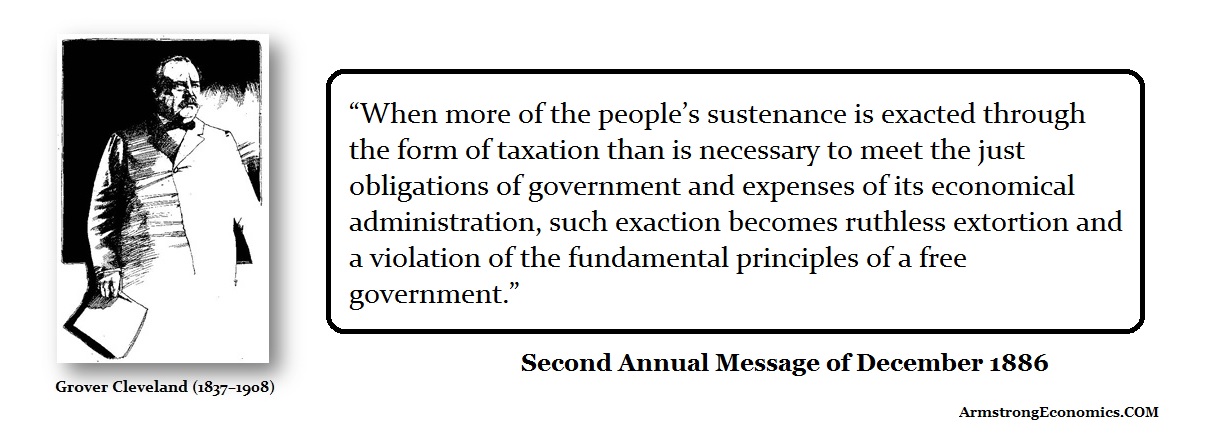
I have dealt with governments around the world in my 50 years. They are all the same, no matter what they call themselves; there are no mirrors ever in government. We are always the problem. If we all just paid the taxes, they think we are not paying; somehow, their system would work. They never see that they are the instrument of their own decline. It is not IF but WHEN. No government has ever lasted forever.
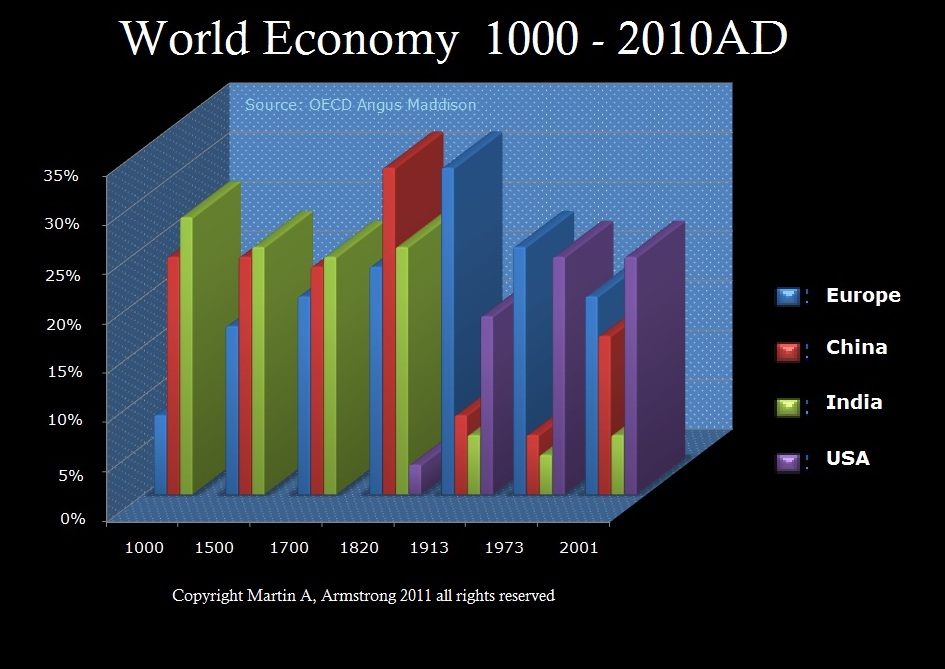
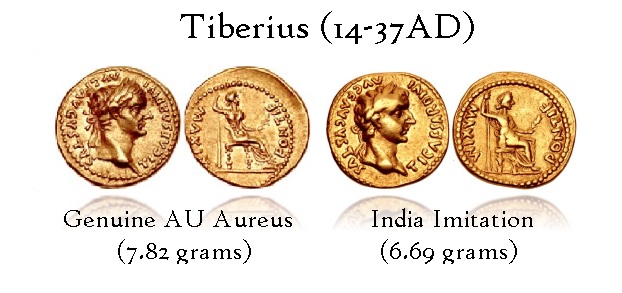
India was the source of luxury products and spices, along with dyes and silks, that they obtained from China and sold to the Greeks and then the Romans. That’s why Alexander the Great attempted to invade and conquer India, and his troops mutinied, forcing him to abandon the adventure. India produced gold imitations of Roman coins, demonstrating that the value was greater than the gold content. This is why Christopher Columbus set sail, assuming he could find a shorter route to India. When he bumped into a continent in the way, he called the people “Indians.”
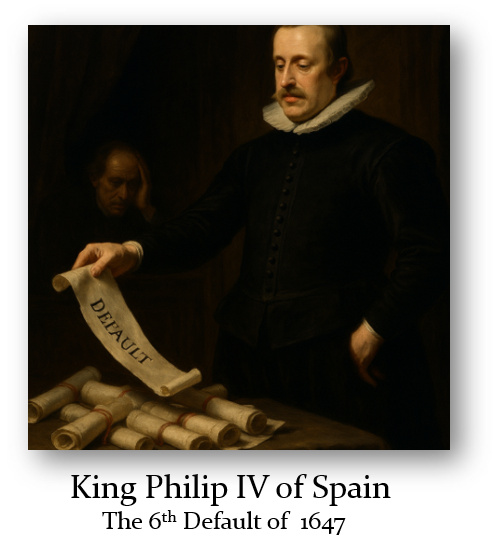
Spain became the financial capital of the world after exploiting gold and silver in the New World. They spent more than they had on endless wars, as we have, and Spain defaulted on its national debt many times. 1557, 1575, 1596, 1607, 1627, 1647. Even in modern times: 1809, 1820, 1831, 1834, 1851, 1867, 1872, 1882, 1936-1939. Even England and France defaulted (see 13th and 14th century Panics). Financial capital migrated from Spain to the Netherlands, then to Britain. After World War I, it moved to the United States. Governments NEVER remain on top indefinitely.
The Long-Term Structural Decline
The Soviet command economy was designed for rapid industrialization and military production, but it was fundamentally ill-suited for a modern, consumer-oriented economy. The whole idea of equality eliminated the most critical factor that increased productivity and living standards – human curiosity. By suppressing wealth and stripping it from private ownership, they destroyed the very incentives and innovation that not even AI can replace, for they lack curiosity.
Without market competition or profit motives, enterprises had no incentive to improve efficiency, cut costs, or innovate. The system was rigid, inelastic, and unable to respond to the changing demands of its population or the technological revolution happening in the West. This was because a bureaucrat made the decisions.
Then there was the misallocation of resources. The state directed all investment. This led to a massive, inefficient military-industrial complex that consumed vast resources, while the civilian sector, producing food, clothing, and consumer goods, was neglected and technologically backward.
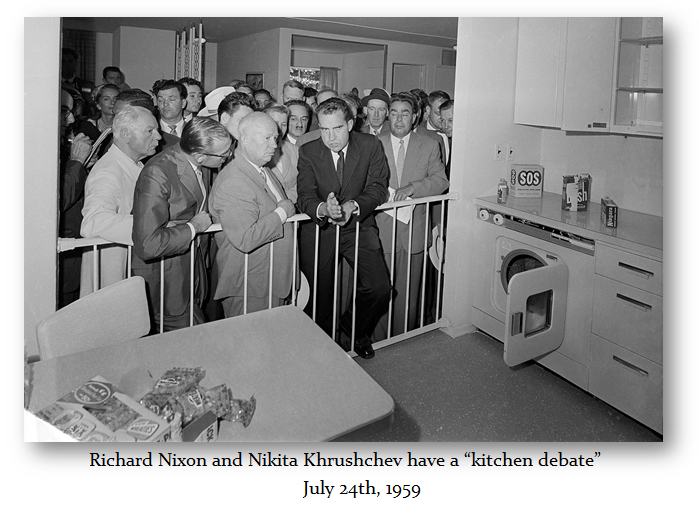
The famous 1959 display of the modern American kitchen showed that when you followed Marx and saw wealth disparity as evil, the result was not just economic stagnation, but worsening standards of living. Despite being a superpower, the Soviet Union saw its per capita GDP ranking drop from 35th to 47th in the world over the last 30 years of its existence. By the 1980s, it had become a net importer of food, a stark failure for a country with vast agricultural potential.
By the 1980s, everything went from bad to worse. The underlying weaknesses turned into an acute crisis in the 1980s because of several factors that began with the oil price shock of the ’70s. The Soviet economy became dangerously dependent on revenue from oil and gas exports. When global oil prices crashed in the mid-1980s, this vital source of hard currency and budget revenue dried up, exposing the underlying economic foundation that was constructed on Marxist dreams of equality to defeat the business cycle, which proved to be an economic implosion. Europe faces that crisis today, with Germany’s economic growth collapsing to 0.8%.
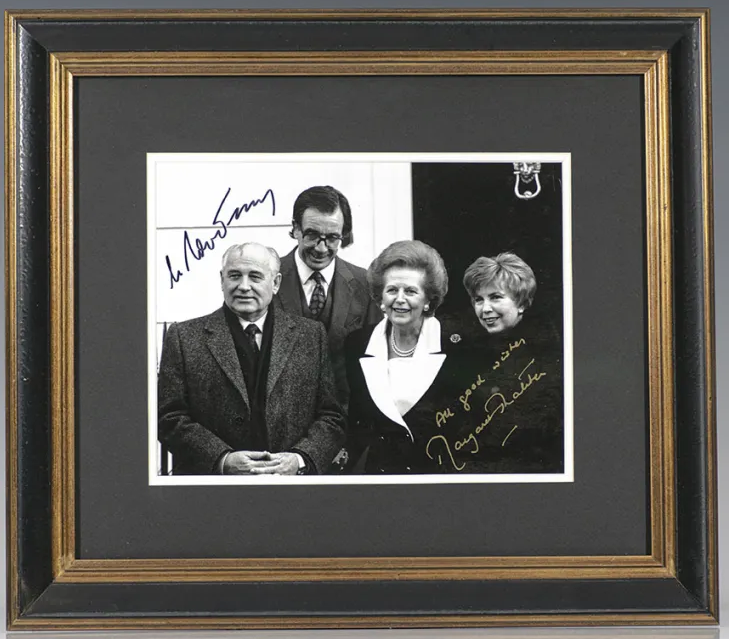
Gorbachev’s attempts to reform the economy were half-measures that made things worse – Perestroika. The 1987 Law on State Enterprises gave factories more autonomy over wages and investment but did not introduce market pricing or hard budget constraints. This led to a spiral of wage increases without corresponding increases in goods, creating massive shortages and runaway inflation.

The government’s budget deficit exploded to roughly 10-11% of GDP by 1988-1989. The fiscal and monetary systems were collapsing. Because there were no independent central banks or bond markets, the government financed this deficit by printing money. This created a “ruble overhang,” which became a huge amount of cash chasing very few goods. This led to hoarding, especially of food, empty shelves, and the eventual breakdown of the consumer market. The Soviet Union’s collapse was set in motion economically. Nationalism also rose, as in Ukraine, the first to proclaim independence. The central government no longer cared about the people; it focused on retaining power. This eroded its political legitimacy. The West’s attempt, with Maxwell funding the failed August 1991 coup, was also a crucial factor.
However, the economy was the primary structural strain, and we are now suffering in the West for the same reasons, especially in Europe. A system that ignored the people and could not feed its own people, innovate, or manage its finances was not sustainable in the long run. The specific missteps of the Gorbachev era turned a slow, decades-long decline into a terminal crisis, making the collapse from within all but inevitable by 1991.

The migration that has taken place in Europe, USA, and Canada, presents a serious risk. Sovereign State Debt Crisis of the 1839-1844 period was a serious economic event that destroyed the credit standing of ALL states and the Federal Government. The Philadelphia Nativist Riots were a series of riots that took place between May 6th and 8th followed again by riots on July 6th and 7th, 1844. These riots took place in Philadelphia, Pennsylvania and the adjacent districts of Kensington and Southwark. They were a result of the economic depression that turned into riots against the new wave of immigrants manifesting in anti-Catholic sentiment at the growing population of Irish Catholics. The migrant were seen as taking local jobs creating rising unemployment during the state defaults, not the federal. This became gun battles on the streets of Philadelphia.This become the risk for Europe into 2027/2028.
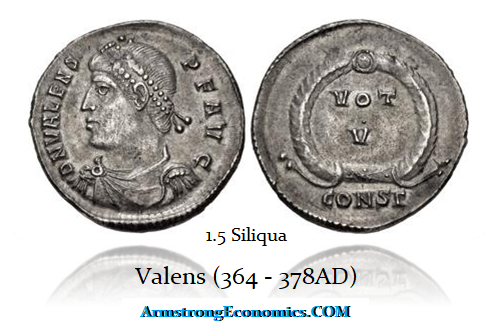
I have warned that immigration was the final straw that broke the back of the Roman Empire. Roman Emperor Valens (364-378AD) let the Goths enter the Roman Empire, assuming they would defend Rome against the advancing Huns. He trained the Goths in Roman military tactics, and because they were of a completely different culture, as European migrants, they did NOT assimilate into Roman society. The Goths then turned on the Romans in retaliation, as they were a separate class. Valens met his death on August 9th, 378AD, in one of the greatest military catastrophes ever suffered by the Roman legions, where they were defeated by the very migrants they allowed in at the Battle of Adrianople. Valens body was never found, and the disappearance of an emperor’s body was a profound shock to the empire, leaving his ultimate fate a mystery. This is the risk that Europe faces. They may assume that they can conscript these Muslim imports, but they have no loyalty to Europe, as was the case with the Goths. Europe is in danger of violent internal conflict between cultures.
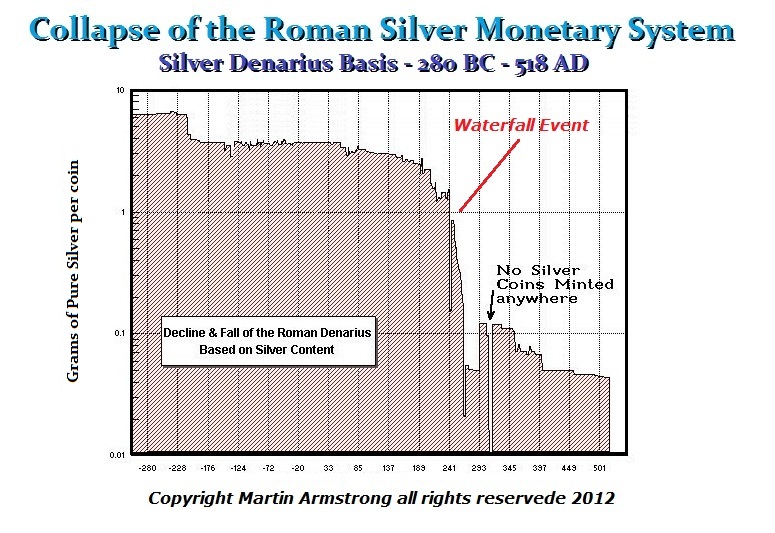
The traditional date is 476AD for the end of the Roman Empire, when the Germanic chieftain Odoacer deposed Romulus Augustulus, the last Western Roman emperor. But that’s misleading—it wasn’t sudden. It was the endpoint of a long unraveling. Between 235 and 285AD, Rome had over 20 emperors in 50 years, most assassinated or killed in civil war. I assembled Rome’s coinage to determine how empires actually die. We all knew Rome fell, but no historian ever looked at this from an economic viewpoint. Was it like a 747 coming in for a landing gradually, or a violent, sudden shock? The latter was the answer. The final fall of the West will be rapid, and 8 years is quite enough.
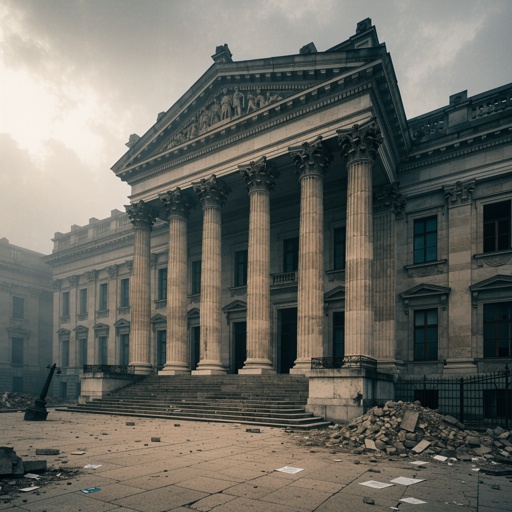
Czechoslovakia’s peaceful split in 1993, often cited as a model for non-violent state breakup, required two distinct, regionally concentrated nations (Czechs and Slovaks) with clear internal borders and a mutual willingness to separate. The political elites on both sides negotiated the terms of separation.

We show a CONTAGION will sweep the world. This will not be a single isolated event. That is the GOOD NEWS. Because this is a CONTAGION, violence should be more at a minimum domestically. The Sovereign Default will undermine the CONFIDENCE in the political state making it more difficult for the government to deploy its armies against the people as we saw with Yeltsin standing on the tanks. The troops were not ready to return to Communism themselves and the coup failed.
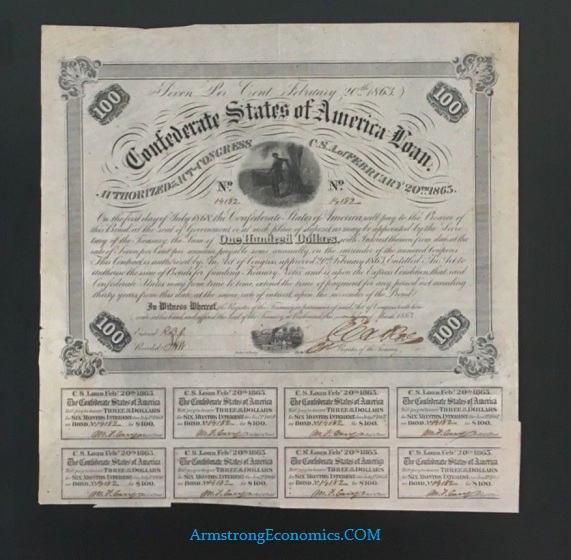
The American Civil War was over a religious dispute involving slavery. It was NOT an economic crisis that caused the government to collapse. That is more like we see with Iran vs Israel. The downside will be for those holding government debt. Even in the USA post 1931, since most of Europe and even Canada defaulted on their sovereign debt, foreign debt crisis resulted in the U.S. government creating the Foreign Bondholders Protective Council (FBPC) in 1933 to protect American holders of defaulted foreign bonds and to try to negotiate repayment with foreign governments.
This time, we are looking at a worldwide Sovereign Debt Crisis because everyone borrows with no intention of paying anything off and they assume that this will last forever. That is the risk. Not private assets.
As Edward Gibbon wrote the epitaph of the Roman Empire:
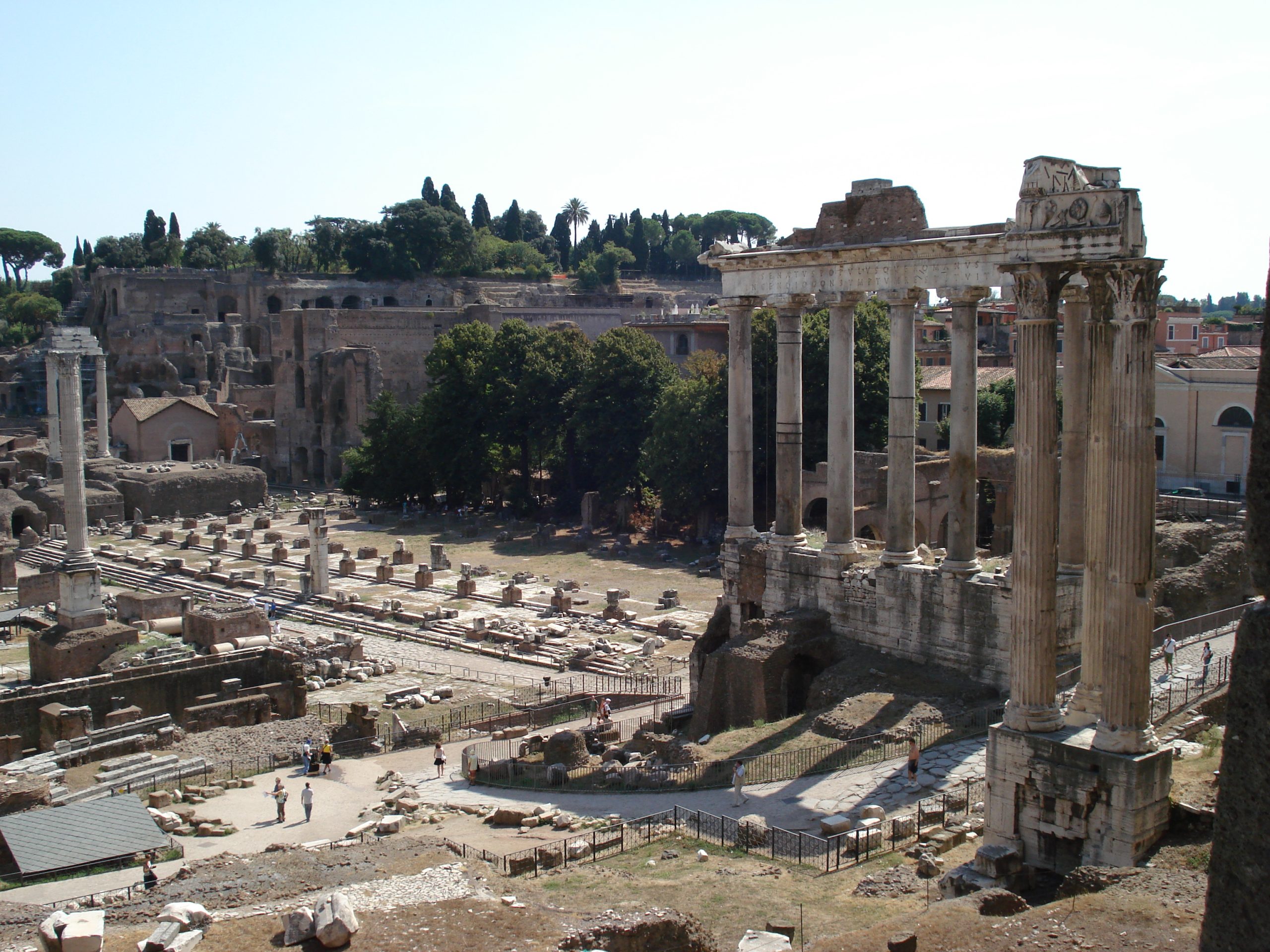
“Her primeval state, such as she -might–appear in a remote age, when Evander entertained the stranger of Troy, has been delineated by the fancy of Virgil. This Tarpeian rock was then a savage and solitary thicket; in the time of the poet, it was crowned with the golden roofs of a temple, the temple is overthrown, the gold has been pillaged, the wheel of Fortune has accomplished her revolution, and the sacred ground is again disfigured with thorns and brambles. The hill of the Capitol, on which we sit, was formerly the head of the Roman Empire, the citadel of the earth, the terror of kings; illustrated by the footsteps of so many triumphs, enriched with the spoils and tributes of so many nations. This spectacle of the world, how is it fallen! how changed! how defaced! The path of victory is obliterated by vines, and the benches of the senators are concealed by a dunghill. Cast your eyes on the Palatine hill, and seek among the shapeless and enormous fragments the marble theatre, the obelisks, the colossal statues, the porticos of Nero’s palace: survey the other hills of the city, the vacant space is interrupted only by ruins and gardens. The forum of the Roman people where they assembled to enact their laws and elect their magistrates, is now enclosed for the cultivation of pot-herbs, or thrown open for the reception of swine and buffaloes. The public and private edifices that were founded for eternity lie prostrate, naked, and broken, like the limbs of a mighty giant, and the ruin is the more visible from the stupendous relics that have survived the injuries of time and fortune.”